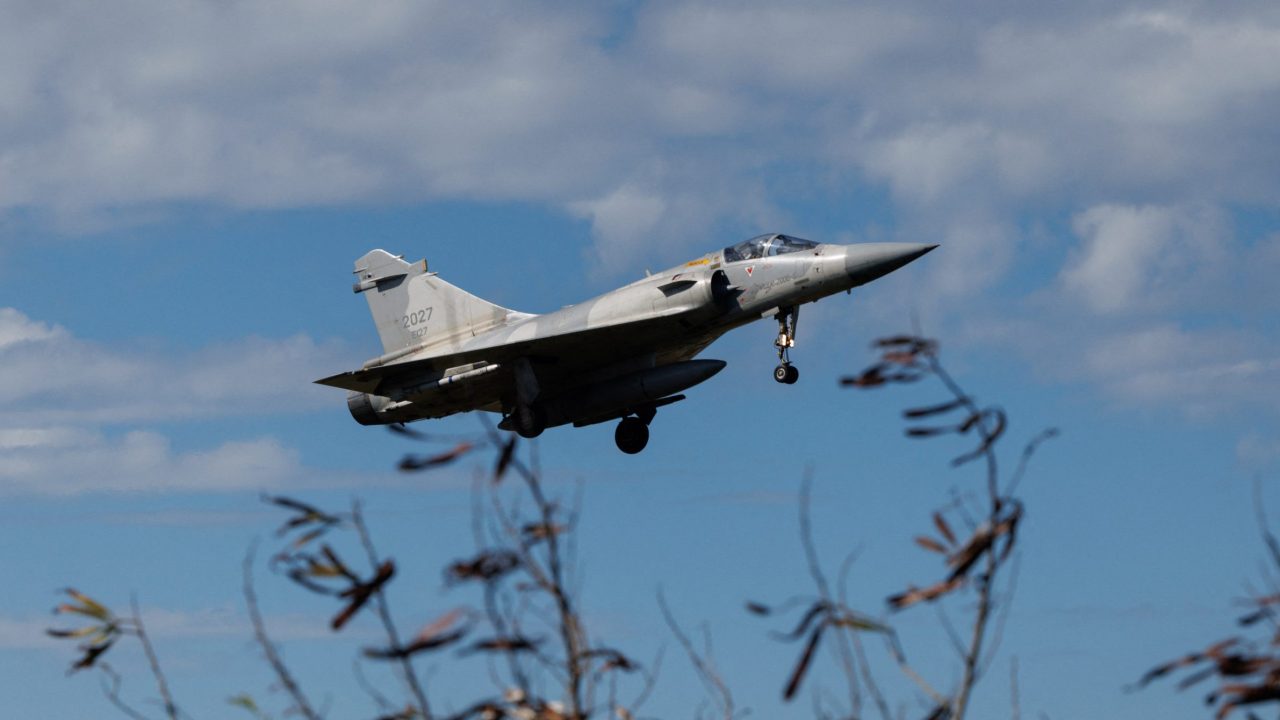
Taiwan’s opposition parties passed a special defense budget on Friday. Initial reactions were predictably polarized. But now that the dust has settled, what are the real implications?
The Chinese Nationalist Party (KMT) and Taiwan People’s Party (TPP) bill, officially titled the Special Act on Safeguarding National Security and Strengthening Asymmetric Warfare Capabilities Procurement, sets aside 780 billion New Taiwan dollars ($24.8 billion) for defense spending over the next eight years, additional to Taiwan’s annual budgets.
The special budget is intended to cover two key expenditures: an already announced arms purchase from the U.S., and an anticipated one.
The U.S. announced it would sell $11 billion worth of weapons to Taiwan in December. That sale contained eight different components. Five of them need to be funded by the special budget. These are the HIMARS rocket artillery systems, Paladin self-propelled artillery systems, ALTIUS loitering munition systems, Javelin anti-tank missiles and TOW anti-tank missiles. The special budget passed on Friday allocates 300 billion New Taiwan dollars for these.
The second component is NTD 480 billion for a future arms sale from the U.S. That sale, for $14 billion is understood to be already agreed; Senator Jeanne Shaheen said on May 11 that it had been approved in January but still not notified to Congress. She added that her understanding was that President Trump didn’t want to notify that arms sale before he went to China.
The details of this sale have not been disclosed, but there is reporting that it is focused on air defense, including Patriot and NASAMS systems. This NTD 480 billion will be released after the U.S. issues letters of offer and acceptance, or LOAs, for the presumptive sale.
Much of the criticism of this special defense budget has centered around the fact that President Lai Ching-te’s (賴清德) administration had asked the legislature to pass a NTD 1.25 trillion special budget. This larger amount included items that are now unfunded, and critics say that this threatens Taiwanese security.
The key items now unfunded are huge orders for more than 200,000 drone aircraft and 1,000 drone boats from domestic manufacturers. Additionally, Lai’s version would have started up domestic production of ammunition for Taiwan’s artillery and armored vehicles, as well as funding further developments and production of the Strong Bow (強弓) anti-ballistic missile air defense system.
The U.S. response to the special budget has been mixed. Senators Shaheen and John Curtis said in a joint statement that it “sends a strong signal of resolve at a critical moment for peace and stability across the Indo-Pacific.” However, a spokesperson for the State Department said on May 9 that “further delays in funding the remaining proposed capabilities are a concession to the Chinese Communist Party.”
The KMT has clearly taken the view that the party cannot afford to oppose arms purchases from the U.S. It feels that to do so would cause pain not only with Washington, but also with Taiwanese voters in future elections.
However, in choosing to focus solely on foreign purchases, it has left itself curiously open to the charge that it doesn’t support Taiwanese businesses. After all, it is Taiwanese workers, voters, who would be the ones to build all those drones. The KMT says it is concerned about the potential for corruption when special budgets are used to fund domestic purchases, as there is less oversight compared to using the regular budget.
But shifting drone spending into the regular budget, which KMT legislators like Hsu Chiao-hsin (徐巧芯) have said the party will do, means that they won’t be funded or ordered until 2027 at the earliest. That leads to two problems. Not will the drones reach the Taiwanese military one year later, it also creates a credibility gap until the 2027 budget is passed where no one knows if the drones will really be funded.
Given how important drone warfare has been shown to be in Ukraine and Iran, not funding this critical capability has left the KMT open to exactly the same accusation they sought to close by funding the U.S. sales, that they are at best not serious about Taiwan’s defense and at worst actively hampering it.
To close this drone gap, Taiwanese Premier Cho Jung-tai (卓榮泰) has said that the executive branch will submit the unfunded items as a new special budget. Why they would expect this to pass is not clear.
Funding might also be found in the 2026 budget through the “multi-year emerging projects budget,” according to the office of Chen Kuan-ting (陳冠廷), co-convener of the legislature’s defense committee.
Taiwan’s defense ministry released a statement after the budget was passed listing those items that had not been funded. Among them were two tactical mission network software systems known as the Taiwan Tactical Network, or TTN, and the Team Awareness Kit, or TAK, which are part of the $11 billion sale.
But these systems are already partly funded. When the KMT made their initial special budget proposal in March, funding for TTN and TAK was included. But Taiwan’s Ministry of Defense released a statement saying that these networks were instead funded by the regular budget.
When TTN and TAK reappeared in a report on the proposed special budget, questions were asked. The defense ministry clarified in April that TTN and TAK were being funded through multiple channels, according to an article by Taiwanese media UDN. The ministry was unable to explain to Domino Theory why the systems were in the unfunded press release.
There is “a huge gap in information communication,” KMT Legislator Lo Ting-wei (羅廷瑋) told Domino Theory in March. He speculated that the Defense Ministry “intentionally concealed [information] or failed to inform us.”
Aside from having to grapple with not having funding for certain domestic production of defense capabilities, the KMT and TPP’s special budget puts another problem on the president’s desk. Lai’s administration has committed to increasing defense spending to 5% of GDP. NTD 1.25 trillion over eight years, on top of the regular defense budget, was already not enough to reach 5%. The reduction to NTD 780 billion leaves Taiwan even further away.
Readers should not lose sight of the fact that Taiwan’s legislature just passed a historically large special budget to buy a historically large amount of U.S. weapons. The framing by many that because drones weren’t funded, this is exactly what Xi Jinping (習近平) wants is a little strange, to put it mildly.
But at the same time, the drones must be funded.



Leave a Reply