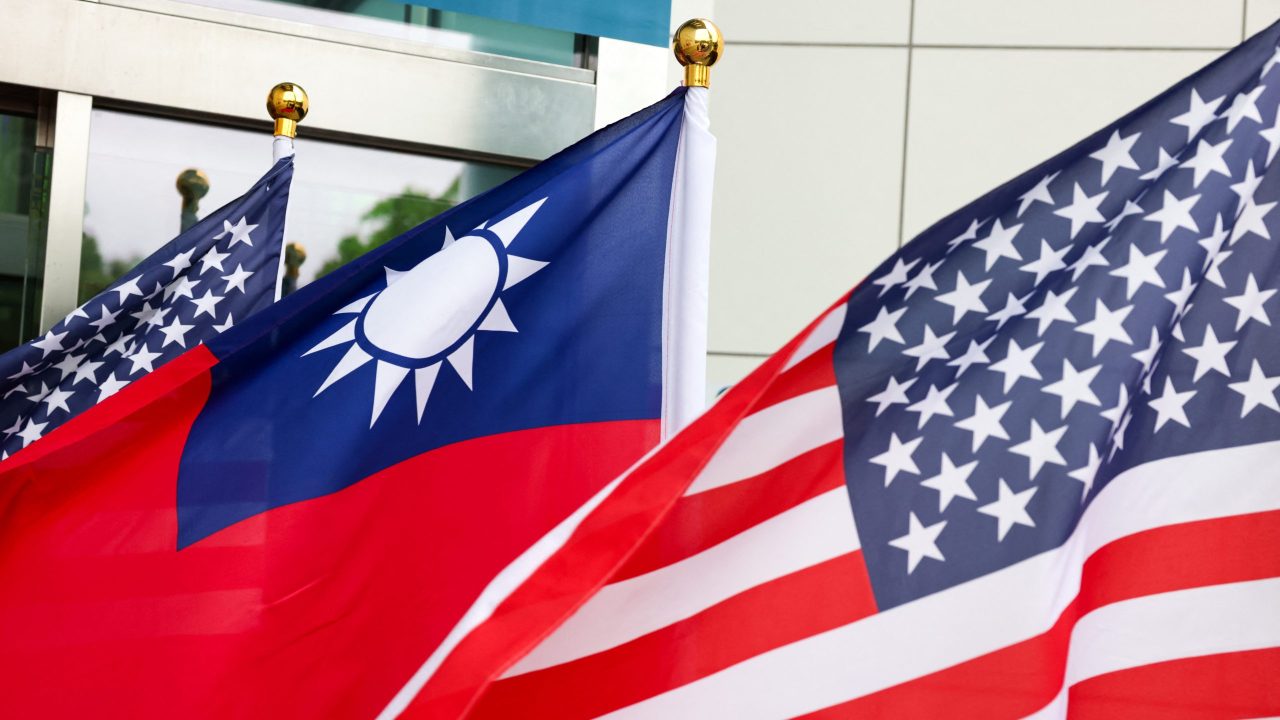
Taiwan’s legislature emerged from its fourth round of cross-party defense budget negotiations on Wednesday without any substantive progress toward a compromise.
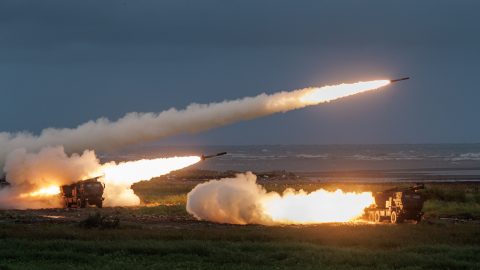
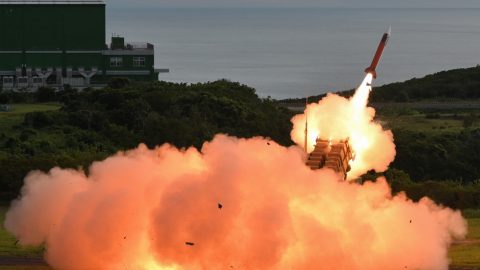
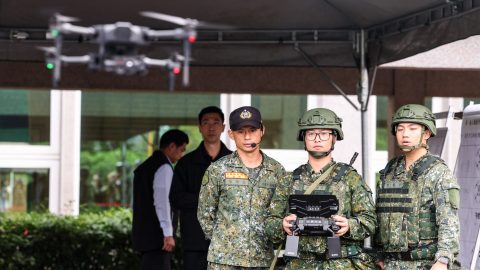
The ruling Democratic Progressive Party (DPP) continues to hold firm behind the government’s $40 billion version, which includes eight years worth of funding for both the purchase of U.S. weaponry and the development of a domestic drone industry.
The opposition Chinese Nationalist Party (KMT), whose legislative speaker Han Kuo-yu (韓國瑜) has been convening the cross-party talks for the past three weeks, has argued that domestic procurements do not belong in the special budget, citing lack of oversight.
Previous Taiwanese special defense budgets included only foreign military sales, with domestic investments folded into the regular annual budget. But the DPP says that the looming threat of a Chinese invasion demands a more urgent approach to defense spending.
The government has also argued that the domestic investments are crucial for Taiwan’s development of the kind of asymmetric capabilities that have been employed to great effect by Ukraine and Iran.
The KMT, for its part, has struggled to unify behind a single alternative to the DPP’s proposal.
The party’s chairwoman, Cheng Li-wun (鄭麗文), has called for the immediate approval of just $11 billion, enough to cover a package of weapons already approved by the U.S. Congress. Cheng says that further funding should only be considered once the U.S. signs subsequent letters of offer and acceptance, or LOAs, a formal document under the U.S. Foreign Military Sales program that confirms a purchasing countries agreement and authorizes the Department of Defense to proceed with procurement.
A separate group of prominent KMT members have emerged in recent weeks to call on the party to commit to funding all $25 billion worth of foreign military sales included in the government’s proposal. In an interview with Domino Theory last week, former vice presidential candidate and KMT insider Jaw Shau-kong (趙少康) said that a significant contingent of his party’s lawmakers are prepared to support the $25 billion, but have refrained from doing so for fear of offending Cheng.
On Tuesday, the KMT convened a caucus meeting to hash out the differences between the two camps, but the meeting was adjourned after less than an hour with no consensus to show for it.
After the Tuesday caucus meeting, KMT lawmaker Lai Shyh-bao (賴士葆) told reporters that the legislature should commit to all $25 billion in U.S. arms sales, without waiting for the U.S. to issue its next LOA. Cheng, by contrast, emerged from the caucus meeting holding firm in her stance that Taiwan should wait to approve the last $14 billion in U.S. arms purchases until it has received the LOA.
Last month, KMT caucus whip Fu Kun-chi (傅崐萁) elaborated on Cheng’s stance, claiming that Taiwan has waited to receive an LOA before approving its special defense budgets going back decades. “Following internal discussions between the U.S. Department of Defense and the U.S. government, a letter of offer and acceptance for the approved items would be officially signed by the U.S. president and sent to Taiwan,” Fu said. “Then, based on the contents of the LOA, our side would allocate the corresponding budgets and draft special acts.”
Recent history contradicts Fu’s claim. The previous special defense budget to come before Taiwan’s legislature was first proposed by the government in September 2019. The proposal, which included funds to purchase F-16 fighter jets from the U.S, passed the legislature on November 22 of that year. The U.S. government did not sign the LOA for that arms package until December 12.
“The signing of an LOA commits to a payment and delivery schedule locking in pricing as well as production slots,” Rupert Hammond-Chambers, longtime president of the U.S.-Taiwan Business Council, wrote in a LinkedIn post last week. “That comes after the customer has committed the funds, not before.”
Taiwan’s Defense Minister Wellington Koo (顧立雄) told reporters ahead of the legislature’s cross-party negotiations on Wednesday that waiting for the U.S. to issue an LOA before approving the defense budget would create major practical issues for the defense ministry.
At the end of the negotiations, which lasted just over an hour on Wednesday afternoon, Han, the legislative speaker, offered a closing remark.
“After four rounds of negotiations, as everyone knows, the situation has been turbulent. I believe the party caucus leaders have been very dedicated, and the Ministry of National Defense officials have also worked very hard,” he said. “I regret that the various parties have still not been able to reach a consensus.”


Leave a Reply