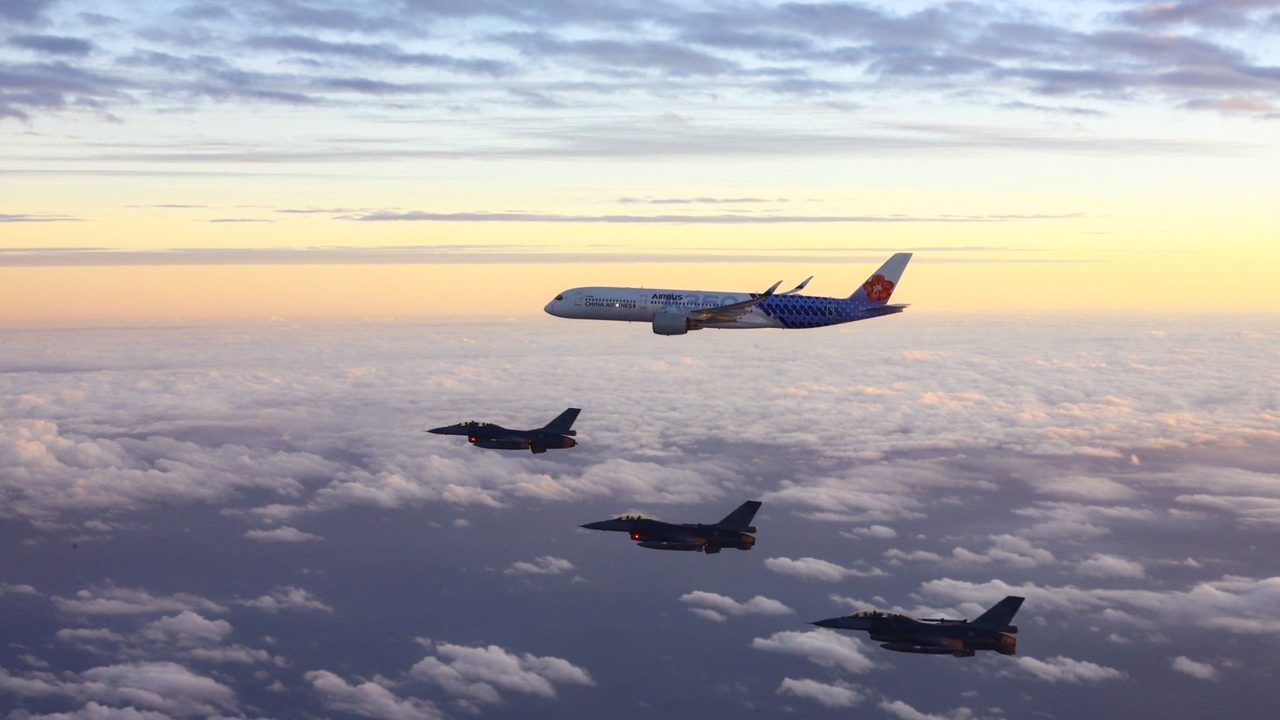
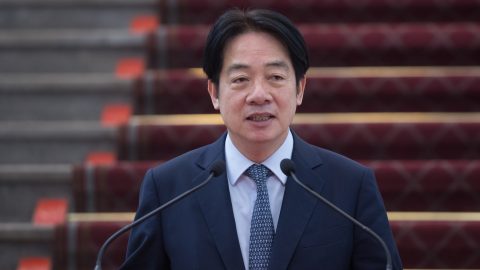
It’s August 23, 2026. Taiwan’s president, Lai Ching-te (賴清德), is in a plane flying across the strait to the small island of Kinmen, just a couple of miles from the Chinese coast. He plans to commemorate the anniversary of the 823 Artillery Battle, as he and his predecessors have done many times before.
He looks out the window, pondering the strange twists of history that have left Taiwan in control of islands that are not meaningfully Taiwanese. On these trips, more so than at any other time, he is truly the president of the Republic of China, not just the Taiwanese president.
Suddenly, the radio crackles. Chinese J-10 fighter jets appear alongside his plane, telling the pilot to either divert to Xiamen airport in China or be shot down. With no prospect of Taiwanese air force fighters reaching his plane this close to China, Lai must suddenly make a terrible decision.
This aerial abduction of a Taiwanese president is an entirely fictional scenario. Lai has not announced any plan to visit Kinmen this August. But that’s kind of the point.
Lai appears to have stopped crossing the Median Line that divides the strait.
Lai has not visited Kinmen since October 25, 2024, when he commemorated the Battle of Guningtou, another famous clash between Chinese Communist and Chinese Nationalist forces. It’s not unprecedented for a president to go for significant periods without a visit, though. Lai’s predecessor, Tsai Ing-wen (蔡英文), didn’t visit Kinmen for more than two years between September 2016 and January 2019.
What is completely out of the norm is that Lai has not once visited the Matsu Islands as president. The Matsu Islands are another archipelago that are much closer to China than Taiwan. Previous presidents all visited Matsu within their first year in office, often with the express purpose of visiting Taiwanese troops stationed there.
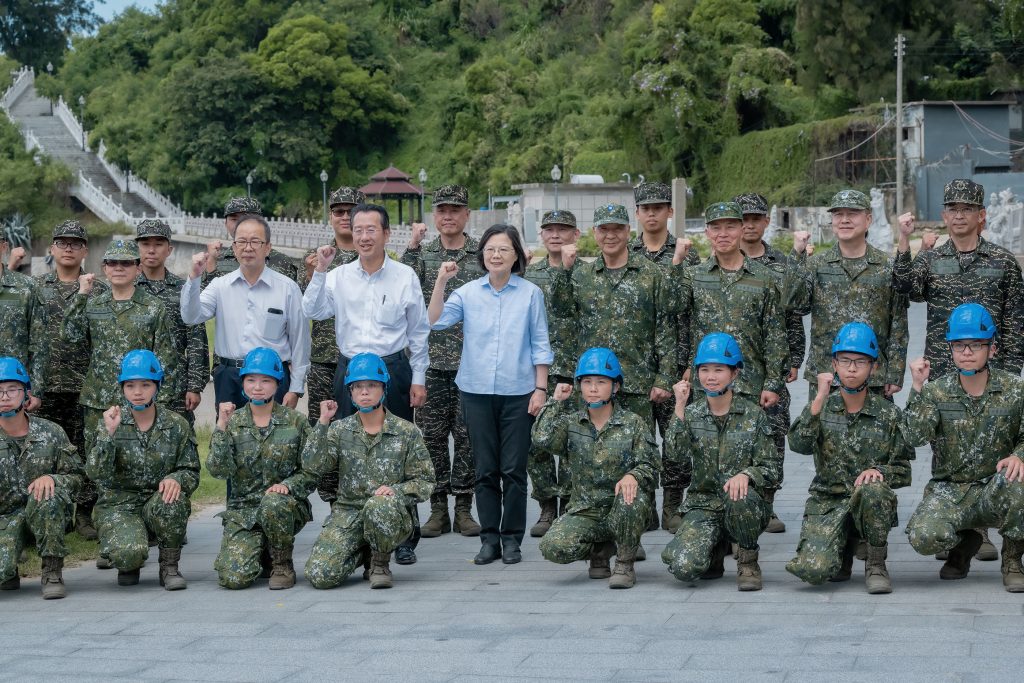
Lai reaches his two-year anniversary this week on May 20. When asked why he still has not made a trip to Matsu, and whether his security team has decided he can no longer safely cross the strait, a spokesperson for Taiwan’s Presidential Office declined to comment.
Speaking on the understanding that we were discussing a plausible but ultimately hypothetical question, Adam Ma (馬準威), a professor at Tamkang University focused on China’s Taiwan policy, explained why he thought Lai’s security team would be more concerned now about the possibility of China trying to abduct him than in previous presidential terms.
Foremost in his mind was the U.S. capture of Venezuelan President Nicolas Maduro. On January 3, U.S. special forces helicopters swooped out of the night and landed in Caracas. When they took off again, they were carrying Maduro, who is still in detention in the U.S. now. That, Ma said, “gave us a very big imagination” of what is possible.
Many, including in these pages, have argued that China probably could not attempt a similar operation while Lai was in Taipei, heavily defended by the Taiwanese military. But he would be far more vulnerable when visiting Kinmen or Matsu.
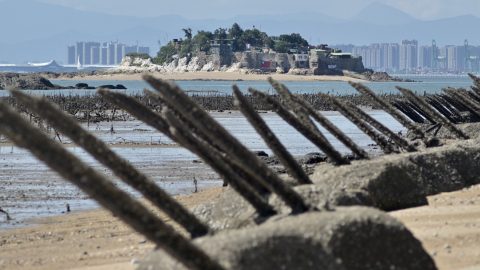
Throughout the Cold War, these islands were heavily militarized and were at times actively fought over. In recent decades the military garrison has been substantially reduced, but is still significant.

As the balance of power between Taiwan and China has shifted, Taiwanese fighter jets stopped flying on the Chinese side of the Median Line that runs down the middle of the Taiwan Strait. By unspoken agreement, China does not interfere with the Taiwanese military cargo planes that regularly fly to Kinmen and Matsu. The result is that if Beijing did decide to attempt an aerial abduction of Lai on its side of the Median Line, he would be close to defenseless.
Chinese jets had approached a Taiwanese medical evacuation plane flying from Kinmen earlier in 2025, Taiwanese media RW News reported in September. Taiwan’s Mainland Affairs Council, which handles relations with China, expressed strong condemnation.
Ma also pointed out that China has created more legal tools to target Taiwanese politicians and civil society figures, and that this could be raising security concerns for the president. He cited the example of Puma Shen (沈伯洋), a legislator who has just been nominated as the Democratic Progressive Party’s (DPP) candidate in the Taipei mayoral election.
In October 2025 the Chongqing Municipal Public Security Bureau opened an investigation against Shen for the suspected crime of “separatism.” Shen now has to consider which countries he can visit for fear of extradition to China, although he is at pains to point out it has not stopped him traveling.
During Tsai’s time in office, Beijing was still, to a certain degree, reluctant to escalate too much to a point where they could be compromising presidential security, according to J. Michael Cole, a Taipei-based analyst and author who previously worked for Tsai’s Thinking Taiwan think tank and also consulted for the National Security Council during her tenure as president. “There are fewer guardrails on the Chinese side in terms of doing things to further constrain President Lai’s ability to travel” now, he added.
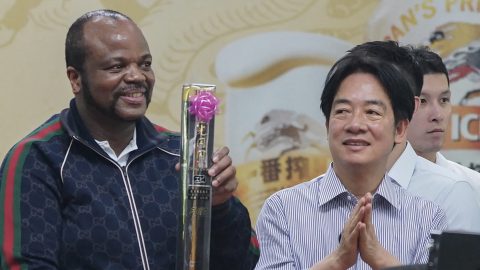
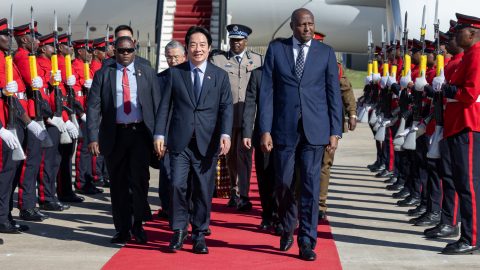
Last month, Lai delayed a trip to Eswatini at the last minute after several countries along the route cancelled diplomatic overflight permits. It is the first known case of China successfully requesting countries deny their surrounding airspace to the Taiwanese president, and represents a new level of coercive behaviour. Lai subsequently traveled to and from Eswatini in the Swazi royal plane.
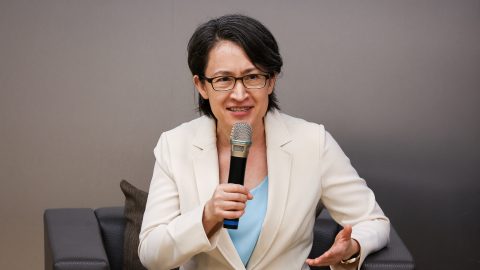
There are other precedents, too. In 2024, then vice president-elect Hsiao Bi-khim (蕭美琴) visited Prague. A year later, Czech military intelligence officials said that the Chinese embassy had planned a “demonstrative kinetic action against a protected person,” according to Czech media Irozhlas. This was understood to mean deliberately crashing into Hsiao’s car. The attempt is reported not to have taken place.
Beijing wouldn’t need to threaten Lai’s safety in order to exploit him visiting Kinmen or Matsu, Cole pointed out. A sudden naval deployment that disturbed a visit could “further underscore his limited control over Taiwan’s destiny and his ability to maintain security over not just Taiwan proper, but outlying islands as well.” Why would Taipei risk that?
If the Taiwanese president is unable to visit parts of Taiwan’s territory, it would be easy for the domestic opposition to argue that “we’re losing control of our own country,” Cole said. He sees this potential situation as the “psychological and political warfare that China, with allies on the Taiwanese side, could be waging on the Taiwanese public.”

Ma, the professor at Tamkang University, is not so sure. He said it would be “odd” for Kinmen and Matsu people if the president stopped visiting, but he pointed out that other senior officials are still going. Premier Cho Jung-tai (卓榮泰) visited Matsu at the beginning of this month. He said he does not think Lai’s absence would lead to any shift in Taiwanese perception on the sovereignty of the islands.
It bears emphasizing: There is no proof that Lai’s security team has made this decision. But the fact he has not crossed the Median Line in 18 months, and has never been to Matsu, is evidence enough that more people should be raising the question.
It’s August 23 again in Lai’s lonely plane over the strait. The pilot calls Lai over the intercom and asks him what is effectively the final question of his presidency: “What have you decided?”


Leave a Reply