Semiconductors, AI and Quantum
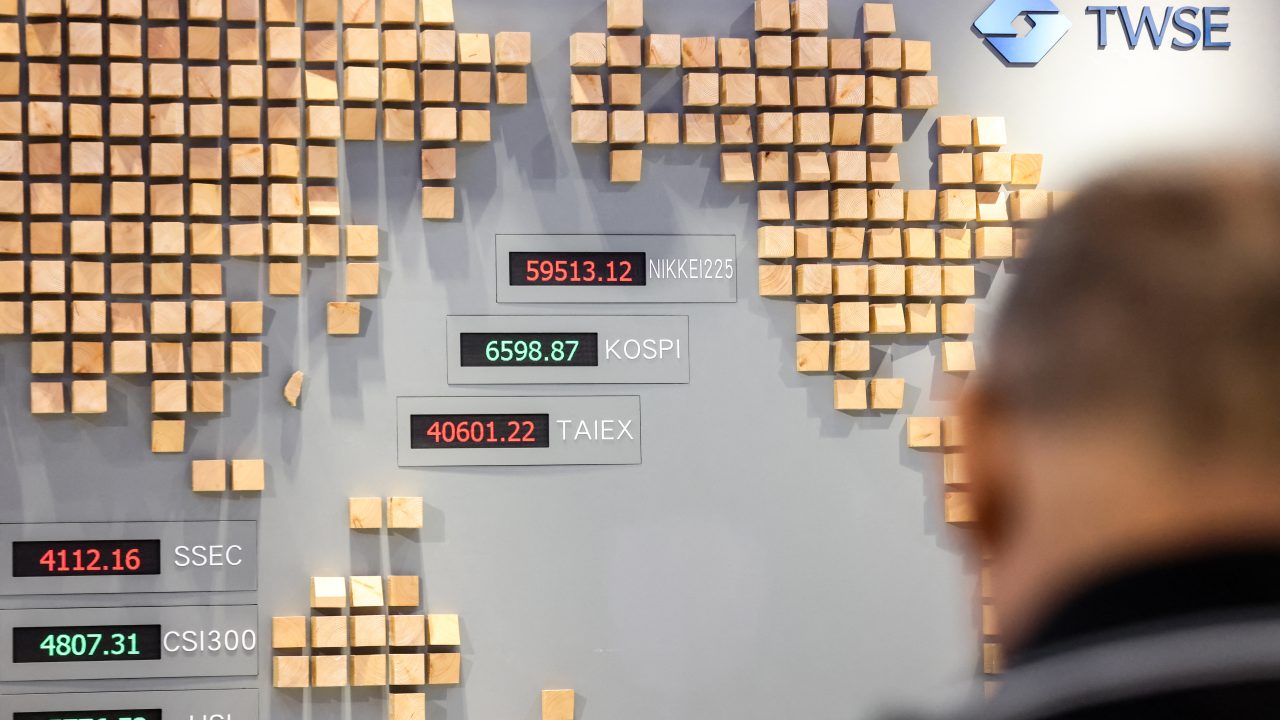
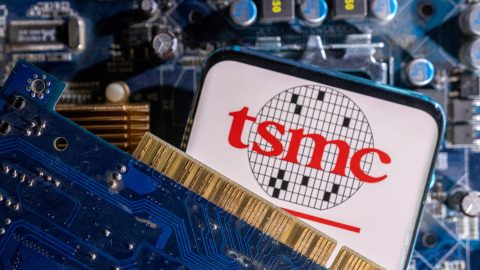
Taiwan’s chip sector continues to thrive despite disruptions related to the Iran war. TSMC reported a 58% percent year-on-year jump in profit in the first quarter of 2026, citing growing AI demand. While rising supply costs resulting from the Iran war might impact profitability, there will be no near-term operational impacts resulting from supply chain disruptions to key chipmaking inputs like helium, TSMC’s chief financial officer said.
Exports of AI-related technologies underpinned Taiwan’s higher-than-projected GDP growth for the first quarter at 13.69% year-on-year, the fastest growth in nearly four decades. Exports in March alone were 61.8% higher than a year ago.
TSMC continues to develop its overseas chip manufacturing presence. On April 23, TSMC unveiled the next-generation A13 chip process at its North America Technology Symposium in California. Compared to the A14 node, the A13 process is a direct shrink that makes the chip about 6% smaller with improved power efficiency and performance. At the beginning of May, Minister of Economic Affairs Kung Ming-hsin (龔明鑫) sent a delegation to Arizona, where Taiwanese and U.S. officials discussed how to facilitate Taiwanese investment in the U.S. and inaugurated the Taiwan Trade and Investment Service Center in Phoenix. Kung noted double taxation as a key obstacle. Later in May, Taiwan will launch a financing guarantee program for Taiwanese companies investing in the U.S., per the Taiwan-U.S. trade agreement signed in January.
In Kumanoto, Japan, TSMC received approval from the Taiwanese government to deploy its 3-nanometer process. The facility was originally set to manufacture 6 to 12-nanometer chips but shifted its focus due to the global demand for AI-related technologies, C.C. Wei (魏哲家), TSMC’s chief executive, said.
Japan’s chip industry is also expanding its chip presence in Taiwan. Nikkei Asia reported yesterday that JSR, a Japanese chip materials company, will open a plant in Taiwan. Aiming to start operations in 2028, the facility will supply TSMC with photoresists, the light-sensitive chemicals used in chip manufacturing.
When it comes to China, the Taiwanese government is not so enthusiastic about AI cooperation. Taiwan’s National Security Bureau warned last month that China is trying to lure Taiwanese AI and chip companies to establish factories in China. China is also continuing its efforts to poach talent, steal technology and acquire controlled goods to break “through international technological containment,” the bureau said.
Looking ahead toward AI applications and next-generation technologies, Taiwanese President Lai Ching-te (賴清德) launched the National Center for AI Robotics on April 10. The center will expand local robotics research, testing and talent development. The government plans to invest 20 billion New Taiwan dollars ($629 million) between now and 2029 to support the sector and help create at least three new robotics startups.
Later in April, Taiwan launched the Quantum Industry Technology Promotion Office under the Ministry of Economic Affairs. The office will promote the adoption of quantum computing, the use of quantum physics to process information exponentially faster than normal computing, in the private sector, facilitate communication between academia and industry and seek foreign investment into quantum research in Taiwan.
Space, Telecommunications and Defense
After an undersea cable leading to Taiwan’s northernmost outlying island broke at the end of April due to bad weather and shipwreck debris, Taiwan activated backup microwave communications. The island of Dongyin’s phone and internet services are now operating normally, but the incident underscores the vulnerability of the undersea cables serving Taiwan and its outlying islands.
Foxconn successfully launched two second-generation, low-Earth orbit satellites from California on Sunday: the PEARL-1A and PEARL-2B. The satellites are designed to test communications and space science technologies.
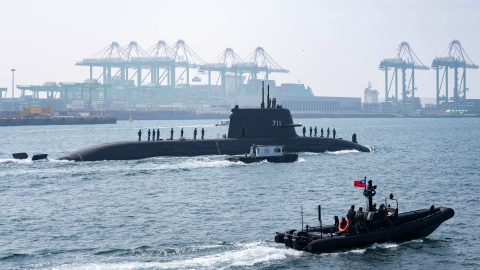
On defense, the National Chung-Shan Institute of Science and Technology and the Industrial Technology Research Institute signed a memorandum of understanding last month to strengthen Taiwan’s AI-enabled defense capabilities, with a focus on unmanned systems. The partnership aims to improve resource allocation for research and development, standardize hardware and software platforms, and advance autonomous systems, communications and precision strike technologies.
Taiwan signed six arms procurement deals with the U.S. in April, amounting to more than NTD 208.77 billion ($6.6 billion). The U.S. agreed to allow Taipei to procure the weapons, including High Mobility Artillery Rocket Systems, or HIMARS, and M109A7 self-propelled howitzers, on a delayed payment schedule due to the Legislative Yuan’s failure to pass the special defense budget. There’s no movement on its passage yet.



Leave a Reply