Semiconductors and Artificial Intelligence
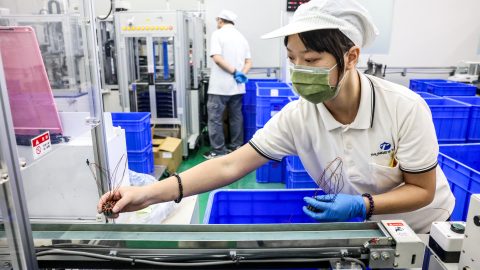
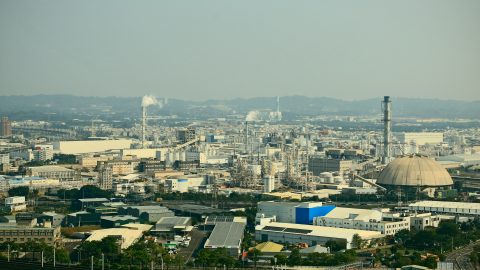
Taiwan’s Ministry of Finance announced this week that Taiwan was the 12th largest exporter in the world in 2025, the highest ranking it has seen in 32 years. The growing demand for AI-related products led to a 34.8% increase in Taiwanese exports, which totalled $640 billion for the year.
Tech-fueled growth numbers are continuing to look strong in 2026. Taiwan’s Ministry of Economic Affairs reported that Taiwan’s manufacturing production index, which measures manufacturing output, rose 19.64% year-on-year last month. This marked 24 months of consecutive annual growth. The ministry says the index is likely to rise to a first-quarter record high this year.
U.S. chip manufacturer Micron announced this month that it has acquired a site in Miaoli, which will accommodate two new fabrication facilities for AI memory chips. At the unveiling ceremony on Thursday, Micron’s vice president said the company plans to expand its Taiwan workforce to 15,000 by the end of the year. Product shipments will begin in 2028.
To accommodate rising high-tech freight volumes, U.S. shipping company UPS opened a $100 million logistics hub in Taoyuan on Wednesday, its largest in Asia. Applied Materials, the U.S.’s largest supplier of semiconductor manufacturing equipment, will use the site as a regional distribution center.
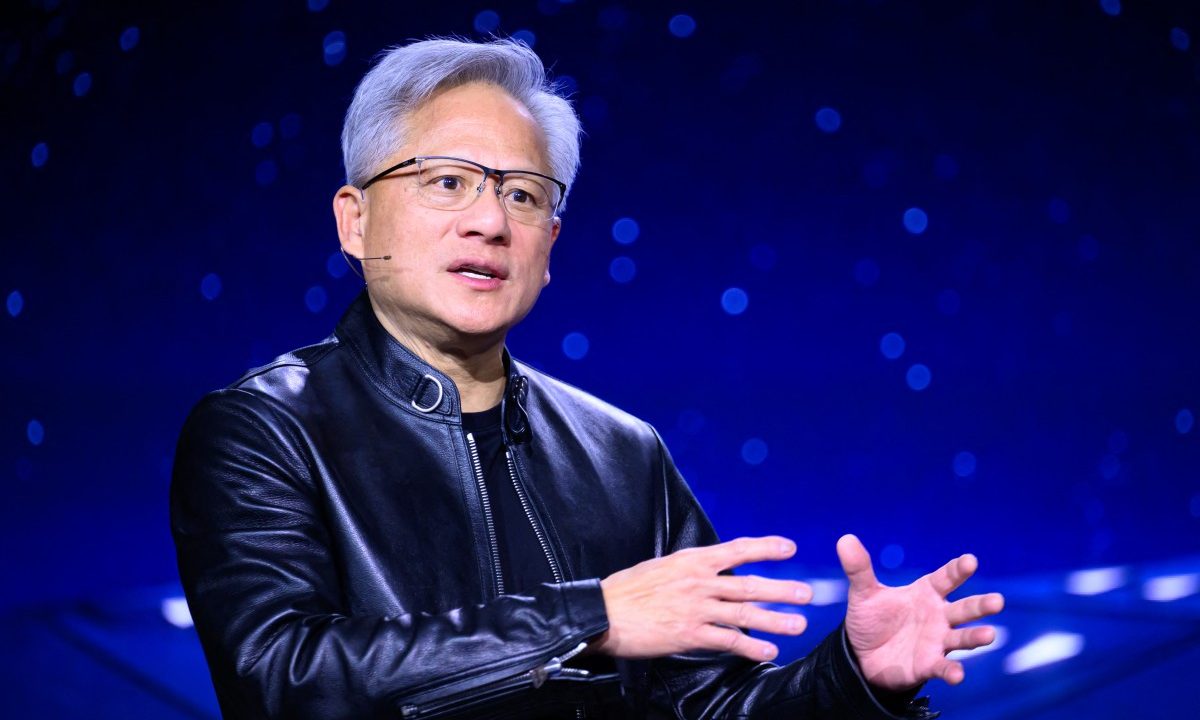
Demand for Taiwanese tech will continue to grow beyond 2026, Nvidia CEO Jensen Huang said last week at GTC, the chip designer’s annual AI conference hosted in San Jose, California. Huang said that demand for AI infrastructure will reach $1 trillion by 2027. In response to a question about geopolitical precarity, Huang said that Nvidia is 100% committed to continuing its presence in Israel and Taiwan long term. “Our entire supply chain is there,” Huang said of Taiwan, according to CNA. He also said that it will be “very challenging” for President Donald Trump to onshore 40% of Taiwan’s chip production capacity given the sharp rise in demand for chips.
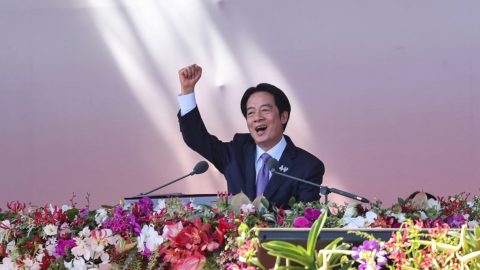
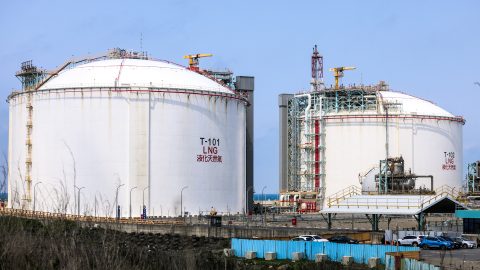
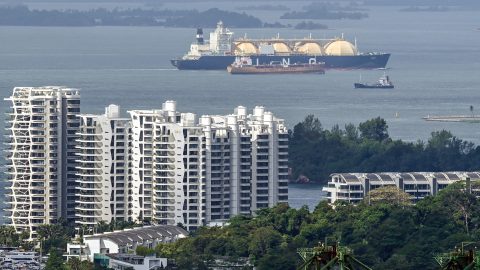
Regardless of Nvidia’s commitment to Taiwan, the tech industry here is not immune to geopolitical shocks, which the war in Iran put into stark relief this month. Exports of Qatari liquefied natural gas, or LNG, which supplied one-third of Taiwan’s LNG, have effectively halted. Some analysts are worried this shock puts Taiwan’s chip industry at risk, per reports by Bloomberg and Politico. LNG powered about 50% of Taiwan’s grid last year, and industry accounts for more than half of Taiwan’s electricity consumption, with leading chipmaker TSMC alone consuming about 10%. For now, the government has mostly secured alternative suppliers through May, as well as half of June. Taiwan’s long-term strategy for alternative LNG shipments is to import more from the U.S. Another potential solution is nuclear energy — President Lai Ching-te (賴清德) confirmed this month that Taiwan is considering restarting two of Taiwan’s decommissioned nuclear plants, Maanshan and Kuosheng.
In local news, the southern city of Kaohsiung made strides in its pursuit of becoming a “smart city.” Mayor Chen Chi-mai (陳其邁) attended Nvidia’s GTC conference in San Jose, where he promoted the Smart Lighthouse Project, which aims to apply AI tools to urban management tasks like traffic and flood prevention. While he was in the U.S., Chen signed a memorandum of understanding with Arizona and Kumamoto Prefecture in Japan — regions where TSMC is expanding production capacity — to create a “semiconductor strategic triangle” for innovation and talent development. Kaohsiung also hosted the Smart City Summit and Expo this month, which featured city-level tech solutions like hydrogen fuel stations (for hydrogen-fueled vehicles) and AI eldercare.
In a final and dramatic piece of chip news, two Taiwanese citizens have run afoul of American export controls after an AI chip smuggling scheme was unsealed in the U.S. Three individuals connected to U.S. server company Super Micro have been indicted with smuggling Nvidia AI chips into China via “dummy” servers that were made in the U.S. and traveled through Taiwan and Southeast Asia before being repackaged and shipped to China. The scheme generated $2.5 billion in server sales. Ring leader and Super Micro co-founder Yih-Shyan “Wally” Liaw has resigned his seat on the board. Two Taiwanese citizens, one an employee of Super Micro and the other a third-party broker, are also being indicted in connection with the scheme.
Space and Defense Tech
More than 30 Taiwanese companies showed off their latest technology at Xponential Europe, a trade fair for autonomous technologies and robotics that took place in Germany this week. Representatives from Taiwan emphasized the value of “non-red supply chains” that avoid links to China. Taiwan’s burgeoning drone industry sold over 100,000 drones to Ukraine last year, according to data provided by the Research Institute for Democracy, Society and Emerging Technology to The Japan Times earlier this month.
Another delegation of 21 Taiwanese companies traveled with Taiwan’s space agency and the Industrial Technology Research Institute to the U.S. this month to participate in the Satellite 2026 expo. Taiwan’s section was themed “Taiwan — Your Trusted Partner” and featured satellite solutions across communications, disaster response, maritime operations and defense, Taiwan News reported.
In another win for non-red supply chains, Taiwan’s first domestically built submarine, the Narwhal, completed its fifth round of dive tests this month. The Narwhal was successfully built using a supply chain that excludes China, despite the pressure that Beijing exerted on foreign suppliers to not participate in the project. CSBC Corporation hopes to deliver the submarine to the Taiwanese navy by June after missing a contractual deadline in November 2025.

Leave a Reply