Semiconductors
In June, Taiwan’s government added Chinese tech companies Huawei and Semiconductor Manufacturing International Corp (SMIC) to its export control list. Government approval will now be needed for companies like Taiwan Semiconductor Manufacturing Company to sell to those companies. Though TSMC has not supplied Huawei since 2020, last October, a TSMC chip was found in Huawei’s most advanced, mass produced AI processor — the 910B. Responding to the move, Zhu Fenglian (朱凤莲), a spokesperson for China’s Taiwan Affairs Office, said Taiwan’s Democratic Progressive Party government’s “intentions are extremely sinister, and their methods are extremely despicable.”
The future of TSMC’s manufacturing operations in China could hinge on U.S.-China trade talks as the U.S. Department of Commerce has been reconsidering a previous exemption they held from U.S. export controls. However, in a move seen as beneficial to TSMC, Nvidia — which uses TSMC to manufacture its chips — has been given permission to sell its H20 chip in China, having initially been banned from doing so in April. The H20 can be used to power AI chatbots, various kinds of robotics equipment and self-driving cars. It was developed for the Chinese market — with some built in limits to its power — in 2023.
TSMC is expected to report a profit of $377.4 billion New Taiwan dollars ($12.9 billion) in the second quarter of this year, a rise in revenue of over 38% compared to the same period last year.
TSMC should be seen as “the safest long-term play in the AI infrastructure space,” according to the Motley Fool investment advice company. This is based on the idea that whichever of the largest companies comes out on top in AI chip design — Nvidia, Advanced Micro Devices, Broadcom or Apple — they are likely to be using chips manufactured by TSMC.
After the Trump Administration locked in 20% tariffs on goods produced in Vietnam, Taiwanese firms that have moved operations there will be “breathing a bit easier,” according to Taipei-based market analysis TrendForce. ShunSin (訊芯) — the only Taiwanese chip packaging and testing firm operating in Vietnam — is looking to increase work in Vietnam as geopolitical risks ease, according to United Daily News.
Military Tech
Taiwanese drone company HY Tech (璿元科技股份有限公司) launched its electric long-range drone, Sky VTOL 2, last month. CEO Chou Yu-tuan (周玉端) said it can transmit data to satellites that can then relay that data to receiving stations on the ground.
Taiwanese shipbuilder CSBC Corporation Taiwan (台灣國際造船) denied rumours its first indigenous submarine, the Narwal, had showed signs of deformation during sea trials. It said a protrusion on its side spotted by internet users housed its passive ranging sonar system.
The Taiwanese military’s weapons research arm and Thunder Tiger, a drone manufacturer, have completed live-fire testing for an attack drone called “Overkill.” It uses an AI strike feature similar to those on Ukrainian drones and is known as a type of “suicide drone” because it is destroyed in the process of hitting a target.
Computing
Computer manufacturer Asustek Computer Incorporated (華碩電腦股份有限公司) posted a 13-year high one-month revenue of $68.57 billion New Taiwan dollars ($2.35 billion) in June. The company said revenue had risen due to strong demand for artificial intelligence servers and gaming products.
Space Industry
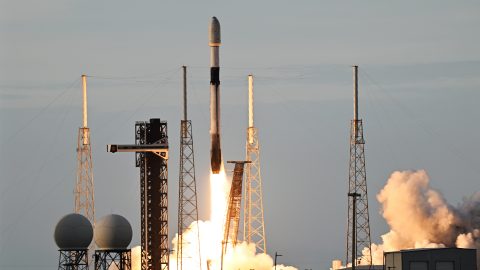
With Taiwan’s surveillance satellite Formosat-8 (福爾摩沙衛星八號) set to launch from the U.S. in October, via a SpaceX rocket, its National Science and Technology Council announced last month that it will send its first low-Earth orbit (LEO) satellite into space in 2027. The B5G-1A is set to be one of six indigenously produced LEO’s launched into space in an effort to enhance its satellite communications infrastructure and reduce reliance on outside providers.
Green Transition
Hsinta power plant (興達發電廠) is now operating with gas rather than coal, contributing 1.3GW to the national energy grid. The stated aim of the current government’s energy policy is to “promote green energy, increase natural gas, reduce coal-fired, achieve nuclear-free.”
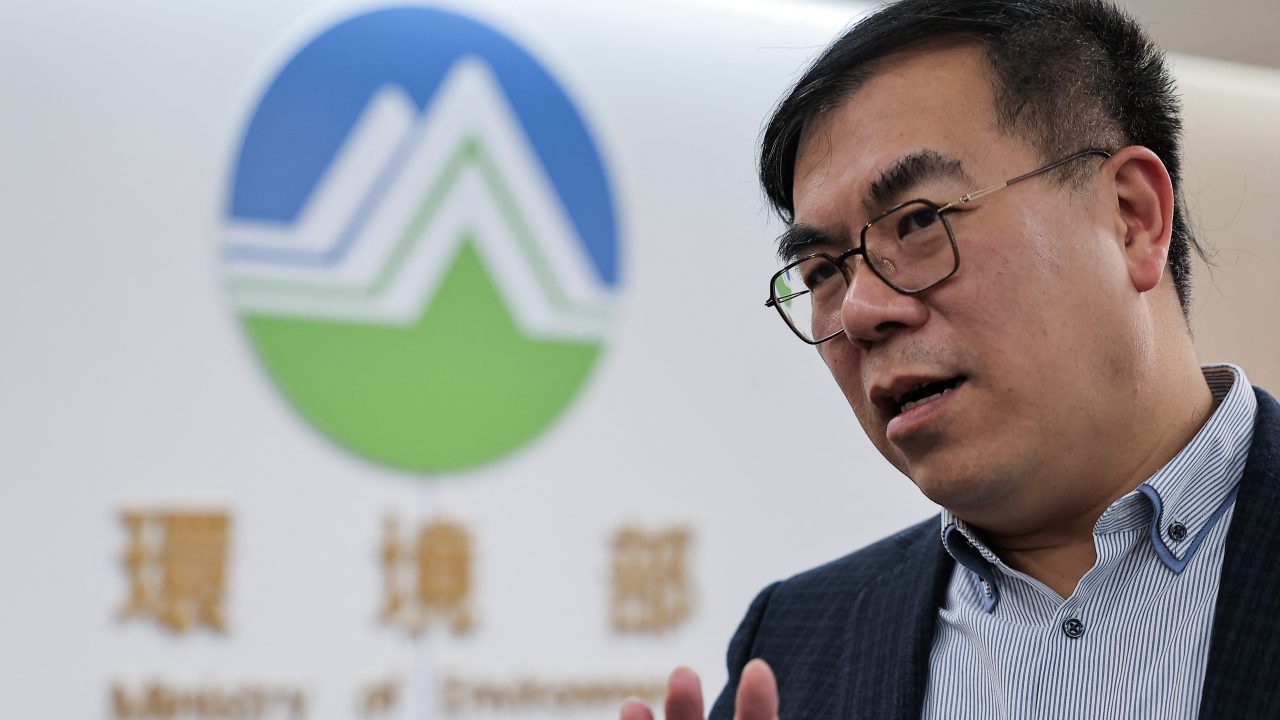
Taiwan aims to reduce carbon emissions by 36% to 40% by 2035, with 2005 as the baseline year, according a statement by Minister of Environment Peng Chi-ming (彭啟明) made at the Japan Energy Summit in Tokyo.
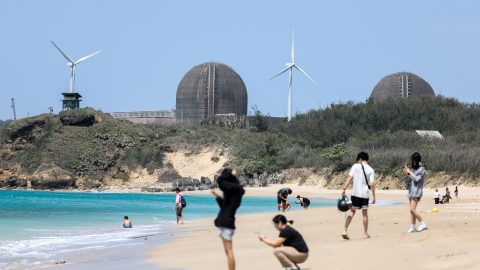
Ahead of a referendum on nuclear in August, Taiwan’s President Lai Ching-te (賴清德) has said if nuclear facilities are to be turned on, three principles must be applied: nuclear safety has to be ensured, the issue of nuclear waste resolved and societal consensus reached.

Leave a Reply