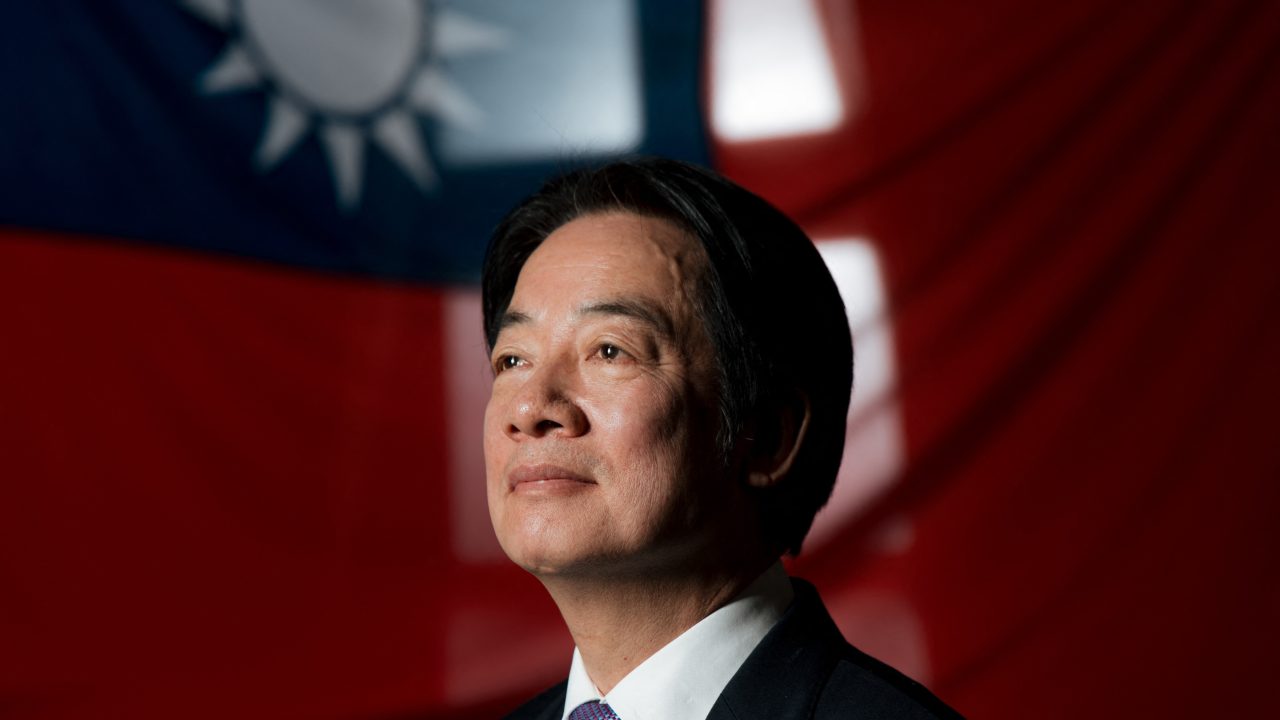
Taiwan’s president, Lai Ching-te (賴清德), on Wednesday reiterated that China is Taiwan’s main external threat, repeating a line that has become central to his presidency two years in, even as domestic politics remain divided.
Lacking a legislative majority, Lai and his Democratic Progressive Party (DPP) have faced an opposition coalition, composed of the Chinese Nationalist Party (KMT) and its smaller ally the Taiwan People’s Party (TPP), that describes him as uncompromising.
In a panel organized by the Taiwan Foreign Correspondents’ Club, speakers offered mixed assessments of the first two years of the Lai administration.
“There’s a man who doesn’t want to be constrained. There’s a man who doesn’t want to be checked,” Ann Lai (賴苡安), a legal advisor for the TPP. “The real question is, what pushed the TPP away and drove us to work with another side [KMT]? Of course, the answer is the DPP.”
Ann Lai noted that the administration “is marching down a fundamentally dangerous path,” referring to the Taiwan president’s “uncompromising attitude.”
The president’s supporters disagree. “In the last two to three years, Taiwan moved from a kind of behind-the-scenes facilitator to a front-stage player,” Roy Lee (李淳), a former deputy foreign minister and ambassador to the European Union and Belgium, told the panel. Lee pointed to Taiwan’s cooperation with global and regional partners in supply chain and security as examples.
Two years into his four-year term, Taiwanese give Lai credit for defending Taiwan’s sovereignty and economic growth — GDP growth reached 13.69% in the first quarter of this year, largely due to surging global demand for AI chips and related hardware — but not governance.
A TVBS poll in May measured Lai’s approval at 38%, up from a record low near 31-32% in mid‑2025. Economic satisfaction has climbed 12 points, yet disapproval still edges above 45%, and voters remain skeptical of his policies on anti‑fraud and judicial reform.
MyFormosa’s April poll measured Lai’s approval at 44.5%, up 0.7 points from March, with disapproval edging up to 47.5%, similar numbers to last April’s poll, which showed his approval at 47.1% and disapproval at 47.3%.
“Taiwan’s economy is very good, I mean very good, but half of the people are still dissatisfied with President Lai,” said Chen Fang-yu (陳方隅), a professor of political science at Soochow University, noting that the benefits of the growth have been distributed unevenly. Chen was also speaking at the TFCC event.
When Lai was inaugurated two years ago, he promised continuity with the policies of his predecessor, Tsai Ing-wen (蔡英文). Since then, Lai has adopted a more assertive stance, including labeling Beijing a “foreign hostile force.” Supporters say the stance is a necessary defense of Taiwan’s sovereignty, but critics call it reckless.
“Don’t irritate or stimulate mainland China on purpose,” Jaw Shaw-kong (趙少康), a KMT heavyweight and media personality, told Domino Theory, warning against this assertive stance and advocating for “equal distance” from Washington and Beijing. “Peace is much more important than missiles.”
This strong stance was reflected in Lai’s proposed 1.25 trillion New Taiwan dollar ($40 billion) special defense budget. The opposition-dominated legislature ultimately passed a reduced NT$780 billion ($24.8 billion) special budget, slashing funds for domestically produced drones and AI integration.
Chen Kuan-ting (陳冠廷), a DPP legislator who also serves as co-chair of the Foreign Affairs and National Defense Committee, told Domino Theory the final budget an “unprecedented big step,” though he highlighted that “The most important things were taken out — AI and C5ISR,” or combat information systems.
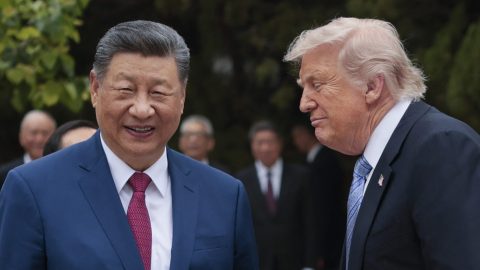
Jaw defended the opposition’s cuts. “If tomorrow Xi Jinping (習近平) persuades Trump not to sell Taiwan weapons … the responsibility is not ours. It’s America, it’s Trump.”
Diplomatically, Lai’s team has achieved high international visibility, including a secret trip to Eswatini, Taiwan’s last African ally, and Vice President Hsiao Bi-khim’s (蕭美琴) speech at the Inter-Parliamentary Alliance on China, or IPAC, in Europe.
Lee, the former deputy foreign minister, called Lai’s ability to maintain all 12 formal diplomatic allies a “remarkable achievement given the constraints.”
However, the return of Donald Trump to the White House has introduced new anxiety, especially following Trump’s trip to China last week. After leaving China on Air Force One last week, Trump called arms sales to Taiwan a “very good negotiating chip” in trade negotiations with Beijing.
During his midterm speech on Wednesday, Lai said he would tell his American counterpart that peace and stability in the Taiwan Strait are essential for global security and prosperity. “My administration maintains the status quo with dignity and without provocation.”
On the same day, Trump raised the prospect of speaking to Lai before making a decision on whether he will sign off on a major Congress-approved $14 billion arms package to Taiwan.
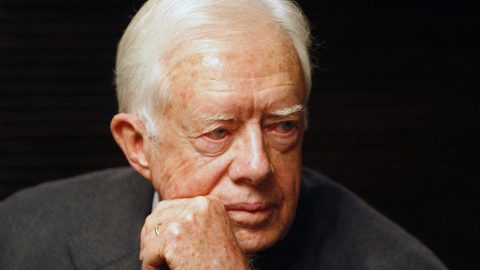
The last time an incumbent U.S. president spoke to a Taiwanese president was in 1979, when Jimmy Carter informed Chiang Ching-kuo (蔣經國) that Washington was shifting diplomatic recognition to Beijing.


Leave a Reply