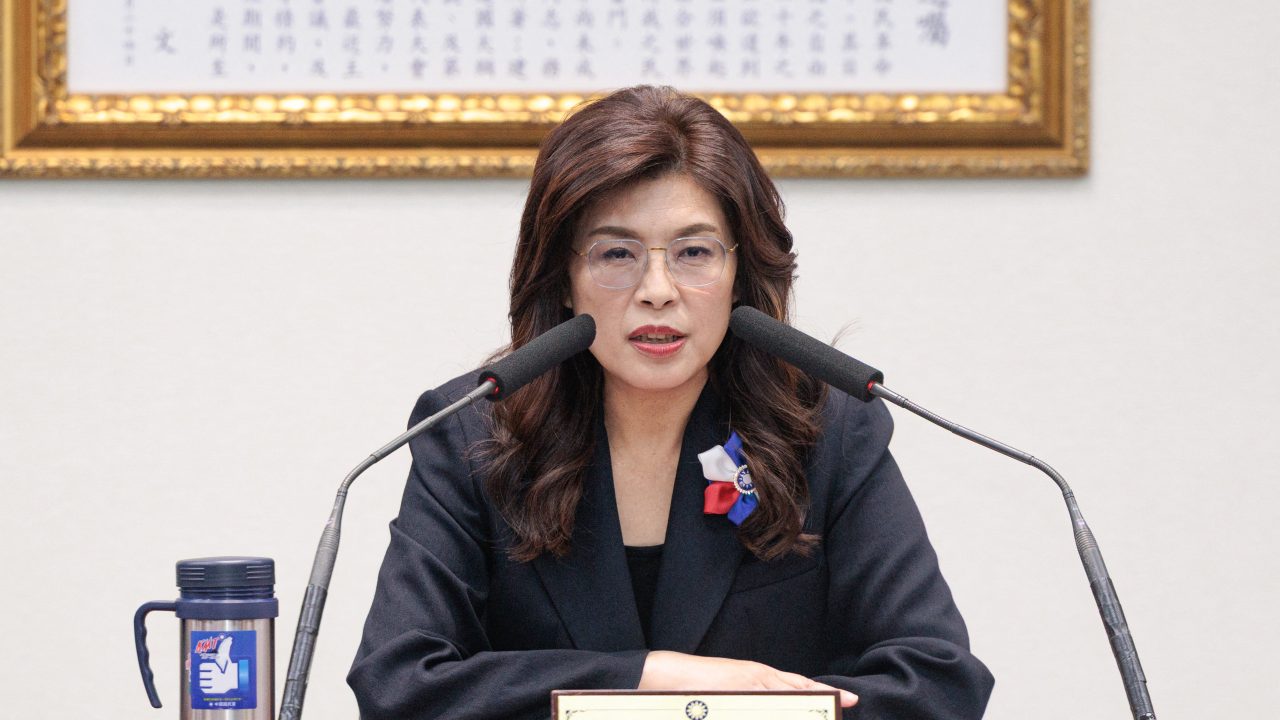
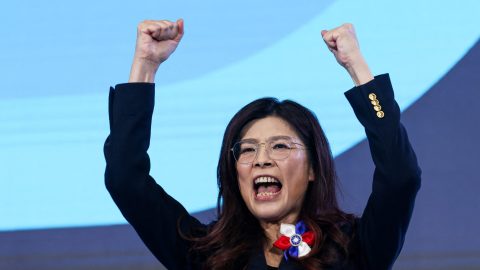
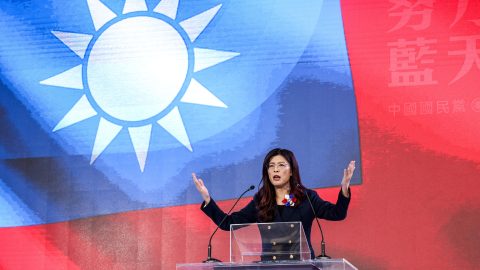
There is no reason why ethnic Chinese can’t have as much influence in the U.S. as Jewish people, Cheng Li-wun (鄭麗文), chairwoman of the Chinese Nationalist Party (KMT), told a packed room in New York on Sunday.
Cheng’s remarks were delivered during the second week of her trip to the U.S., at a banquet in Flushing organized by the KMT’s Overseas Department. Taiwanese cable network CTI TV reported that more than 700 people attended the event.
“If Jewish friends can have this much critical influence, there’s no reason why the wisdom, diligence and morals of we Huaren (華人 or ethnic Chinese) would be lesser than theirs,” Cheng said, in an excerpt featured in TaiwanPlus’s report on the event.
“It is important to bear in mind that Taiwan has always viewed the Jewish lobby and AIPAC as something that Taiwan should have in terms of outreach and influence,” said Mor Sobol, a professor of international affairs at Tamkang University in Taipei, whose research area includes Taiwan-Israel ties. He said this was not a blue or green issue, meaning that both Chinese- and Taiwanese-identity parties hold the same view. He added that the comparison won’t negatively affect people’s views towards the KMT in the U.S., nor will it hurt the Jewish community in Taiwan.
This isn’t the first time that Cheng has shown a certain bluntness in her political rhetoric. In November, she caused a stir when she said that Russia’s president, Vladimir Putin, was not a dictator. At the time, Chen Ping-Kuei (陳秉逵), from the Department of Diplomacy at National Chengchi University, suggested that Cheng was receiving narratives from Taiwanese sources that are close to China.
A report this year by the Jewish People’s Policy Institute identified that rising antisemitism in China is strongly linked to historic philosemitism, where tropes about Jewish influence and money were seen as positives rather than the reverse.
“KMT Party Chair Cheng Li-wun casually dropping the [antisemitic] trope of Jewish control of the United States government during her speech in the US,” Lev Nachman, a professor at National Taiwan University whose work includes political attitudes and public opinion, wrote on X.
Putting aside questions about Cheng’s willingness to talk admiringly about Jewish influence in Washington, there are other implications of what she said. Why does she think that increasing the influence of the Chinese diaspora in the U.S. would be a good thing for Taiwan?
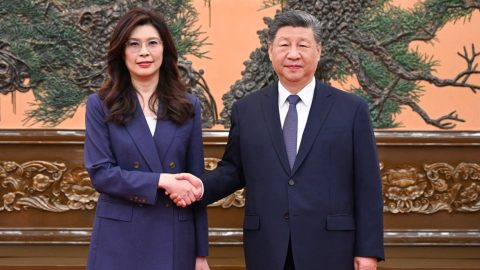
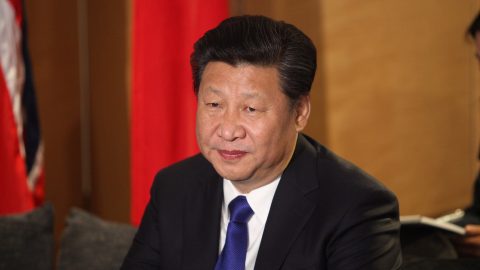
Cheng sees both Taiwanese and Chinese as part of the same diaspora. When she met Chinese President Xi Jinping (習近平) in April, Cheng said that people on both sides of the strait are one family. That’s a popular belief in China; somewhat less so in Taiwan. It’s an intellectually coherent position for Cheng if she is a Chinese nationalist. The question is whether it makes sense for someone who is increasingly seen as a potential presidential candidate in Taiwan in 2028.
Genuine Chinese influence wasn’t far from Cheng’s speech on Sunday. In fact, it was in the audience. One of the attendees was Chiao Sheng-an (焦聖安), president of the New York Association for the Promotion of Peaceful Reunification of China, a United Front Chinese influence organization. The KMT told the Liberty Times that only “Taiwanese compatriots and overseas Chinese communities” could register and purchase banquet tickets. Chiao was apparently an invitee of Taiwanese compatriots.
At a banquet in Boston earlier in the trip, Cheng appeared in a photograph with Gary Yu (俞國梁), another Chinese-American who is reportedly a United Front member. Yu supported Boston Mayor Michelle Wu’s (吳弭) election campaign in 2021, raising over $300,000. Wu, who is Taiwanese-American, didn’t meet with Cheng during her visit to Boston, but did find time in March to meet with Lu Shiow-yen (盧秀燕), the mayor of Taichung and a frontrunner for the KMT’s 2028 presidential nomination.
Both Lu and Cheng have described the other as a “sister.” Cheng has tried to rebrand the KMT as the “Kind Mindfulness Team.” It will be interesting to see how long the familial atmosphere persists when the party has to choose who gives them the best chance of avoiding a fourth consecutive presidential loss in 18 months’ time.

Taiwan is Taiwan, Taiwanese people have positive influence in the US, we call it Formosan Association for Public Affairs (FAPA). Taiwanese people is not Chinese and does not represent so-called Chinese in the US.