Cheng in China
Cheng Li-wun (鄭麗文), the chairwoman of the Chinese Nationalist Party, or KMT, made a much-anticipated trip to China to meet with Chinese President Xi Jinping (習近平) in April. The meeting with Xi on April 10 was the first time in a decade that a sitting KMT chair had met with the Chinese president.
Cheng’s trip didn’t deliver many deliverables, but that wasn’t really the point. Her main objective was to start to convince the Taiwanese people that her shift towards a significantly more pro-China position than her predecessor Eric Chu (朱立倫) is viable.
Taiwan has local elections in November that are usually considered as the equivalent of midterms. The KMT tends to perform better at the local level, and the Democratic Progressive Party, or DPP, is now incumbent in the presidency for an unprecedented third term. If Cheng’s party doesn’t do well, it could spell trouble for her chairmanship and would very likely scupper her poorly veiled ambitions to stand as the presidential candidate for 2028.
The trip appears to have paid off. Public opinion of Cheng has risen, although she is still distrusted by over half of poll respondents.
Lai in Eswatini
Taiwan’s president, Lai Ching-te (賴清德), canceled a planned trip to Eswatini at the very last minute on April 21, after what his office described as “Chinese pressure” on Indian Ocean states that Lai’s plane had intended to fly over.
Taiwan said Mauritius, Seychelles and Madagascar all withdrew overflight permission. Mauritian media subsequently reported Mauritius had never granted it. The presidential office said the to safety considerations caused the cancellation.
Key questions about the episode remain. Mauritius and Seychelles in particular had no legal basis to deny overflight through their wider Flight Recognition Regions that surround their territory. Taiwan’s Presidential Office had previously declined to answer questions about what the risks were.
However, in a briefing for foreign media in Taipei last week, Foreign Minister Lin Chia-lung (林佳龍) said the decision by the three countries was a “violation of ICAO regulations,” referring to the International Civil Aviation Organization. He then explained: “If an aircraft needs to make an emergency landing in that region, it relies on the services of the country responsible for that region.” The significance of this remark shouldn’t be overstated, but it is some indication of the thinking about presidential security in the president’s team.
Lai subsequently travelled unannounced to Eswatini on May 2 in a Swati government plane that had previously carried Eswatini’s deputy prime minister to Taipei. The wider implications of this incident on Lai’s ability to travel abroad have not yet been well explained or understood.
Eswatini is the only remaining diplomatic ally of Taiwan in Africa and also an absolute monarchy. Taiwan’s foreign ministry criticized media coverage of the relationship with the authoritarian state after The Diplomat published an article detailing problems and abuse in Taiwanese organizations operating in the country.
In May, the organizers canceled a human rights conference in Lusaka, Zambia at short notice, saying it was due to Chinese pressure over Taiwanese attendees. On June 17, Taiwan’s government said Taiwanese delegates at an ocean conference in Mombasa, Kenya were being denied entry to the country.
The Kenyan government subsequently clarified that no Taiwanese passport holders will be allowed entry to the country — a dramatic exaltation from not allowing Taiwanese officials to participate in a conference. In the China-Global South Project’s weekly podcast, analyst Geraud Neema Byamungu said: “From now on and forward we should be expecting African countries to bar Taiwan’s delegation into a major event that’s happening on the continent.”
Han in Europe
Han Kuo-yu (韓國瑜), the speaker of the Legislative Yuan, led a tripartisan delegation of legislators to France and the U.K. in May. The delegation met with vice presidents of the French senate and with the speaker of the U.K.’s House of Commons.
Han is enjoying something of a late career renaissance. As KMT mayor of Kaohsiung in the south of Taiwan, a city which typically does not favor his party, he chose to run for president in 2020. This backfired spectacularly as he lost the election and was subsequently recalled as mayor.
But as speaker in a hyper-partisan environment, he has managed to carve out a moderate position. He has served as convenor for negotiations between the parties, albeit to questionable effect. He has also been very active in the parliamentary diplomacy that is so important to Taiwan, whose cabinet officials often cannot meet with their counterparts in countries that recognize China.
There are rumors that Han is thinking about another run at the presidency. Both he and Cheng, the KMT’s chairwoman, made major trips to the U.S. in June (to be covered in the next Power Rankings).
Parliamentarians in Taiwan
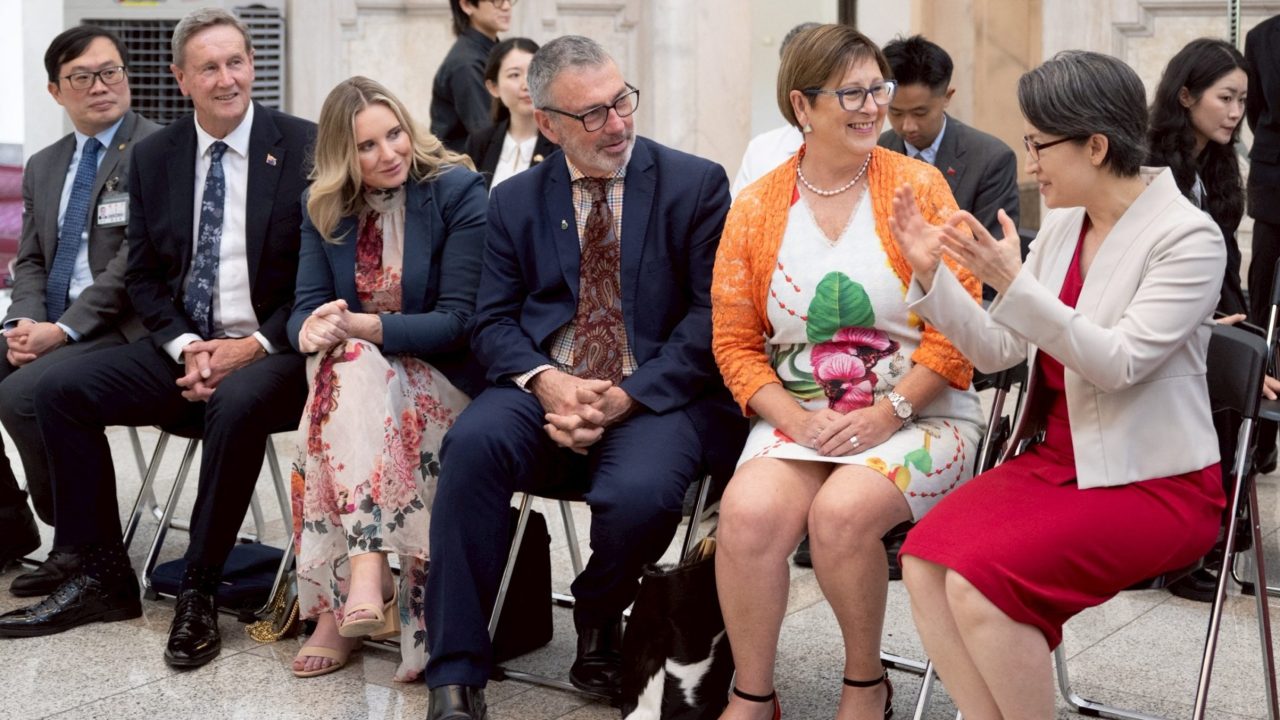
In April and May, Taiwan saw delegations visit from the legislatures of many countries that don’t recognize Taipei. These included the U.S., Canada, Australia, Israel, France, Germany, Ireland and Latvia, as well as the European Parliament.
Of particular note was a delegation from New Zealand. After four parliamentarians visited Taiwan in May, Beijing announced that they were banned from entering China for one year. It is highly unusual for China to sanction foreign parliamentarians solely for visiting Taiwan.
The Chinese Embassy in New Zealand said the travel restriction could be reduced or lifted if the parliamentarians apologized, according to Radio New Zealand. New Zealand’s foreign minister, Winston Peters, instructed foreign ministry officials to discuss the matter with Chinese authorities to “better understand” the departure from past practice, according to reporting from the BBC.
Words of courage indeed.




Leave a Reply