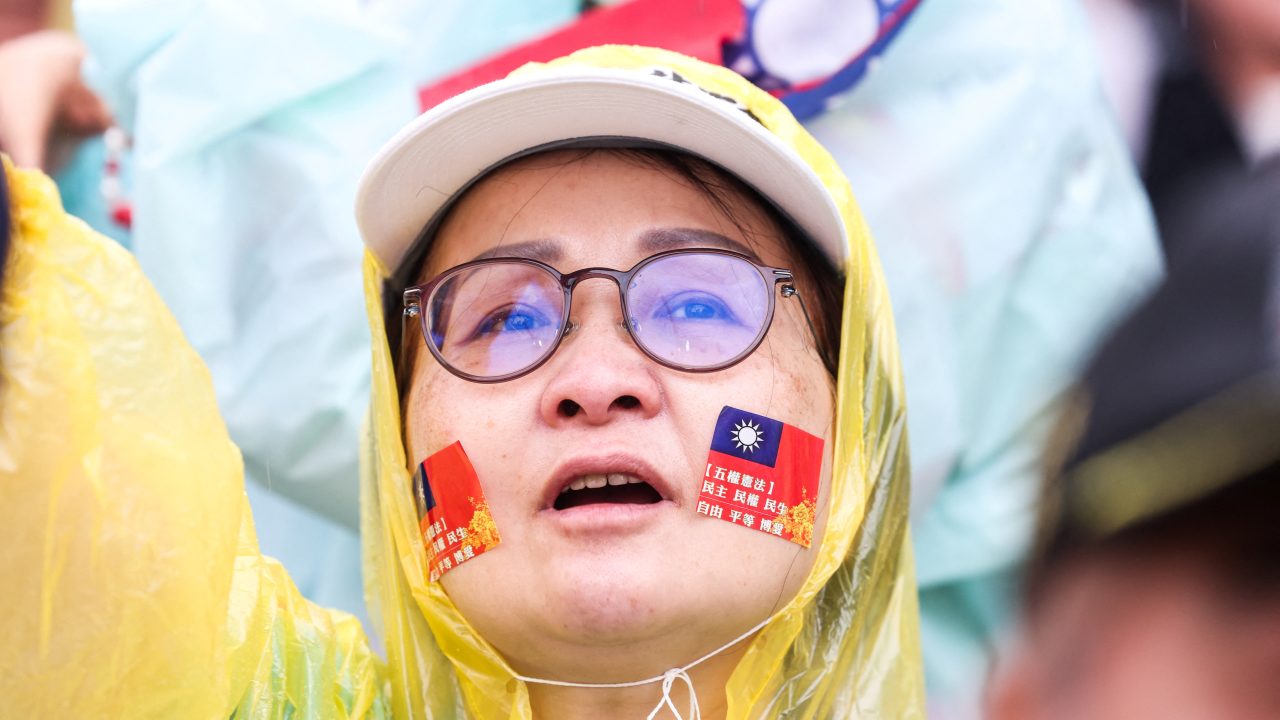
Under Taiwanese law, calling someone “retarded” (智障) in public can cost you 50,000 New Taiwan dollars (around $1,600). The penalty for saying they “have it coming” (the Chinese phrase is more colorful) is twice that. The costliest insult: insinuating that two people have an inappropriate sexual relationship (特殊性關係), which carries a fine of 1 million NTD.
Legal restrictions on public insult have long been an amusing artifact of the East Asian aversion to public humiliation, or “losing face.” (Similar laws exist in Japan and Korea). But under the leadership of President Lai Ching-te (賴清德), Taiwan’s ruling Democratic Progressive Party (DPP) is pursuing a more expansive regime of restrictions on public speech.
Last month, the DPP proposed a series of amendments to Taiwan’s National Security Act, including one that would require internet platforms to remove what the government deems “false or misleading information that endangers national security, social order, fiscal stability, or economic stability.” The proposed changes would also introduce a maximum fine of 1 million NTD for publicly advocating the forceful unification of China and Taiwan.
An additional group of draft amendments to the Social Order Maintenance Act would introduce new penalties for disseminating hate speech in public spaces, through “flags, banners, slogans, or other related items.”
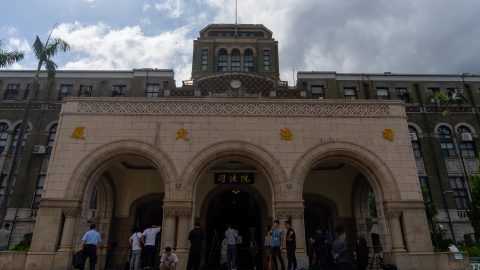
The DPP’s efforts to expand restrictions on speech come amid an extended period of political deadlock in Taiwan. The legislature, led by the opposition Chinese Nationalist Party (KMT), has refused for more than a year to approve President Lai’s nominations for the Constitutional Court. The DPP-led executive branch retaliated recently by refusing to promulgate a fiscal spending package passed via veto-override by the legislature.
The legislature has repeatedly shot down the Lai administration’s top priority, a $40 billion special defense budget that could do much to calm the nerves of U.S. and European officials skeptical of Taiwan’s commitment to defending itself.
The DPP says that by implementing restrictions on hate speech and pro-war advocacy, Taiwan would be acting in accordance with the International Covenant on Civil and Political Rights, which Taiwan codified in 2009. Article 20 of the covenant says that “any propaganda for war” and “any advocacy of national, racial or religious hatred that constitutes incitement to discrimination, hostility or violence shall be prohibited by law.”
A group of international human rights experts invited by the previous DPP administration in 2022 to carry out a U.N.-style review of the country’s compliance with human standards called on Taiwan to implement provisions punishing hate speech. Until recently, the government had been hesitant to comply, weary of the enduring wounds of Taiwan’s martial law past, when the KMT executed dissidents for publicly opposing the regime, despite explicit speech protections in the regime’s own constitution.
In a statement earlier this month, a spokesperson from the KMT said that the Lai administration’s proposals raise “serious concerns” about freedom of speech in Taiwan. “Such vague and expansive definitions risk granting the executive branch excessive discretionary power over online expression,” the spokesperson said.
Clarence Chou (周宇修), a Taiwanese lawyer and free speech expert known for defending activists in civil protest movements, said that the DPP appears to be compensating for lack of clarity in the wording of the amendments by adding extra layers of procedural oversight. A case involving the advocacy of armed conflict, for instance, would proceed from a joint meeting of the Ministry of Justice and the Mainland Affairs Council to the Ministry of the Interior, which would ultimately impose the fine.
“The biggest issue related to speech is the chilling effect,” Chou said. “It’s not how people are being punished, it’s how the regulation — what we used to call the ‘void of vagueness’ — is written. If the language is too vague, people just won’t speak at all.”
Under the second Trump administration, online content moderation has become a frequent source of diplomatic friction between the U.S. and its European allies, many of whom have taken increasingly aggressive measures to police hate speech. Earlier this month, a Paris court found 10 people guilty of cyberbullying France’s first lady, Brigitte Macron, by spreading false rumors online that she was born male.
Last February, U.S. Vice President JD Vance openly criticized Europe’s approach to freedom of expression in a speech at the Munich Security Conference that shook the foundations of the once rock-solid transatlantic alliance. In the National Security Strategy it released last month, the Trump administration doubled down on that line, calling on Europe to restore its “civilizational self-confidence.”
No such rupture has emerged between the U.S. and Taiwan, two countries whose partnership has historically been based more on common security concerns and the tech supply chain than any sense of shared cultural heritage. Last week, as the Trump administration escalated threats against the E.U. over its refusal to sell Greenland, Taiwan announced a deal that would permanently reduce its tariff rate to 15% in exchange for increased commitments to build TSMC chip fabs in the U.S.
The DPP, for its part, says concerns over government censorship are “exaggerated.” Cho Jung-tai (卓榮泰), Taiwan’s premier and Lai’s second-in-command, has argued that the new measures are necessary to combat China’s increasingly belligerent behavior toward Taiwan. Earlier this month, Taiwan’s National Security Bureau released a pair of reports that described a substantial recent increase in China’s cyber and cognitive warfare operations toward Taiwan.
In December, Taiwan’s interior ministry imposed a one-year ban on Xiaohongshu, a popular social media platform often described as China’s answer to Instagram. Xiaohongshu’s removal has prompted backlash in Taiwan, mostly from young internet users who treated the app as a source of news and information.
During debates over the fate of TikTok, which culminated in its sale to an American ownership group late last year, U.S. officials suspicious of the app explicitly cited national security concerns stemming from the Chinese Communist Party’s influence over its recommendation algorithm.
The Lai administration has been more circumspect. In its statement announcing the Xiaohongshu ban, the Taiwanese interior ministry pointed to the unchecked proliferation of financial scams on the app, as well as the company’s unwillingness to cooperate with local authorities to combat the issue.
In a recent essay for the constitutional law website Verfassungsblog, Taiwanese legal scholars Yinn-ching Lu (呂胤慶) and Shao-Kai Yang (楊劭楷) pointed out that the volume of fraud on Xiaohongshu pales in comparison with Facebook, where more than 22,000 fraud cases were reported in Taiwan in December alone. (A Reuters investigation last month found that Meta makes $3 billion in revenue each year from scam-related advertising originating in China.)
Acknowledging national security threats from China “does not justify abandoning constitutional principles,” Lu and Kang wrote. “Taking China’s threats seriously is one thing; permitting arbitrary restrictions on speech is quite another.”
When the DPP’s proposed amendments to the National Security Act reached the legislature earlier this month, they immediately garnered fierce criticism from the KMT, which appeared unwilling to let the measures advance to a first reading. On January 7, both parties agreed to host public hearings on the proposed changes by March at the latest.
Chou, the free speech lawyer, said the Taiwanese public has a complicated relationship with freedom of speech. “Everyone wants to speak, so they insist that others let them speak,” he said. “But then when other people start speaking, they don’t want to hear it. That sense of tolerance is something that is relatively lacking in Taiwan.”





Leave a Reply