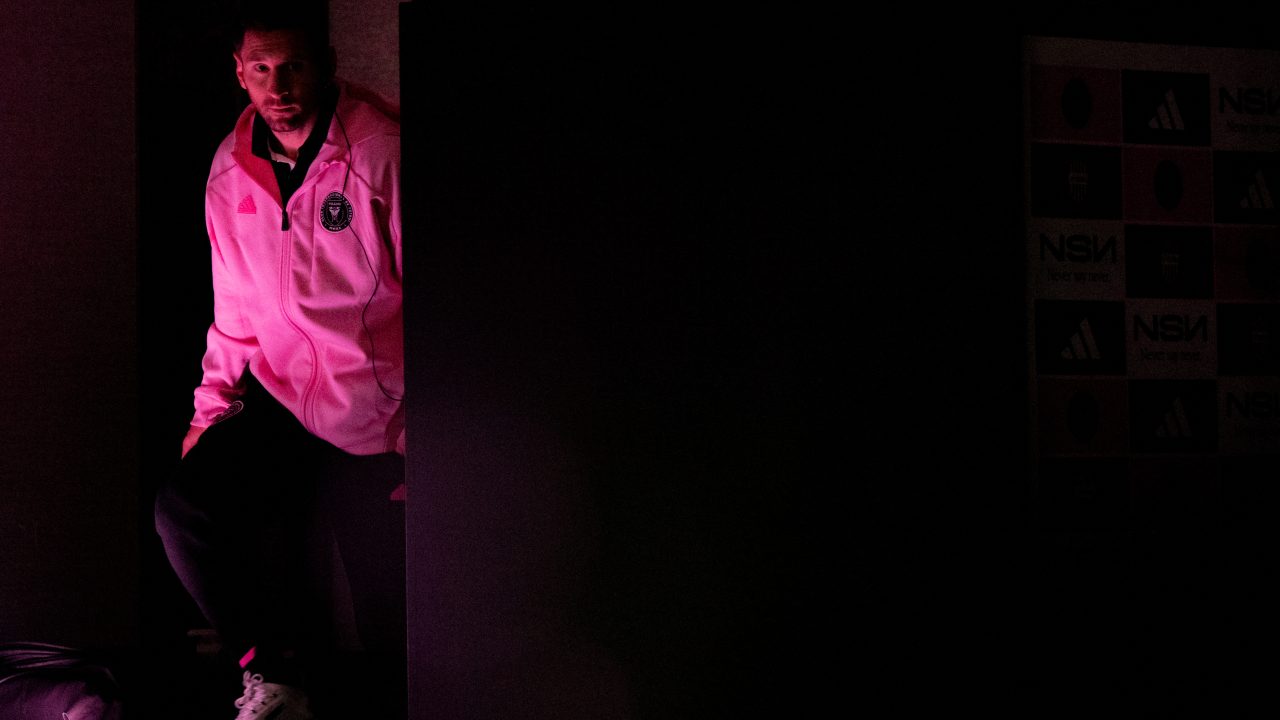
An already strong contender for the most absurd news story of 2024 became one of the outstanding favorites for the title this week when Lionel Messi, the world’s best soccer player, was compelled to issue an explanatory video on Chinese social media platform Weibo, telling “mainland Chinese and Hong Kong” fans why injury meant he had not played in a friendly match in Hong Kong two weeks ago.
With the dead-eyed delivery and dim lighting making for the unmistakable texture of a hostage video, the question it now raises is this: What if … Hong Kong’s government didn’t concern itself with Lionel Messi’s inflamed adductor?
The issue kicked off originally on February 4. Messi sat out a friendly game that his appallingly named franchise, Inter Miami, played against the equally prestigious “Hong Kong XI,” and in his hostage video, Messi explained this was because of an inflamed abductor that had been a problem a few days earlier, on another romantic sporting adventure in Saudi Arabia. Reasonably enough, many local soccer fans — some of whom had paid high ticket prices to see the game — were disappointed, and all the more so when Messi went on to play a game in Tokyo a few days later. But then Hong Kong’s government got involved and decided to treat the whole thing like a cross between a declaration of war and an elephant escaping from a zoo.
Video uploaded to Lionel Messi’s Weibo account.
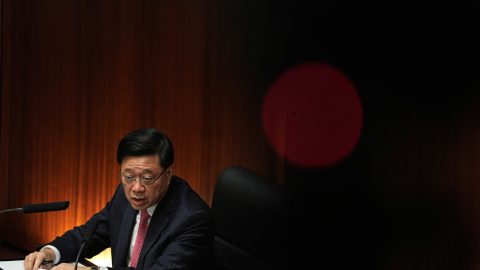
Hong Kong’s Chief Executive John Lee reckoned the performance of the friendly organizer impacted “Hong Kong’s image and reputation.” Hong Kong’s official government statement declared that the organizer of the friendly “owe[d] all football fans an explanation,” and that it would reduce the amount of public funding allocated toward the game as a result of Messi not playing. Two Chinese cities canceled planned friendlies that involved Messi’s national team. And some fun side characters weighed in, too. Hong Kong lawmaker Kenneth Fok opined that Messi’s appearance in Tokyo “sprinkled salt” on the wounds of Hong Kong fans, while senior government adviser Regina Ip whipped out her poetic license with this all-time classic post on X: “Hong Kong people hate Messi, Inter Miami and the black hand behind them, for the deliberate and calculated snub to Hong Kong.”
Coming from annoyed fans, this kind of sentiment would be understandable — check social media in any place and you’ll find emotional outbursts that are both rational and not. Coming from government officials and institutions, such expressions of entitlement are bizarre. Messi is an almost ridiculously a-political figure, who almost never expresses an opinion about anything in public. To read any kind of “calculation” into him missing a game requires either ignorance or cynicism — and probably both.
Various explanations have been given for why Hong Kong’s government officials might have chimed in on what otherwise would have been a normal burst of fan outrage. The Hong Kong Free Press, for example, has suggested it is diverting attention away from a repressive new law currently being authored against Hong Kong citizens. But an alternative might be that Messi’s injury jarred with the Chinese government’s vision for Hong Kong as a hermetically sealed economic zone free from the messy implications of democratic decision making. Messi’s human frailty essentially acted as an accidental challenge to that fantasy of a perfectly smooth economic operation and as that is the only basis of the government’s legitimacy, it proved unacceptable.
Regardless of the exact logic, the obvious lesson here for authoritarian regimes is that sport isn’t quite the ideal vehicle for artifice building that other purer forms of entertainment are. Pop artists sing the same songs every night. TV shows and films are recorded. Soccer stars are more likely to have their bodies break down erratically and that isn’t going to change, however much disingenuous squeaking goes on about it. Forcing famously introverted sportspeople into hostage videos makes everyone involved look like deranged kidnappers.

Leave a Reply