
Every sports fan gets disappointed when their favorite player cannot take to the field. Not everyone, however, flies into such a solipsistic fury that they collapse profits for match organizers, cancel future games involving the player’s team, incite nationwide social media wrath against him and accuse him of colluding with unspecified “external forces” to politically sabotage the state.
Yet this is precisely how China reacted to the reality that Lionel Messi, the soccer player who has been peer-voted as the best in the world a record eight times, would not participate in a friendly game in Hong Kong due to injury. One reading of its antics is unadulterated rage at the collapse of its attempt to beautify Hong Kong’s broken image with a successful mega-event. Another, put forward by Hong Kong Free Press, is that it is subtly diverting local and international attention away from a repressive new law currently being authored against Hong Kong citizens.
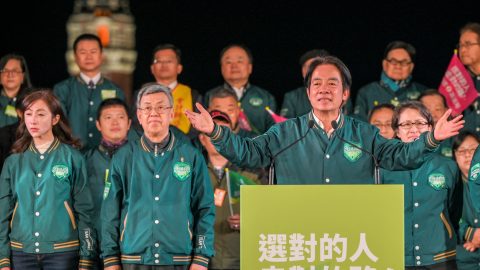
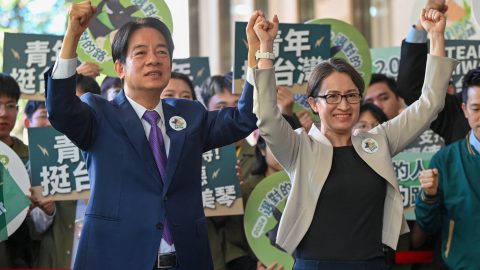
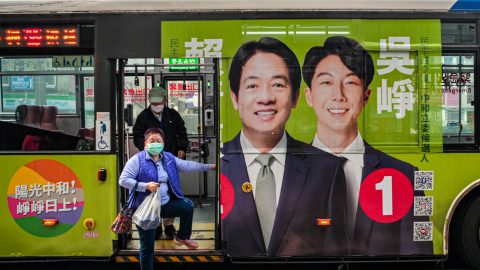
If so, behind the angry facade, China President Xi Jinping may be winking and smiling to his propaganda ops as he busies himself elsewhere with the pleasure of slowly peeling the skin from Taiwan in revenge for it voting in a Democratic Progressive Party (DPP) president last month. The DPP does not favor unification with Beijing and will pull out the stops to avoid it.

Despite relative quietness on the Anger-ometer scale, perhaps because of bright spots like the choice of China-friendly Han Kuo-yu (韓國瑜) for the speaker role in Taiwan’s legislative house, Xi’s regime and its media have nonetheless repeated pre-election threats to tear up the 2010 Economic Cooperation Framework Agreement between Beijing and Taipei and vowed to continue swarming Taiwan with warships and fighter planes. Adverts have popped up in a major Mandarin-language U.S. newspaper reminding the Chinese diaspora to “resolutely oppose” Taiwan independence, letting it know what is expected of it during the DPP’s presidential tenure, too.
Xi has also spat venom by stepping up attempts to isolate the DPP on the international stage. In exchange for a rumored $100 million per year, the Pacific microstate of Nauru ceased recognition of Taiwan as a country, switching ties to Beijing almost as soon as the DPP had been returned to power. Geographical counterpart Tuvalu shows signs of flipping as well, after its pro-Taipei prime minister, Kausea Natano, was voted from office in late January. Guatemala remains on Taiwan’s side but has ominously announced a desire for deeper trade relations with China. And Eswatini has been pettily punished by Beijing for its Taipei ties via the withdrawal of visa-free travel for its citizens to Hong Kong, starting from January 30. It can anticipate nastier measures to ensue.
Plucking off Taiwan’s allies as if they were wings from a bug is one of Xi’s methods to realize a world in which nobody contests his right to rule the Taiwanese people. He could then frame any future invasion or other subjugation of the country as an “internal matter” and deflect calls to international action as “sovereign interference.” But diplomatic maneuvering needs corresponding economic and military strategies.
Electronic chips are essential to both, and, here, Beijing cannot be happy with what it sees. While there is word that its companies will soon advance to production of 5-nanometer processors, yields are low, costs are high, access to the most cutting-edge manufacturing technology is limited, and rival industry leaders in Taiwan and Japan are aiming to go beyond the 2-nanometer boundary.
Moreover, the ecosystem for high-end chip technology is deepening its insulation from China with announcements like the construction of a second Taiwan Semiconductor Manufacturing Company plant in Kumamoto, Japan and the expansion of chip substrate-makers such as Austria’s AT&S and Taiwan’s Kinsus into Malaysia. Vietnam is also dangling incentives for foreign firms to set up there.
Companies in other industries such as automotive giant Tesla and notebook computer manufacturer Compal are diversifying their supply chains away from China, too, and the reported discovery of 2.34 billion metric tons of rare earths in Wyoming may eventually erode the Middle Kingdom’s stranglehold over raw materials for high-tech industries, one of its strongest geopolitical cards. Meanwhile, China-linked firms are facing limits on their U.S. growth potential due to investor misgivings, particularly in the current geopolitical context.
Taken together, these factors can only be worsening already inauspicious salary and employment prospects for Chinese citizens and have contributed to a halving of the current global stock market cap held by their country’s companies. Conversely, the U.S.’s share has surged to nearly 50%, according to Nikkei. Xi will be riled, because, firstly, his dependence on the U.S. is undeniable; secondly, many of these problems result from his own draconian laws and endless crackdowns; and, thirdly, America’s restrictions on sensitive exports and venture capital to China appear to be gathering steam.
He is reacting by amplifying state presence in the stock market and the solid-state battery market for EVs, lurching China ever more completely into a command economy, a move that will end in future outbursts of rage when inefficiency, corruption and the limits of a one-man vision are exposed. The dismal state of Chinese soccer and its rocket force, both of which are enduring truth-and-justice purges as we speak, offer crystal balls for what to expect.
The crisis is deepening as well. Following Ottawa’s announcement that 86 Chinese entities will no longer be eligible for Canadian research grants due to their connections to the People’s Liberation Army, Washington added 17 more Chinese firms, including a chipmaker, to its own blacklist in late January.
The latter group cannot now enter contracts with the U.S. Defense Department and have a large asterisk against their name for any would-be investors or business partners, who will fear stronger restrictions later down the road. For the first time, the blacklisted 17 include a private equity firm, IDG Capital, among their number, which suggests that Beijing’s efforts at civil-military fusion are simply going to draw more companies into the firing line for sanctions and other business limitations. For reasons listed previously, China’s reaction that such steps will “come back to bite” America are losing potency.
Economic grappling has a military counterpart, which unfailingly annoys Beijing, especially when it involves a bolstering of Taiwan’s defense capacity. Irritated by multi-domain exercises in Europe from NATO, it will very dimly view Taipei’s ongoing acquisition of machine guns, stinger missiles and all-weather glide bombs to kit out jet fighters, which were reported this month by Taipei Times. A pact between Germany and Japan to streamline logistical and supply exchanges between their respective armed forces will not serve to lighten its mood. The public revelation of China’s so far failed attempts to construct a naval base in West Africa must smart, too.
Cyber-wise, Xi Jinping has endured the indignity of his Volt Typhoon network being dismantled piece by piece. Volt Typhoon is the name given to the discrete, coordinated, digital infiltration of critical civilian and military infrastructure like aviation, mass transit, port and pipeline systems in target countries by China-backed hackers, who, according to U.S. authorities, have been laying the groundwork for sabotage, not espionage.
Reacting to the news that its botnet had been terminated, on Feb. 1, 2024, China’s Ministry of Foreign Affairs indignantly railed against “groundless accusations” and “a complete distortion of facts,” while describing the U.S. as “the origin and the biggest perpetrator of cyberattacks.” Then, however, Japan, the Netherlands and the Philippines publicly revealed that they, too, have been victims of digital spying and aggression that likely sources to Beijing.
Together with its order to post more troops near Taiwan on the Batanes Islands, Manila’s revelations are especially irksome to China, which, since the turn of the year, has been looking to project an image of friendliness and neighborliness towards the Philippines, while still pushing exorbitant maritime claims against the country in the West Pacific through the continued intimidation of Filipino vessels in their own exclusive economic zone.
Given that the Philippines and Vietnam in late January agreed to coast guard cooperation for the prevention of incidents in disputed waters, Beijing will be additionally seething. As explained by Al Jazeera, the two countries are putting aside their own disagreements in order to unify against Chinese expansionism.
To make matters worse, even the Lao foreign minister, Saleumxay Kommasith, added weight to the Filipino-Vietnamese position during his country’s hosting of an Association of Southeast Asian Nations retreat in Luang Prabang. Saleumxay emphasized that all parties must respect the United Nations’ Convention on the Law of the Sea, a treaty whose interpretation has not favored Beijing in the past. Laos is chairing ASEAN this year and could have been expected to favor China, so Saleumxay’s comments will be a disappointment.
The rest of the world produced still more tests to Xi Jinping’s patience: U.K. police has established a new unit to counter electoral manipulation from China, Russia and Iran, forcing his English-language propaganda outlet, Global Times, to platform accusations that the country is shifting “blame for its domestic underdevelopment issues.” Poland has extradited a suspected fraud to Taiwan, marking the latter’s first ever successful such repatriation and undermining China’s aforementioned attempts to deny it diplomatic relations and functional statehood. The French financial prosecution service has raided Huawei. Footage, explained and apparently verified by The Wire, has emerged suggesting a clash between Tibetan herders and People’s Liberation Army soldiers in Ladakh, India. Singapore has pointedly informed Hong Kong-born businessperson Philip Chan Man Ping (陳文平) that he will be designated as a “politically significant person” under its foreign interference laws due to his “susceptibility to be influenced by foreign actors,” i.e. the Chinese Communist Party. And China was again excluded from the European Union’s Indo-Pacific Forum, at which security cooperation and developments to rival the Belt and Road Initiative were set for discussion.
Beijing has responded to the mixture of strategic, political and diplomatic setbacks by describing itself variously as attacked, mischaracterized and a victim of “the ‘Smear China’ franchise,” aka the Five Eyes. Its Year of the Dragon pledge “to deepen friendly cooperation and exchanges with all countries” will therefore need a little extra work yet.
BEIJING ANGER-OMETER: 70/100 Forcing a smile with a troubled mind (强顏歡笑)




Leave a Reply