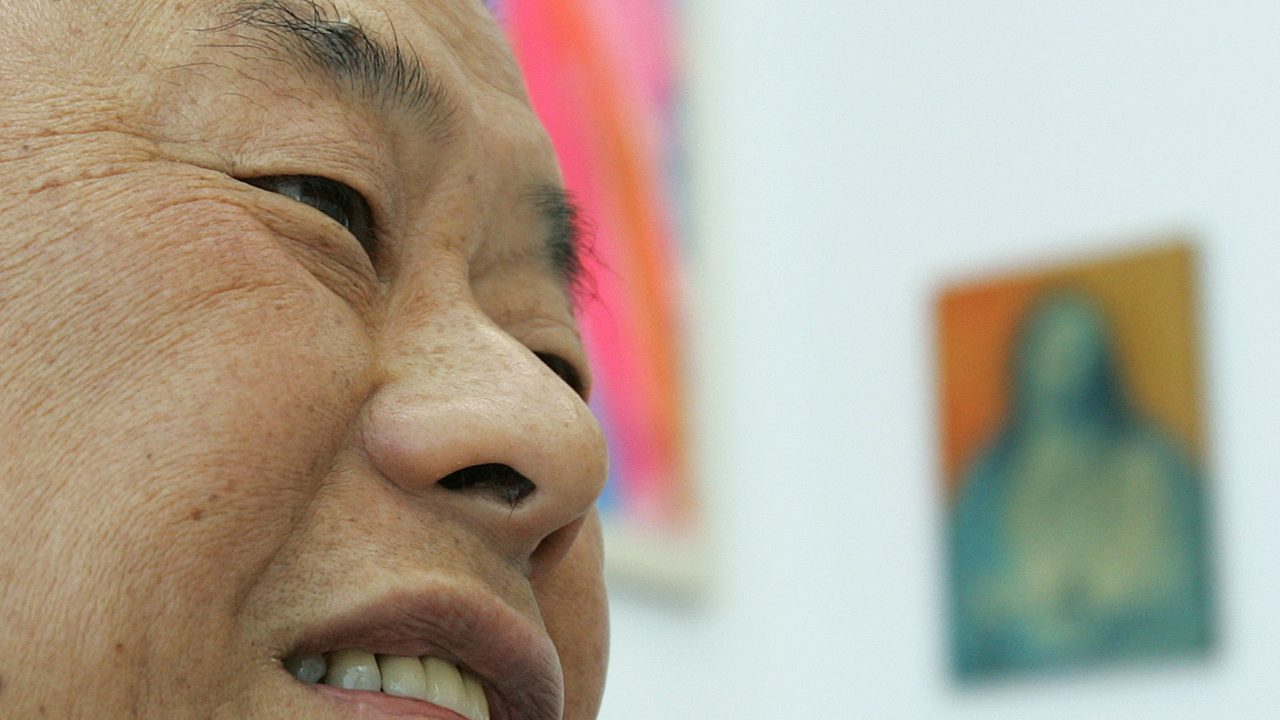
I usually order dozens of pomelos from Nanfang Orchard in Tainan for my close friends and family. One year, I ordered a box for Jimmy Lai (黎智英); he was shocked by how delicious they were. Jimmy said those were the best fruits he had ever tasted and immediately placed a large order with Chen Chun-nan (陳俊南), the orchard’s owner.
Apart from gifting the fruits to his colleagues at Next Digital, Jimmy even shipped a container of them to Hong Kong. He later told me that his colleagues there also found the fruit delicious.
Jimmy Lai introduced paparazzi culture, the tabloid-style “Next Magazine,” and the “Apple Daily” newspaper to Taiwan, sending shockwaves through Taiwan’s tradition of intellectual-led journalism. Scholars accused him of abandoning the standards of news integrity.
To those who do not know Jimmy Lai, he is little more than a source of gossip — some are eager to debate his morals. But the Jimmy I know is more like a chivalrous hero from a martial arts novel. Jimmy loves good food, but he never eats alone, as he cherishes friendship and loyalty. When it comes to big questions of right and wrong, he embodies the spirit of Mencius (孟子) defined as a “true man”: one who “cannot be bent by force or intimidation.”
Apple Daily’s Taiwan edition was launched on May 2, 2003. Before the paper even began publishing, Jimmy invited me to write op-eds for them, with a new piece to run every single day that year. Even before I had written my first article, he had already sent me a check to cover the fee for the entire year.
During the martial law era in Taiwan under President Chiang Ching-kuo (蔣經國), I was elected as a Taipei city councillor and later a legislator; I never shied away from political taboos. As long as an issue was in the public interest, I was never afraid to challenge those in power. From the era of martial law, through its lifting, and throughout my career in politics, public office, hosting TV programs, and writing commentaries, my principle has remained the same: speak plainly, say what must be said, and do what must be done.
Because I frequently criticized President Chen Shui-bian (陳水扁), there was a day when Chen sent Chiang Chun-nan (江春男), then deputy secretary-general of the National Security Council, together with Ma Yung-cheng (馬永成), the presidential aide who had long accompanied him, to meet Jimmy Lai and lobby him to stop my “Fax From Jaw Shaw-kong (趙少康傳真)” column. Lai said that after listening to their pitch, he threw them both out.
In 2004, fearing he would lose his re-election bid, Chen pushed two referendums: one on strengthening national defense through procurement of missile defenses, and another on “equal-status negotiations” to build a framework for interaction with the Chinese Communist Party. He was betting heavily on the ruling Democratic Progressive Party, or the DPP’s strongest card — confronting mainland China in the name of Taiwan — to boost his election prospects. I launched a campaign calling on people to boycott the referendums by refusing to collect their ballots. Jimmy Lai took the initiative to sponsor hundreds of thousands of stickers, at a cost of several million Hong Kong dollars, bearing the slogan “Refuse to Take the Referendum Ballot.” The media gave extensive coverage to the sight of famed actress Brigitte Lin (林青霞) — the perennial “queen of pure beauty” — and her father voting while wearing those stickers.
In 2008, before Ma Ying-jeou (馬英九) had even been inaugurated following his presidential victory, Jimmy Lai asked me to arrange a dinner with him at my home in Taipei. Lai spoke sincerely to Ma about the importance of cross-strait communication and peace, and supported Ma’s decision to launch direct cross-strait flights.
Jimmy Lai made it clear on many occasions that he did not approve of the DPP’s cross-strait policy. In 2015, he asked me to invite Eric Chu (朱立倫) and his wife to dinner at his home on Yangmingshan. By then, the DPP had already settled on Tsai Ing-wen (蔡英文) as their presidential candidate. Lai strongly encouraged Chu to run for president on the KMT ticket and said he would fully support him, both morally and materially. But Chu hesitated repeatedly and did not want to run. The nomination went to Hung Hsiu-chu (洪秀柱), which later triggered the complicated “replacing Hung” (換柱爭議) episode. Chu eventually entered the race, but by then the momentum was gone, and he lost.
Jimmy Lai did not support Taiwan independence, nor did he pursue Hong Kong independence. What he stood for was a democratic political system, press freedom, and freedom of speech. In October 2019, when Hong Kong’s anti-extradition movement had reached its peak, Lai came to Taiwan and gave an interview on my online program. We also spoke privately at length about the movement’s future.
I asked Lai whether he had any effective lines of communication with Hong Kong’s young protest groups. He replied, “No, they don’t listen to me.” He said the younger generation felt that the older generation had fought China for democracy and freedom for 30 years without results, so now it was their turn.
Drawing on Taiwan’s own experience of the opposition movement during the martial law era, I have always believed that one essential element in any protest movement is the presence of people trusted by both sides who can move between the opposition and the authorities. Back then, figures such as KMT legislator Liang Su-yung (梁肅戎), who served as an important channel to the opposition camp represented by Kang Ning-hsiang (康寧祥), played that bridging role.
In the push and pull between protest demands and negotiations with the authorities, there was always a process of three steps forward and two steps back. But in the anti-extradition movement, not only was there a lack of horizontal coordination among protest groups, there was also no channel for communication with the Hong Kong government — let alone any trusted messenger who could even begin to bridge the protest camps and the Beijing authorities. I was never optimistic about a confrontationist, showdown-style movement that sought to challenge the central government head-on.
As the movement became increasingly radical, I could not predict that the CCP would later impose the National Security Law, but I did decide that the authorities in Beijing would eventually move to “clean up” the chaos in Hong Kong. Worried about Jimmy Lai’s situation, I urged him to settle in Taiwan and not return to Hong Kong. He then told me this, without hesitation:
“My 105-year-old mother, before she passed away, called me to her bedside and said: ‘Everything you have today was given to you by Hong Kong. You must fight for Hong Kong’s democracy and freedom.’ That was my mother’s last wish. I will not leave Hong Kong!”
September is the time for the Mid-Autumn Festival, and it is also the season for pomelos. The Mid-Autumn Festival is about two months away; when will Jimmy Lai, who has now been imprisoned for more than five years, be able to taste a piece of delicious pomelo once more?
文旦的滋味
這些年,每到採收文旦的時節,我總會想起黎智英。
我每年會訂幾十箱台南麻豆「南芳果園」陳俊南先生栽種的文旦送給親朋好友。有一年,我送了一箱給黎智英,他一嚐「驚為天人」,大讚是他吃過最好的文旦,黎智英立刻向陳俊南下了大訂單,除了分送給台灣壹傳媒集團的同事,還訂了一貨櫃運到香港,他告訴我,香港同仁都覺得好吃極了。
黎智英把狗仔隊、八卦爆料的《壹周刊》、《蘋果日報》引入台灣,重擊「文人辦報」傳統的台灣報業,學院派學者批評黎智英失了新聞道德底線;不認識黎智英的「吃瓜群眾」,好奇、議論黎智英的「倫理」邊界,而我認識的黎智英,像是武俠小說的「綠林好漢」,他愛美食,但不吃「獨食」,好東西要和好朋友分享;珍惜朋友,重情義;面對大是大非,他做到孟子定義「威武不能屈」的「大丈夫」氣節。
台灣《蘋果日報》2003年5月2日創刊,創刋前,黎智英邀我開專欄,一年365天,天天都要寫一篇文章,還沒有開筆寫專文,他就派人送來了一年的稿費支票。我在蔣經國當總統的台灣戒嚴時期、當選台北市議員、立委,我問政不在乎「政治禁忌」,只要對民眾有利的議題,我向來不畏挑戰當政者。從戒嚴到解嚴,問政、為官、主持節目、撰寫評論文章,直言不諱、言所當言、為所當為,是我的理念。因為太常嚴厲批評陳水扁,某一天,陳水扁派了時任國安會副秘書長江春男和常年跟隨陳水扁的總統府機要秘書馬永成拜會黎智英,「關說」他停掉我的「趙少康傳真」專欄。黎智英說,他聽完江春男和馬永成說辭後,就把兩人「轟出去了!」
陳水扁在2004年擔心總統連任失敗,推動軍購「反飛彈裝備」的「強化國防公投」及建立與中共互動架構的「對等談判」兩項公投,強打民進黨最擅長的以台灣意志對抗中國大陸的「抗中牌」,拉抬選情。我發起反公投「拒領公投票」運動,黎智英主動贊助幾十萬張、花費數百萬元的「拒領公投票」貼紙。被譽為「永遠的玉女派掌門人」大明星林青霞和她爸爸貼著「拒領公投票」貼紙投票,被媒體大篇幅報導。
2008年馬英九當選總統尚未就職,黎智英請我安排在台北安和路家中跟馬英九吃晚餐。黎智英誠懇向馬英九表達兩岸溝通及和平的重要性,並支持馬英九兩岸直航的決定。
黎智英多次表達不認同民進黨的兩岸政策。2015年,黎智英請我邀請朱立倫夫婦到他陽明山的家中晚餐。當時,民進黨已確定總統候選人是蔡英文,黎智英大力鼓勵朱立倫代表國民黨參選總統,他願意全力支持,包括精神和物質。可是朱立倫猶豫再三不願參選,提名由洪秀柱出場,後來又導致曲折的「換柱」過程,朱立倫終究披掛上陣,但大勢已去,落選收場。
黎智英不支持「台獨」、也不追求「港獨」,他堅持的是民主自由的政治體制、新聞自由、言論自由。2019年10月,香港「反送中」 運動白熱化,黎智英到台灣,接受我的網路節目專訪,我們私下也對運動走向深入交換意見。
我問黎智英,他和香港年輕一代抗爭運動團體有無有效溝通聯繫?他回我,「沒有,他們不聽我的」。黎智英說,年輕世代認為,你們老一輩跟中國爭民主、爭自由,搞了30年也沒有結果,現在換他們來爭取了。
我以台灣戒嚴時代,黨外爭取民主運動的歷程,分析每場抗爭,有一項關鍵元素不可或缺,就是反對派和執政當局間,需要有得到彼此陣營信賴的人士穿梭溝通。像是當年代表黨外陣營的立委康寧祥,和國民黨立委梁肅戎就是重要的溝通渠道,在抗爭訴求和與當局談判折衝中,進三步、退兩步。可是「反送中」運動,不但抗爭團體間欠缺橫向串連、和香港執政當局沒有溝通管道,更別提和中共中央連能得不同團體信任的「傳話人」都沒有,我不看好和中共中央叫板攤牌、對決式的「反送中」運動。
當這場運動愈來愈走向激進化時,雖然我無法預料中共後來會祭出《香港國安法》,但我研判中共當局必然會出手「收拾」香港的亂局,我擔心黎智英的處境,勸他到台灣定居,不要回香港了,黎智英一秒都沒有猶豫的說:
「我105歲的媽媽臨終前,把我叫到床邊跟我說:『你今天的一切,都是香港給你的,你一定要為香港的民主自由奮鬥』這是我媽媽的臨終遺言,我不會離開香港!」
農曆八月十五日是中秋節,中秋時節是麻豆文旦的產季,今年中秋節又快來臨了,關押獄中已五年多的黎智英,何年何月何日,才能再吃上一口好吃的麻豆文旦柚呢?
Jaw Shaw-kong (趙少康) is a Taiwanese politician, media personality, and broadcaster who has played a prominent role in both politics and television. He is best known for his long career in Taiwanese political circles, his leadership in media, and his recurring involvement with Taiwan’s Chinese Nationalist Party.



Leave a Reply