In the land where the state has to censor the hashtags to its own propaganda to avoid its new year messages of optimism being shot down by the disillusioned multitudes, redder than red media like the People’s Daily are eradicating predictions from the past that promised China would become a high income country by 2024.
The fear is online comments from a population facing unemployment, salary cuts and meager year-end bonuses, which naturally fall victim to censors themselves. That is, however, unless thoughts are left on social media posts by the U.S. embassy in Beijing. Assuming that the Chinese Communist Party would be unlikely to tamper with replies on its fellow superpower’s Weibo content, clever citizens have taken to venting fury about their failing economy there. The bizarre result has been over 160,000 comments to a post about giraffes.
While there are some things that China does not want the world to see, others are clearly designed to maximize publicity. In the latter category comes the suspended death sentence that was handed down to Australian writer and pro-democracy figure Yang Hengjun (楊恆均) by an opaque Chinese court nearly three years after a one-day trial, held in May 2021. Yang was accused of spying, a charge that also fell upon the now-released former Canadian diplomat, Michael Kovrig, who has recently penned an article about his experiences for Politico, explaining why such espionage charges are dubious. Like Kovrig, Yang may be used for leverage over the West.
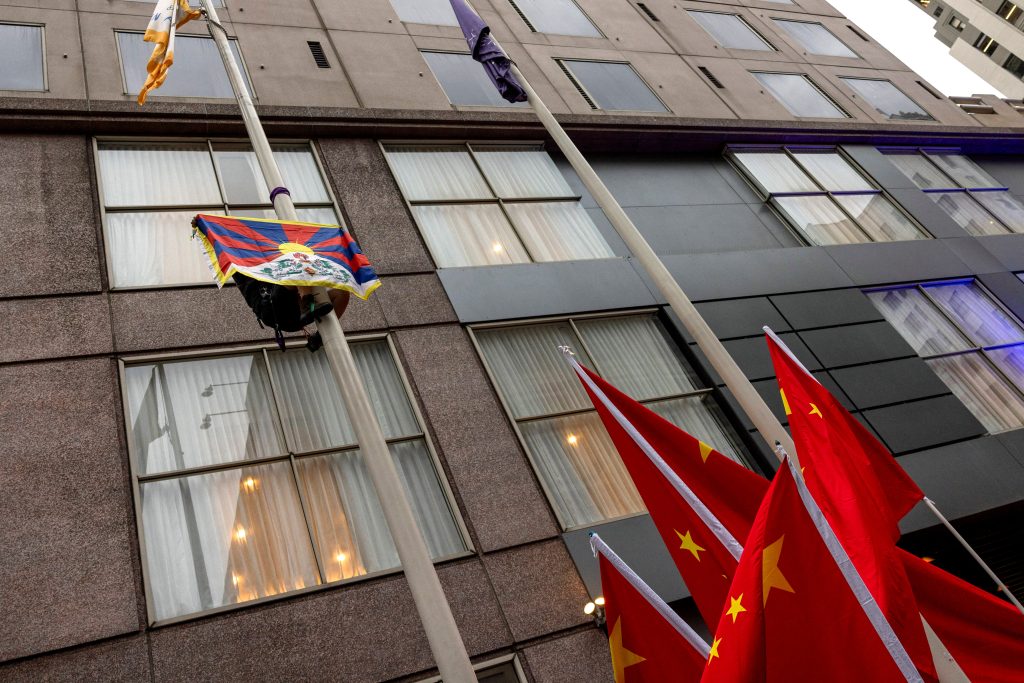
Returning to the unseen, one thing that is absolutely supposed to remain invisible is the Tibetan flag, especially in the hands of a U.S. mayor. Given that the flag can be read as a symbol for an independent Tibet and, by implication, China’s colonization of the country, Chinese authorities take its appearance anywhere to be a dangerous affront. Thus, upon learning that Mayor Michael Melham of Belleville, New Jersey was planning to raise one in celebration of the Tibetan new year, Huang Ping (黃屏), consul general of the People’s Republic of China in New York, wrote to him in a desperate attempt to stop him from doing so. Melham refused, and pictures of him and Tibetan community members holding the flag have now traveled around the world.
The issue of the colonization of Tibet drew more sharply into focus with video footage that apparently showed Tibetan herders being pushed off their ancestral lands by the People’s Liberation Army in January, which was apparently shot in Ladakh territory currently under the control of India. Verified by The Wire, an Indian media, the footage goes hand in hand with news that a disappeared Tibetan monk, Lobsang Thabkhey, was arrested by Chinese police last June for contacting other members of his people overseas and disseminating books from them. His whereabouts remain unknown.
Repression of Tibetans has a strong digital component, whose details are explored in a fresh-off-the-press report by the specialist groups Turquoise Roof and Tibet Watch. It describes how Tibetans are being forced to install an innocuous-sounding yet sinister app from China’s National Fraud Center (国家反诈中心) at police checkpoints.
According to the report, the app combines with facial recognition technology, has “access to sensitive data and control over key device functionalities” and is used for “invasive surveillance, enabling the monitoring of personal information and activities” in a context where “even moderate forms of cultural and religious expression, peaceful advocacy for language rights, or social groups working for the homeless or animal welfare” are criminalized.
It goes hand in hand with the so-called Tibet Underworld Criminal Integrated Intelligence Application, a big data platform run on an Oracle database that is, in the reported words of procurement documentation, intended to “achieve dynamic management and control of key personnel,” which is to say anybody who does not agree with the way they are ruled or speaks out for human rights and self-determination for Tibetans.
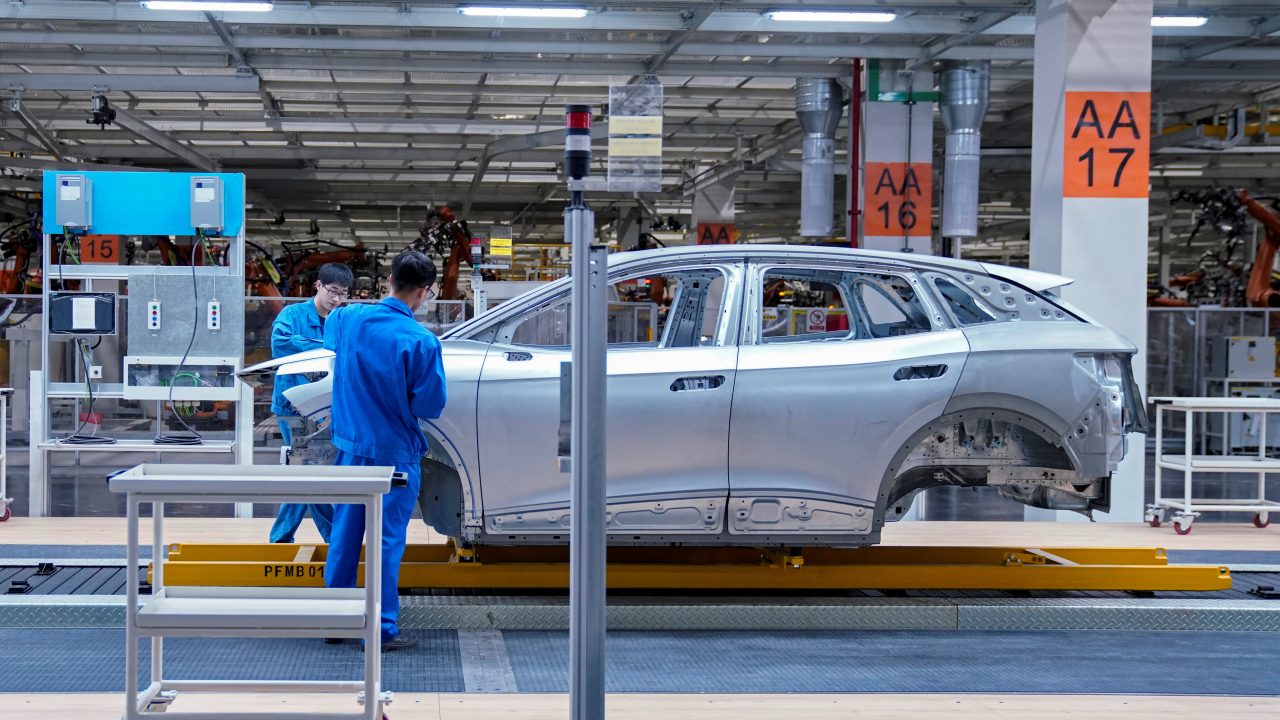
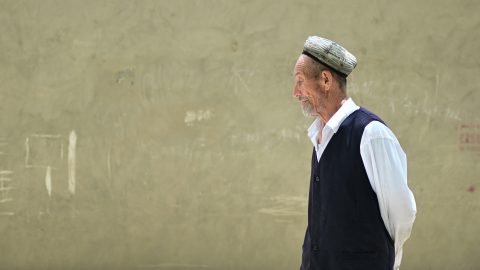
Oracle, headquartered in Texas, thereby joins big names from the automotive industry such as BYD, General Motors, Tesla, Toyota and Volkswagen in being implicated in the systematized abuse of people under Chinese Communist Party control. The carmakers have been accused by Human Rights Watch of turning a blind eye to likely forced labor in the supply chain for aluminum, a material that often sources to China-controlled East Turkestan (Xinjiang), where Turkic peoples are held as part-hostage, part-slave in their own lands.
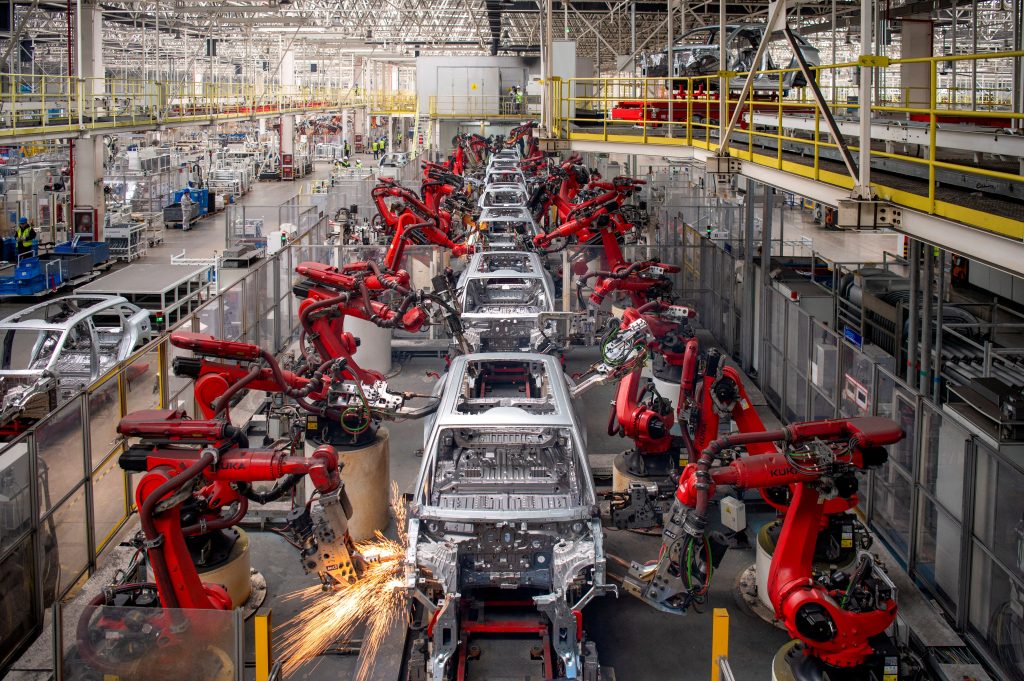
Human Rights Watch highlights both the particular demand for aluminum that has been created by electric vehicles, which achieve greater range with lighter metals, and China President Xi Jinping’s strategic demand for his country to become an automotive power. These drivers interlock with government-orchestrated labor transfer programs that bring workers to East Turkestan’s aluminum smelters, where cheap, coal-derived energy reduces costs.
Turkic peoples have no way to refuse such work transfers without risking imprisonment or other punishment from the state. According to a 2022 report from Horizon Advisory that was reviewed by Sheffield Hallam University, all eight of East Turkestan’s largest aluminum producers were either recipients or coordinators of labor transfers. Two are companies of the notorious Xinjiang Production and Construction Corps (XPCC), which is a paramilitary corporate conglomerate strongly suspected of involvement in crimes against humanity.
International car brands are connected to potential forced labor aluminum not only through the origins of their metals, but also via joint ventures with Chinese companies, where Human Rights Watch claims they have “succumbed to government pressure to apply weaker human rights and responsible sourcing standards.”
On this note, Volkswagen has attempted to absolve itself from responsibility by arguing that it has no “decisive influence” over its cooperation with SAIC, a Chinese firm. None of BYD, General Motors or Toyota responded to Human Rights Watch’s questions, although the former has previously stated that it has “limited control” over commercial arrangements with Chinese (and other) companies and therefore may be “unable to prevent violations of applicable laws or other misconduct.” Tesla, which has not entered a joint venture in China, at least appears to be trying to map its supply chain, if doing so imperfectly.
All should take note of the fallout absorbing German chemical production giant BASF, which is finally withdrawing from its East Turkestan joint ventures after years of resisting pressure from human rights organizations to do so. The scandal that broke the camel’s back was the revelation in German media that its partner company in the region, (Xinjiang) Markor Chemical Industry, was joining government officials on indoctrination and surveillance visits to Uyghur households during the peak years of China’s mass internment campaign.
Unveiled in part by Adrian Zenz, a leading researcher of crimes against Turkic peoples, these visits appeared in reports on Markor’s website. In Zenz’s words, they involved company staff going into “ethnic villages to eat, sleep, ‘control’ and ‘enter’ targeted households at night,” alongside activities reminiscent of the Chinese government’s “pair up and become family” initiative. There is some suggestion, based on witness accounts and an official document, that similar after-dark actions were associated with police, people’s militia and even arrests.
BASF had finally conceded that such activities are “inconsistent” with its values, but true depth to the meaning of “inconsistent” was provided by the continuing slow trickle of information about Uyghurs detained and disappeared in East Turkestan. In the first two weeks of February alone, this included details of elderly women who have been imprisoned on the basis of religious learning that they undertook decades ago, or even in childhood, and the 15-year sentence currently being served by businessperson Obulhashim Tursun, who seems to have done little more to deserve detention than travel to the United Arab Emirates.
China justifies such measures on the grounds that it is fighting extremism and its Ministry of Foreign Affairs used a February 8, 2024 press conference to highlight purported links between the East Turkistan Islamic Movement (ETIM) and a previous terrorism attack on a church in Istanbul. Responding to a possibly prearranged question from China Daily, a media owned by the Chinese Communist Party’s Central Propaganda Department, a ministry spokesperson emphasized, “China stands ready to step up counterterrorism cooperation with Turkiye and other members of the international community to firmly strike down on ETIM.”
While preventing atrocities is a legitimate aim, there is every reason to believe that such rhetoric will be used for both the internal and transnational repression of innocent Uyghur communities and individuals.





Leave a Reply