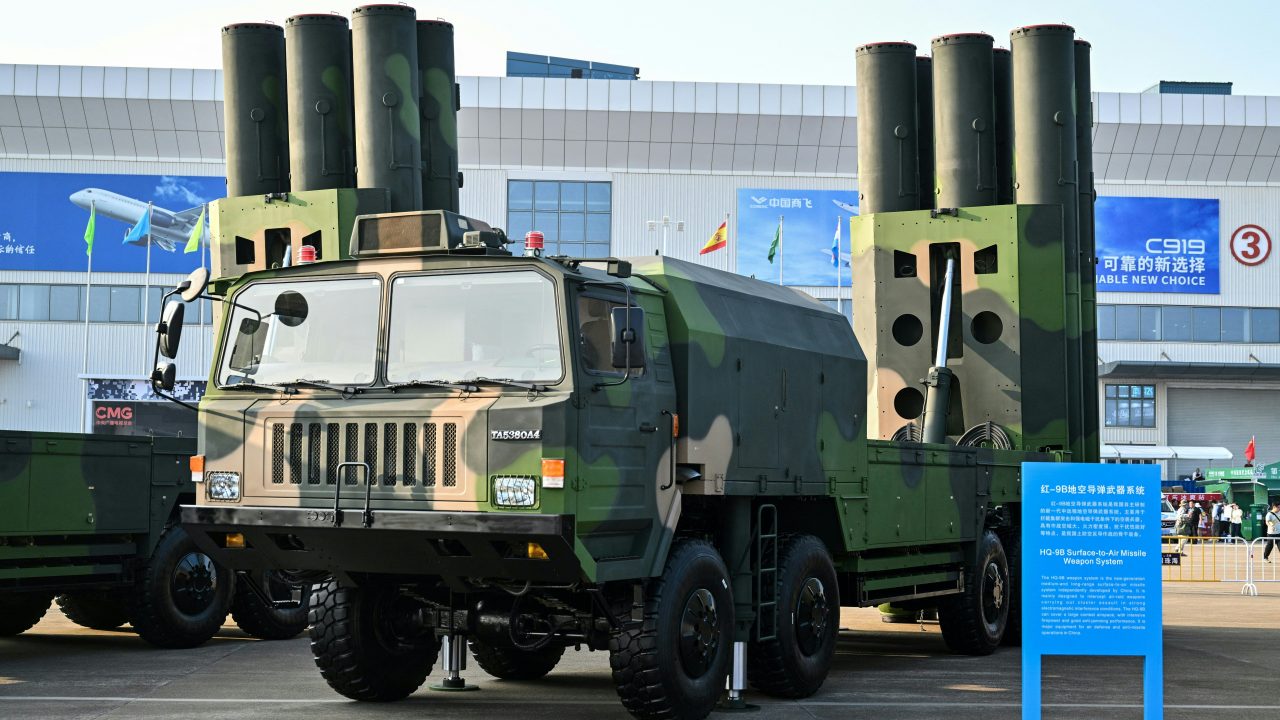
Despite sensationalist reports of the failures of modern Chinese air defense systems in Iran, multiple experts interviewed by Domino Theory said there is no evidence they were used or even delivered.
After the 12-day war in June 2025 when Israel and the U.S. decimated Iranian air defenses, it was widely reported that Iran had taken delivery of the relatively advanced HQ-9B air defense system from China.
But there are no pictures of the HQ-9B in Iranian service, no satellite images that suggest it has been deployed, and nothing from the U.S. or Israeli governments to say their armed forces have encountered it in combat.
“As far as I’m concerned, there’s zero evidence that Iran operates any Chinese air defense missiles like the Hongqi, the HQ-9B — it’s just not there,” said Xu Tianran (徐天然), a senior analyst focusing on Northeast Asian security and missile systems.
The HQ-9B is a long-range air defense missile system comparable to the Russian S-300 system, which is operated by Iran. Some analysts have suggested that the HQ-9 was developed based on the S-300.
Middle East Eye reported that Iran had already received new air defense missiles from China in July 2025. This was swiftly followed by follow-up reporting from sites like Army Recognition saying that the missiles were HQ-9Bs.
The Chinese Embassy in Israel denied these reports, telling Israel Hayom that “China never exports weapons to countries engaged in warfare and maintains strict controls on the export of dual-use items.”
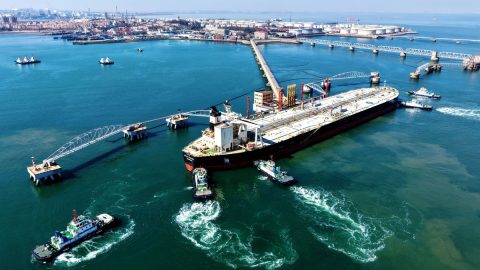
Putting aside the credibility of Chinese public denials, there are strategic reasons to think China wouldn’t sell advanced weapons to Iran right now. China gets more oil from the Arab Gulf states than it does Iran, and so arming Iran would cause problems, said Joshua Arostegui, a former U.S. military intelligence analyst. He said that the Chinese foreign ministry would have gone into “danger mode” to get those denials out.
Arostegui, who is currently chair of China Studies at the U.S. Army War College, also pointed out that HQ-9Bs would have been seen if they were in use: “You don’t keep them hidden in caves and stuff because otherwise they don’t really serve a purpose.”
This is a point echoed by Carl Rhodes, the director of Robust Policy, a defense analysis firm, who said that “hidden, they don’t do any good.” He noted that the U.S. and Israel would also get signals intelligence on them as soon as their radars started emitting.
Rhodes does, however, think it’s possible that China, or Chinese companies, are assisting Iran with intelligence and satellite imagery. He said that the Houthis were getting satellite imagery from Chang Guang Satellite Technology, and that the Chinese firm was using the Iranian military as an intermediary.
It doesn’t take a giant leap to think that connection is ongoing. Chang Guang Satellite Technology issued a denial last year when the story first broke.
Both Rhodes and Arostegui also found the reporting from late February that Iran was going to buy the CM-302 anti-ship missile from China to be unlikely, and that if it were to happen it would now be too late to have an impact due to the time it would take to train and integrate in the systems.
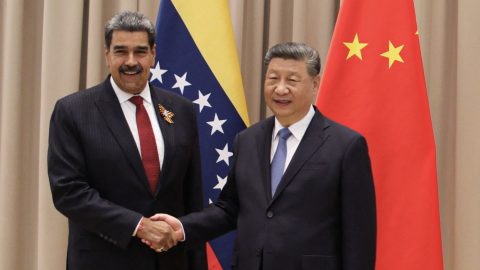
There’s a more holistic point about the whole idea that we can learn much about Chinese weapons in these situations. Xu, the missile systems analyst, said that in the case of Venezuela, Russian air defense systems were not moved around for weeks before the American attack. As a result, they were destroyed in exactly those spots.
There are no confirmed reports of Iran downing any American or Israeli crewed aircraft. It’s just difficult to parse whether that tells us more about the inherent quality of Iranian weapons than it does about how the Iranian armed forces operate them.


Leave a Reply