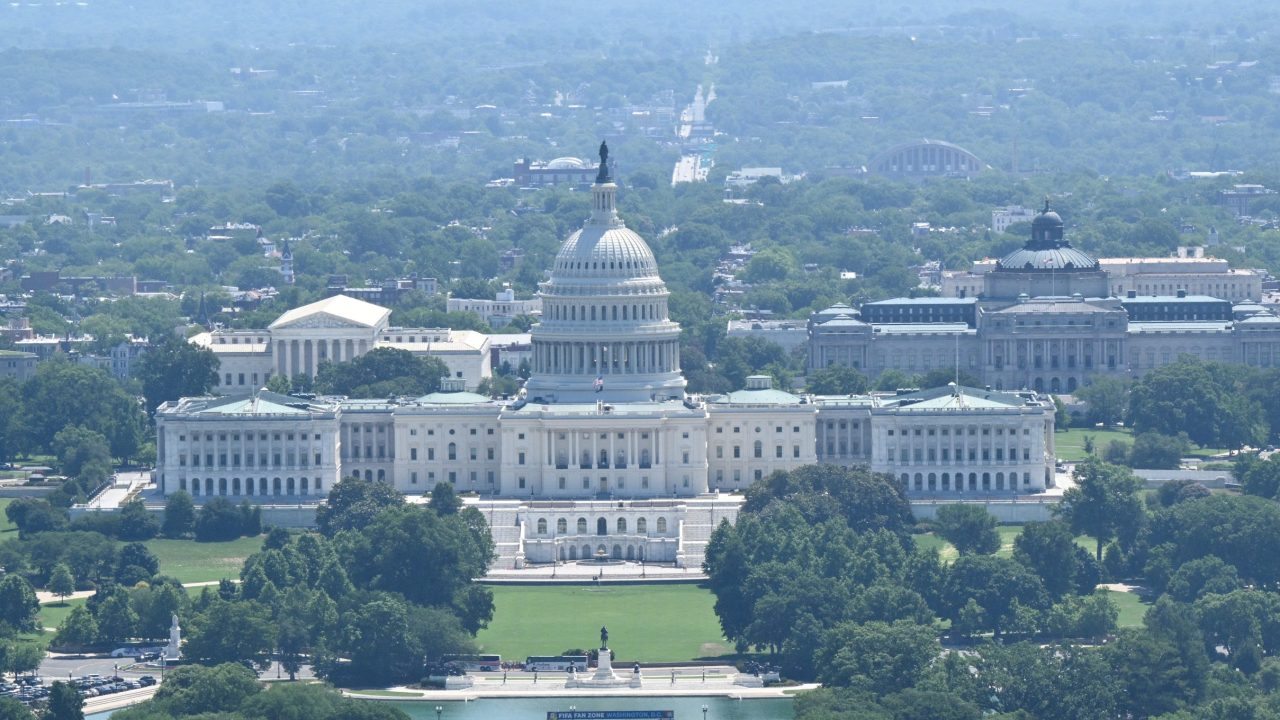
China-linked actors are targeting elderly Americans for their health and financial data, according to testimony before the Senate Committee on Aging.
“Beijing has stopped treating data as a commercial byproduct and now treats it as an instrument of state power,” Leland Miller, a commissioner on the U.S.-China Economic and Security Review Commission, said during a hearing held by the Senate Committee on Aging last week. “[O]rdinary Americans, including our oldest and most vulnerable citizens, are increasingly the raw material.”
China pursues a few distinct types of American data, according to Miller. State-sponsored campaigns like Salt Typhoon hack American telecommunications to extract call records. Chinese actors purchase sensitive commercial data that is created through apps, payment systems and connected devices from data brokers. China also regards American health data, including genetic sequences and treatment histories, “as a strategic national resource.”
China accesses American health data through several channels, according to Edward You, the founder of EHY Consulting, who testified before the U.S.-China Economic and Security Review Commission in April. Many of these channels, like research collaborations and clinical trial participation, are lawful and mutually beneficial. But they could contribute to a structural imbalance over time if one side gains more access to data that creates a cumulative advantage in biotech. Chinese policy emphasizes building such an advantage through data integration and coordination across sectors like biomedicine, agriculture, industrial biotechnology and AI.
Miller stressed that even data that is seemingly mundane can become a powerful tool for China. “A dataset does not have to hold national security value when it is collected. That value can emerge once the state fuses it with other data in its possession,” said Miller. Even the smallest details, like the measure of the tire pressure in your car or your heart rate on a Fitbit, could be things that could build a composite picture of a person and a network.
Elderly Americans are at particular risk for data extraction and financial exploitation, given that they possess long medical histories and a disproportionate share of U.S. wealth. “The financial, genomic, and clinical data Beijing prizes is, in large part, theirs,” said Miller.
The risk is compounded by artificial intelligence, Miller said, which can sift through unwieldy bulk data to reveal useful patterns and facilitate tailored and convincing fraud at scale. Quantum computing, which uses quantum physics to solve problems that are too difficult for traditional supercomputers, will allow China to decrypt later the data that it is harvesting now.
Joseph Lin, the chief executive of Twenty Technologies, told the U.S.-China Economic and Security Review Commission in April that China will use data extracted from Americans — including telecommunications metadata, logistics records, health and genomic data, cloud telemetry, financial signals and consumer location — to train its AI models and enhance its military capabilities. “From Beijing’s perspective, a dataset is valuable if it can reveal a vulnerability, identify a person, improve a model, shorten an innovation cycle, or shape a future battlespace,” Lin said.
Beijing’s focus on collecting health data, in particular, presents not only a privacy issue but a “dual-use industrial and national-security issue” with implications for “biomanufacturing, precision medicine, force health and future military applications of biotechnology,” Lin said.
Washington, to its detriment, treats privacy, telecommunications security, critical-infrastructure resilience and artificial intelligence as discrete issues, Miller said. He recommends that the U.S. create a legally binding framework to protect sensitive data and harden telecommunications and data broker ecosystems.
These solutions would address the apparent unease and resentment that members of Congress feel about China’s ability to extract data from the U.S.’s relatively open digital ecosystem. “Communist China wants to destroy our way of life,” Rick Scott, chairman of the Senate Committee on Aging, said in his statement. “50 years ago, we never would have given the Soviets the kind of leeway we give China.”



Leave a Reply