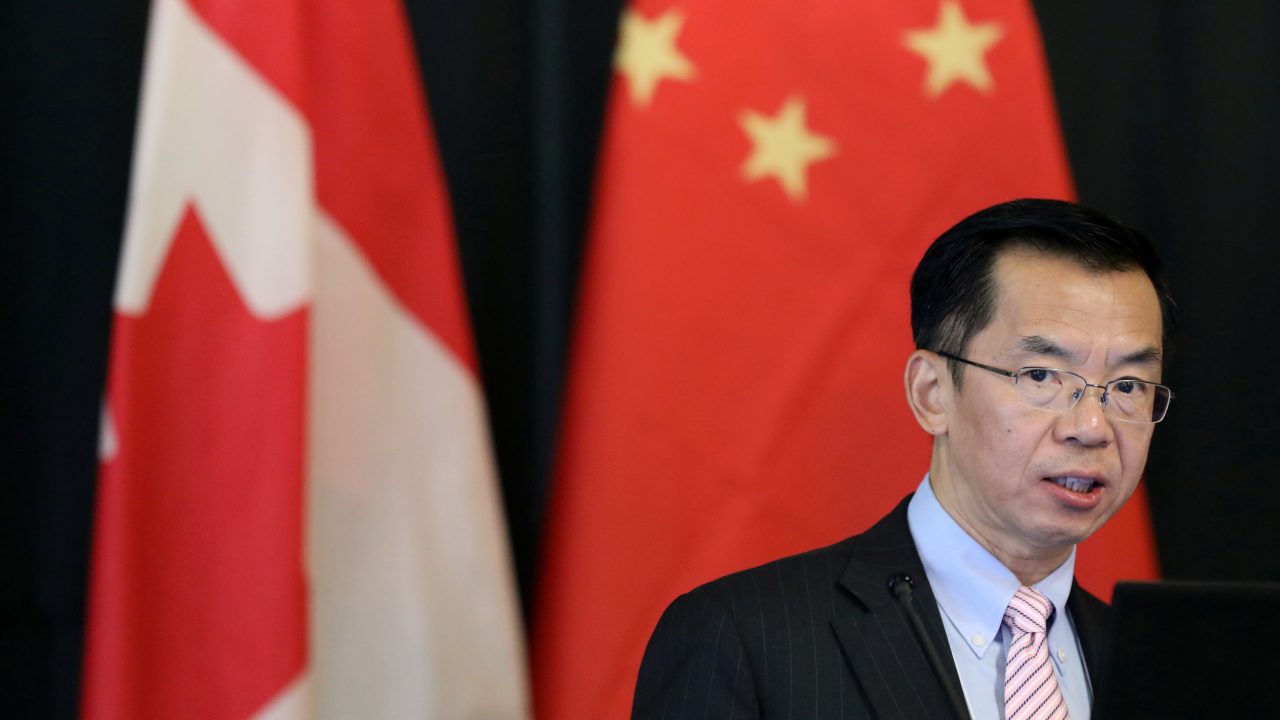
China confirmed on Thursday that Lu Shaye (盧沙野) would become the new Special Representative for European Affairs, after reporting from the South China Morning Post.
Lu is the former ambassador to France who several times attracted international attention for continuous remarks, earning himself the mantle of “wolf-warrior.”
This appointment comes as Europe is cautiously rethinking its relationships with both China and the U.S. It raises the question of what message China is trying to send to European leaders.
Lu will “assist in the coordination and handling of European affairs, and conduct consultations and exchanges with European countries and EU institutions as needed” according to Guo Jiakun (郭嘉昆), a spokesperson for the P.R.C.’s foreign ministry. Lu’s predecessor in the role, Wu Hongbo (吳紅波), appears to have spent much of his time attending ceremonial events in Europe and in China. He appeared extensively in the Chinese foreign ministry’s press releases and rarely in European media, but did at least have some real responsibility to try to drive relations forward.
Lu, on the other hand, is no stranger to the European limelight. When ambassador to France, he amassed quite the reputation within European policy circles. He first came to international notice during the Covid-19 pandemic where he became one of China’s first and loudest “wolf-warrior” diplomats, taking a strident tone that was at times aggressively critical of France and its allies. During the pandemic his embassy published an article saying that France had let old people die in nursing homes.
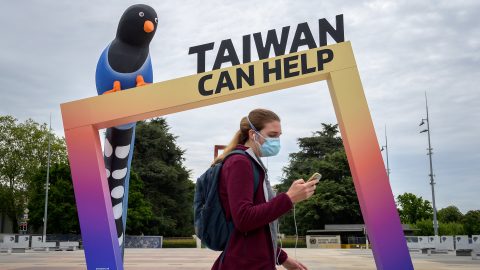
Lu again got into hot water in 2022 when he said that Taiwanese would be “re-educated” if China annexed Taiwan. While such language is relatively commonplace in China’s internal discussion, it’s rare for foreign diplomats to speak so frankly abroad.
In 2023, Lu sparked outrage across Europe when he said that states that were formerly part of the Soviet “don’t have an effective status in international law because there was no international agreement to materialize their status as sovereign countries.” He was speaking in the context of Ukraine and Crimea, but his words were heard and rebuked widely. In the aftermath Beijing clarified that it respected the sovereignty of the former Soviet republics but notably refused to criticize Lu for his words.
While it is clear that Lu long ago decided that adopting a pugilistic tone was going to benefit his career, and apparently he was not wrong, we don’t really know whether the extremes he has gone to, which have provoked official criticism from European officials, are slip-ups where he accidentally crossed the line as opposed to calculated attempts further bolster his wolf-warrior image or even to try shift the diplomatic Overton window. But clearly they have not been punished by Beijing.
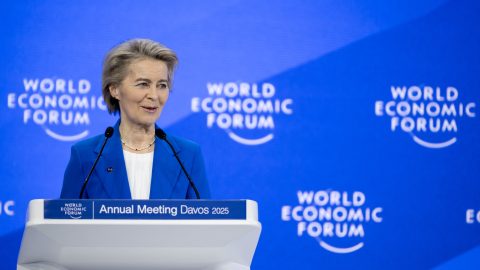
What makes this decision both interesting and puzzling is that China’s relationship with Europe stands at a crossroads. With the beginning of Trump’s second presidential term, and especially Trump’s aggressive rhetoric on Greenland (a Danish territory that is nonetheless not part of the E.U.), as well as threats for tariffs against the E.U., European decisionmakers are potentially reconsidering the distance they had created from the P.R.C. during the Biden administration. There has been a notable shift in language on China from European Commission President Ursula von der Leyen in the past two weeks.
In grand strategy terms, this moment should present a golden opportunity for China. Chinese diplomats have continually asserted that Europe should be “strategically autonomous.” This can be understood as a not-so-subtle call for Europe to decrease its alignment with the U.S.
Why then, in the midst of European agonizing over what to do about the U.S., would you choose to announce that you are selecting as your new special envoy to the continent one of the only Chinese officials who is genuinely disliked in European capitals because of his words and actions on post in Europe?
It is baffling. It is impossible to know if it is a decision born out of laziness, stupidity or deliberate disrespect. Hanlon’s Razor suggests it is not the latter, but why would you choose a known wolf-warrior if you were not trying to howl at the Moon?
Lu Shaye is not becoming the ambassador to the E.U. His new role is somewhat ill-defined and if European capitals choose to keep him at more of a distance it is unlikely to damage relations unless Beijing wants to take umbrage.
But tonally, this appointment sends all the wrong signals. And really, which is worse? A diplomatic partner who deliberately offends, or one who does so accidentally through a lack of attention to detail. Europe might be about to find out.


Leave a Reply