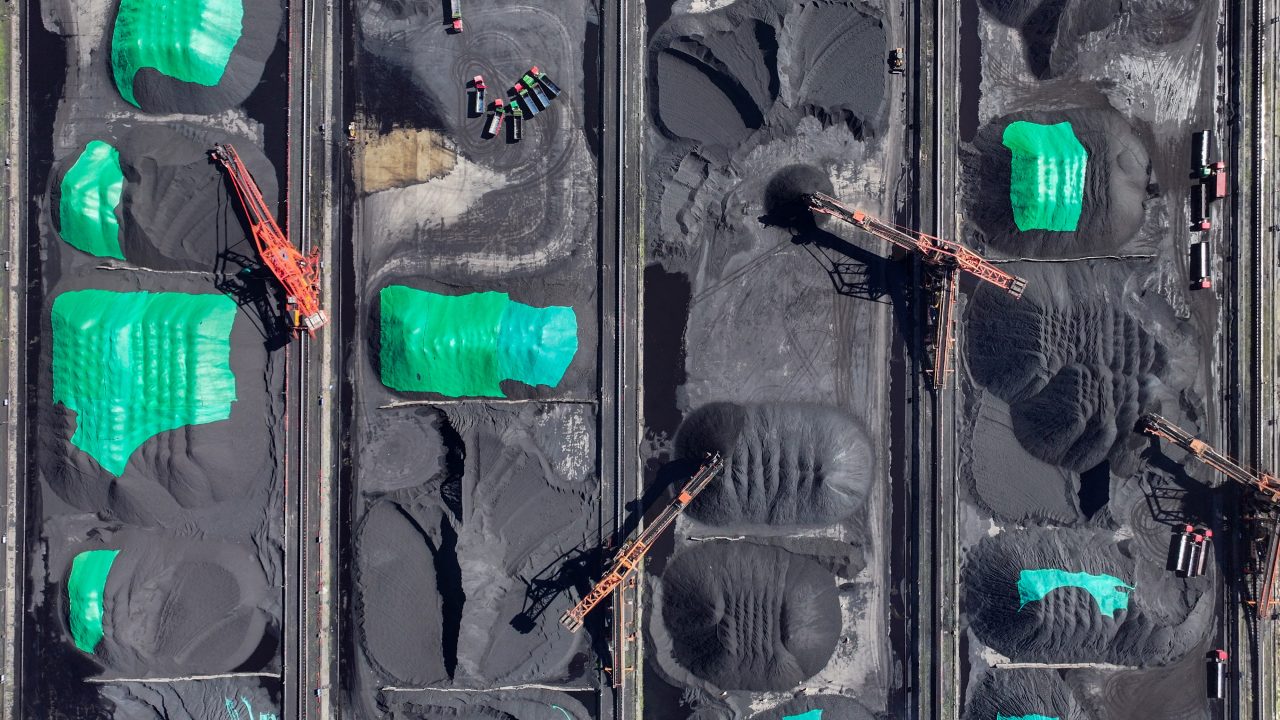
The driving force behind carbon emissions in China is changing.
Previously, when China’s coal usage surged in the early 2000s, it correlated with transnational corporations pouring foreign direct investment into the country in order to produce exports with cheap labor.
As its government further opened up its economy by joining the World Trade Organization, between 2000 and 2006, 55 percent of the global growth of CO2 emissions took place in China — moving to two thirds by 2007. At the same time, as climate scholar Andreas Malm explained in his book “Fossil Capital,” the share of goods produced by foreign companies in China went beyond 50 percent in 2001, and remained above that for the rest of the decade.
“Of all the massive growth in Chinese energy consumption between 1987 and 2007, over half occurred in just the final five years, with industry the most voracious sector by far,” Malm pointed out.
So, while the CO2 emissions went under China’s name, foreign — often Western — companies made a large amount of money from the process, producing goods that were primarily made to be consumed elsewhere.
And coal was the main energy source in this process, with China’s government deregulating its coal market to allow mines to grow alongside investing in transit from inland power plants to cities on the coast where foreign direct investment accumulated.
Now, though, new growth is coming from a different source.
As foreign direct investment flattened off in the 2010s, overall emissions increases did, too. This year emissions are expected to show no increase on last year, while approvals for new coal power plants fell by more than 80 percent in the first half of 2024.
But research by the Centre for Research on Energy and Clean Air (CREA) has identified a key sector still running in the opposite direction — and doing so for different reasons to the 2000s surge.
While China’s overall coal usage is flattening out, its coal-to-chemical industry’s coal usage is rising.
“[I]n the first eight months of 2024, [the industry’s] coal consumption increased by 18% year-on-year,” CREA noted, making the coal-to-chemical industry China’s most significant driver of emissions growth.
Why is this?
“Amid global energy price volatility and supply uncertainties, China — reliant on coal for over 95% of its fossil fuel reserves — has increasingly turned to modern coal chemical processes to produce oil substitutes. This approach is viewed as critical for reducing dependence on imported oil and gas while enhancing domestic energy security,” CREA’s Cheng-cheng Qiu (誠誠邱) told Domino Theory by email.
In other words, this time, these emissions increases are not being driven by external forces coming in. They’re being driven by internal energy security.
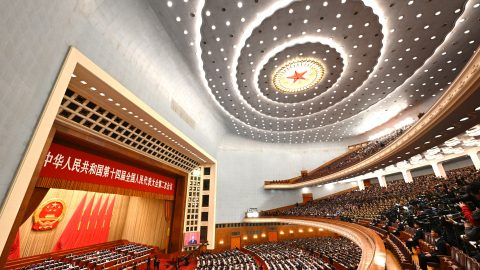
“This marks a departure from the coal surge of the early 2000s, which was primarily driven by economic incentives and export demand,” Qiu explained. “State-owned enterprises continue to dominate the coal and coal-processing sectors, with their investment decisions often aligned with central government policy signals.”
That might seem surprising, given China’s massive growth in renewables, and the fact it publicly placed limits on the expansion of its coal-to-chemical industry last year. But those limits explicitly left out coal used to make substitutes for gas and oil, and Qiu notes that a recent directive “calls for ‘accelerating’ the development of the coal-to-chemicals industry, including ‘speeding up the construction of strategic bases for coal-to-oil and coal-to-gas production.’”
This need not obscure the dramatic rise in renewable energy, with some estimates suggesting renewables will reach almost 60 percent of China’s energy mix by 2030. But it does mean two things.
One: CO2 emissions from the coal-to-chemicals industry may not peak before 2030, in line with the goal for overall emissions to peak by then. And two: This time around, that is being led very directly by the Chinese state.






Leave a Reply