Fifteen years ago, no one outside of China had ever seen a Chinese next-generation combat aircraft. Now, we are knee-deep in them.
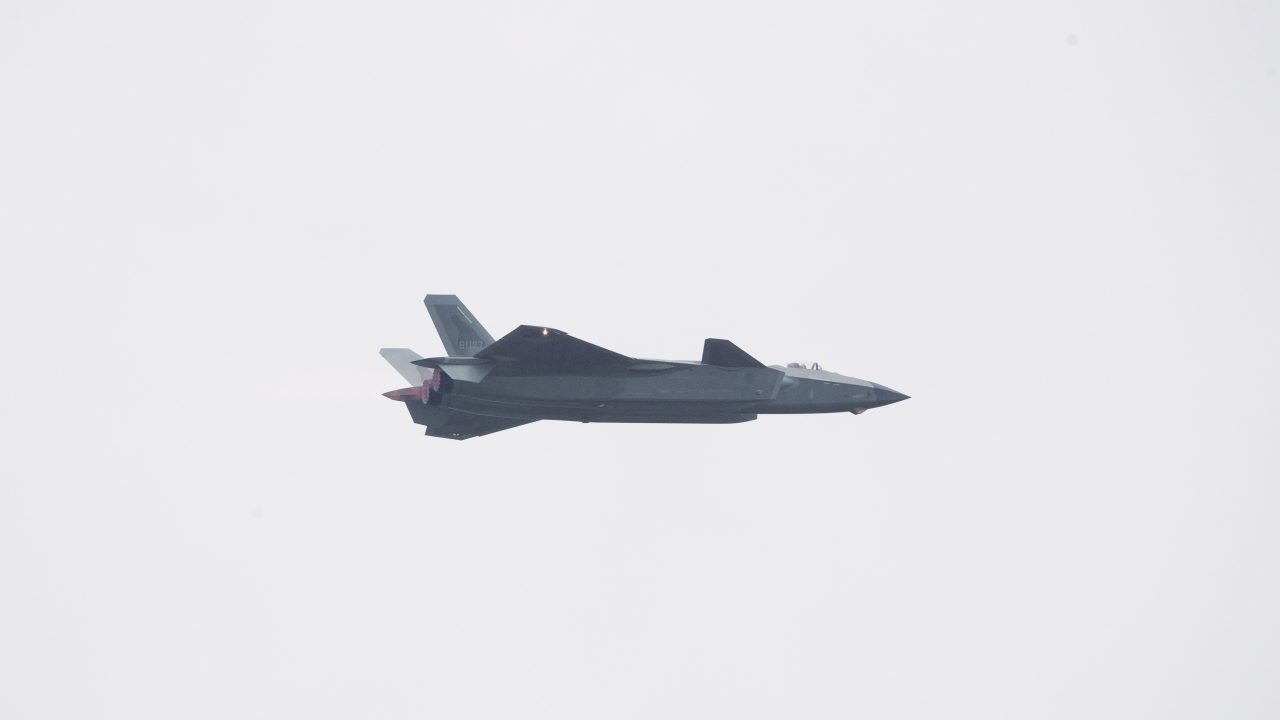
With the two new Chinese planes that were photographed and videoed flying in public view for the first time on Boxing Day, our view of the future “stable” of Chinese next-generation combat aircraft is suddenly quite a lot wider than before. This article will take a look at the different advanced aircraft that China is likely to be operating in a decade’s time.
There are a lot of new aircraft that are already in service or will enter the Chinese inventory soon, but this article will limit itself to those that are considered or claimed to be fifth or sixth-generation combat aircraft, by which we mean fighters, bombers and strike aircraft.
What defines and separates fifth-generation aircraft from previous jets is in the simplest terms that they are much stealthier, with far more powerful onboard computing, sensors and networking capabilities. With no specifications for planned sixth-generation aircraft yet public, what separates them from the fifth-generation is unclear and contested, but the following are often listed: further increased stealth; higher performance engines; better electronic warfare capabilities; integrated AI; and the ability to operate as part of a “system of systems,” where a crewed aircraft operates alongside multiple smaller and potentially expendable uncrewed aircraft.
J-20
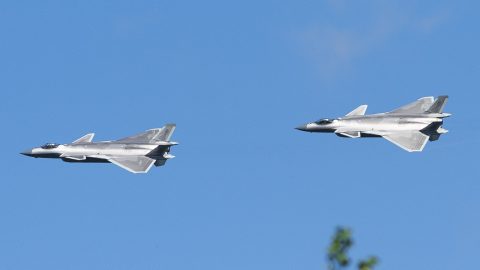
The J-20 is China’s first fifth-generation fighter jet, built by Chengdu Aircraft Corporation. It is a large fighter, able to fulfil air superiority and interceptor missions close to China’s borders and coast, but with enough range to hunt further out for support aircraft like tankers or AWACS. The J-20 does not appear to have any capability to carry anti-ship missiles.
Uniquely on this list, the J-20 is already in service, having first entered the PLAAF in 2017. And, it’s in service in sizable numbers: more than 300 have likely been built, which is 100 more than the less than 200 F-22 fifth-generation jets that the U.S. has.
“Weaknesses” of the J-20 include its engines, which is an area where China has traditionally struggled, but newer and better models are coming. There are also persistent questions about how stealthy the J-20 really is, especially given the large canards it has at the front of the aircraft. It’s telling to note that it has never been recorded as flying near Taiwan by Taiwan’s Ministry of National Defense, which is to say it has never been recorded as flying near to the advanced American-built radar system in Hsinchu.
J-35
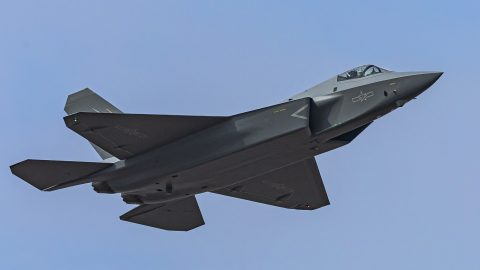
The J-35, built by Shenyang Aircraft Corporation, was officially unveiled to the world at the Zhuhai Airshow in November 2024. It was developed from the FC-31, which was first seen in 2012. It is not yet in service.
Compared to the J-20, the J-35 is smaller and has a more “conventional” fifth-generation fighter profile or shape. This has led to comparisons with the American F-35, which is in service with many U.S. allies’ air forces, including Japan and South Korea.
The J-35 will be flown by the Chinese air force, but arguably more importantly it will enter service with the navy as China’s first fifth-generation carrier-borne fighter. Chinese media say the J-35 will be capable of maritime and ground strike as well as air superiority. It is possible that eventually it will be procured in greater numbers than the J-20, again mimicking the relationship between the F-35 and the F-22.
From here on we leave the path of clear official information and have to pick our way through rumor and speculation.
H-20
The H-20 is a Chinese bomber that has not yet been “unveiled,” or even had photographs leaked, even though it has been publicly known to exist since 2018. The aircraft is being developed by Xian Aircraft Corporation.
The H-20 is understood to be a long-range strategic bomber using a flying wing-like design, so it would be analogous to the U.S. B-2 bomber. However, while the B-2 and the B-21, its successor, are true flying wings, imagery of the H-20 suggests it might have some sort of tail structure behind the border.
Last week, video surfaced online of a possible H-20 in flight, but the Chinese and foreign P.L.A. watching communities are skeptical that this is actually the bomber.
J-50
The J-50 is the unconfirmed name given to the jet that was seen over Shenyang on December 26. It is assumed that this aircraft is being developed by Shenyang Aircraft Corporation, who developed the J-35.
The J-50 is likely going to be considered a sixth-generation aircraft, with the caveats above that we don’t know what that means. The J-50 is a tailless design, which should increase its stealth. Its wings have a relatively harsh swept angle, indicating optimisation for high-speed flight. It has two engines and seemingly is large enough to carry quite a lot of missiles internally.
Everything that is in the preceding paragraph is guesswork based on looking at the images we have. It is generally thought that the J-50 will be a fighter aircraft in a recognizable albeit sixth-generation sense. There is further online speculation that the J-50 could serve as the career-borne sixth generation fighter for China. This is mostly supported by the fact that the next plane in this article clearly cannot fulfil such a role.
J-36
The J-36 flew openly on the same day as the J-50 but got far more attention because pictures of it broke cover first but were also more surprising and arguably more interesting. Because the J-36 was seen over Chengdu, it is assumed that it is being developed by Chengdu Aircraft Corporation, which developed the J-20.
The J-36 is also seen as “sixth-generation,” but the design is more radical than the J-50. The J-36 is huge for a “fighter,” dwarfing the J-20 chaser plane photographed flying alongside it. It has a diamond delta wing, giving it almost the appearance of a flying triangle. This means that it has a large internal volume, so it is speculated that the range, weapons capacity and onboard computing power will be correspondingly large.
With all this derived information, analysts guess that the jet will be able to operate far from China and to launch long range anti-air and anti-ship missiles, as well as controlling a fleet of UAVs. It therefore seems to be optimised to fight at range with American assets in the Western Pacific.
If the above is true, the J-36 is probably not really a fighter in the understood sense. Authors already use the term airborne cruiser, evoking the feeling of a larger craft that operates in tandem with more traditional destroyers and frigates.
JH-XX
The JH-XX is a Chinese project to develop a dedicated next-generation strike aircraft. Very little is known about this, and some analysts have speculated that the J-36 is the JH-XX. This however is a minority view.
According to this rumor roundup from The War Zone, the JH-XX is a regional tactical bomber, smaller and faster than the H-20. It would be a fifth-generation aircraft and is speculated to be being developed by Shenyang Aircraft Corporation rather than Xian Aircraft Corporation, which builds China’s current JH-7 strike aircraft. The War Zone also compared possible images from Shenyang Aircraft Corporation with the FB-23 concept for a U.S. regional strike aircraft and found them to be strikingly similar.
There are two more unidentified aircraft that bear a passing mention. In 2021, a tailless diamond-winged design was caught in satellite photography at Chengdu Aircraft Corporation. However, this aircraft is clearly not the J-36. Whether it was simply a one-off prototype, another design yet to be unveiled or even a decoy is not publicly known. And on January 1 this year, another diamond-winged aircraft was seen in satellite imagery at Shenyang Aircraft Corporation.



Leave a Reply