Dictators adore the Olympic Games, and nowhere has this been more evident than with Russia President Vladimir Putin. Not content with splurging that portion of his country’s money he hadn’t stolen from Russian citizens on the most expensive games ever held for Sochi 2014, he embarked on a state-sponsored doping scam to ensure his team would win a bounty of medals at it as well.
Receiving fudged penalties for those antics that continued to enable Russian athletes to compete at subsequent summer and winter Olympics in 2016 and 2018, his regime then falsified data that it was supposed to provide as part of a deal to avoid more severe sanctions and may even have been launching cyberattacks on those 2016 and 2018 events. Again, Russia was given a slap on the wrist. Again, it found itself at the center of another high-profile cheating scandal at the Beijing 2022 Winter Olympics.
The human cost of this malfeasance was not trivial. Blind powerlifters may have been given substances without their knowledge, and children were doped, their promising careers ruined. Those with knowledge of the operation live — or lived — in mortal fear. In between, an emboldened Putin by turns annexed Crimea from Ukraine just days after Sochi’s closing ceremony and postured with the soccer World Cup in 2018, like nothing had ever happened. It was almost as if, with no effective consequences for his actions, he felt as if he could do anything he pleased.
This is the context where, in late April 2024, The New York Times and German public broadcaster ARD, which was the forerunner in exposing Russia’s sporting crimes, published shocking new revelations: In the words of the former, China has been “able to send athletes who had recently tested positive for a banned drug to the world’s highest-profile athletic competition, where they set world and Olympic records without any public disclosure.”
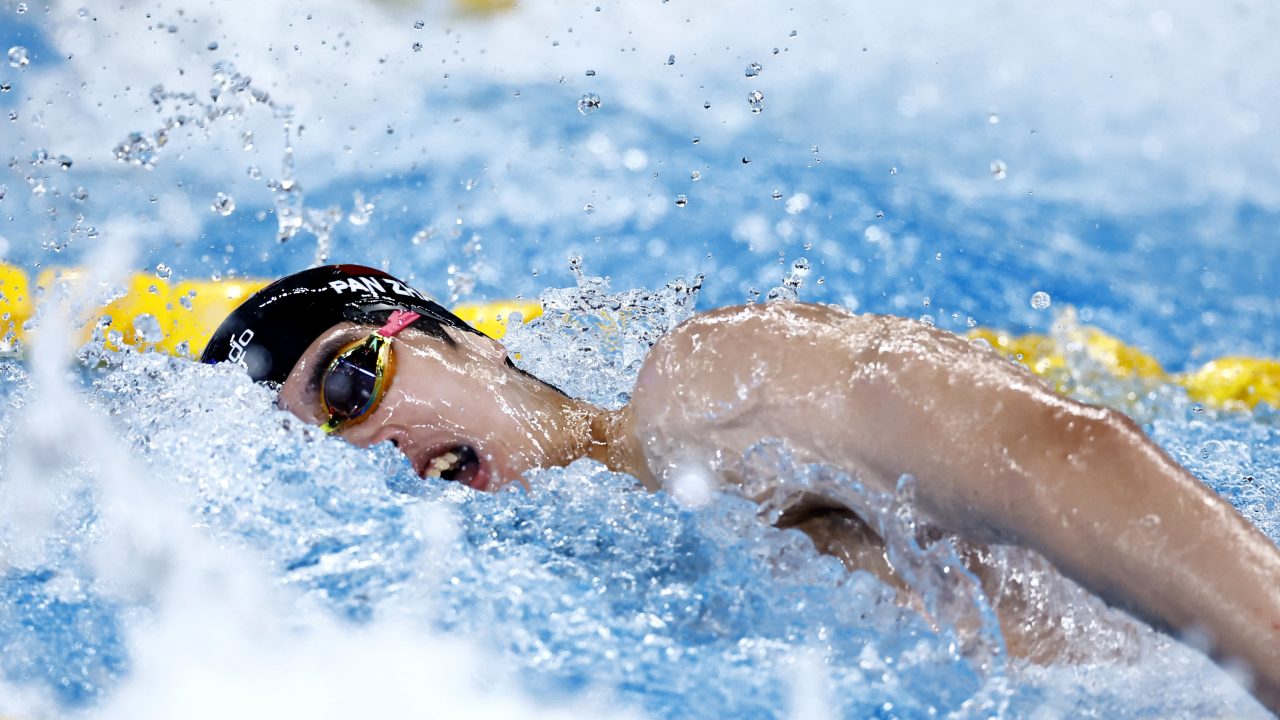
The bombshell news centered around trimetazidine (TMZ), a stamina-enhancing substance that had been recorded in the bodies of nearly half the Chinese national swimming team by the China Anti-Doping Agency (CHINADA) at a competition in Shijiazhuang seven months prior to the Tokyo Olympics. Even though the drug is prohibited in sport, the athletes concerned were neither suspended nor sanctioned nor identified, but went on to compete in Japan, winning medals along the way. Some will be present in the Paris Olympics later this year.
The swimmers were afforded this luxury because the World Anti-Doping Agency (WADA) accepted CHINADA’s explanation in June 2021 that they had not knowingly ingested the banned substance, but, rather, had unsuspectingly consumed contaminated food at their hotel, where traces of TMZ were allegedly found over two months on from the incident in the extractor fan, on spice containers and in the drain.
Lambasting media reports as “misinformation,” CHINADA has not explained how a heart medication normally prescribed in pill form had come to be so distributed in what should be the tightly controlled environment of a kitchen for top-level athletes or who was responsible for it ending up there. These are far from the only unanswered questions.
For its part, WADA has come under fire as well. It receives large donations from China, holds an apparel deal with one of the country’s largest sportswear firms — a company that simultaneously sponsors the Chinese Olympic Committee — and employs the former Chinese Olympian Yang Yang (楊揚), a member of China’s 11th and 12th National People’s Congresses, as vice president of its executive committee. It has also reacted to The New York Times/ARD disclosures by doing everything except undertaking a deeper examination of what happened in Shijiazhuang.
Instead, it has slammed the media expose as “potentially defamatory” and signaled legal action against Travis Tygart, CEO of the United States Anti-Doping Agency, whom it chastised as “politically motivated” for his criticisms of the situation. While it has invited a perhaps independent prosecutor to conduct a review, which could at least answer allegations of inconsistency in its approach with regard to athletes in similar circumstances from other countries, the focus of the inquiry is on its own handling of the case, not investigating the background of the positive tests themselves.
A secondary assessment of the present state of anti-doping in China will also be undertaken, but, although extra auditors are being brought along for the ride, it appears to be part of regular compliance monitoring, not a special procedure. Crucially, due to China’s extreme COVID restrictions, a full investigation of the failed tests was not possible at the time of their occurrence, and little suggests an intention to rectify that shortcoming now.
Disingenuously, the chair of the WADA Athlete Council, Ryan Pini, has characterized the major concern among sportspeople to be that the names of the 23 swimmers were leaked to media, which clearly does not reflect the full gamut of opinion, whereby some competitors are furious at what they see as blatant cheating. Other commentators have suggested that the whole affair is being blown out of proportion due to unfair double-standards applied to Chinese athletes in a tense geopolitical atmosphere.
Yet this kind of framing does a grave disservice to the very people it claims to protect. If a doping violation did occur in Shijiazhuang, the scale suggests a systematic approach in a country where athletes have zero power to decline what authorities decide for them, and, as evidenced by figures like the former Chinese sports team doctor Xue Yinxian (薛蔭嫻)and the former Chinese Olympian Peng Shuai (彭帥), nothing like a safe environment in which to speak out about their experiences. As if to emphasize this point, three days prior to the New Times/ARD revelations, Sina Weibo, the Chinese Twitter equivalent, announced a three-month clamp-down on “leaking information”, criticizing or “fabricating rumors” in relation to sportspeople.
Thus, the issue goes far beyond whether the 23 are cheats in a sporting contest or not. More integrally, it is about whether they have any choice in the matter or any control whatsoever over what goes into their bodies. With no realistic hope for freedom of expression, these people are extremely vulnerable, and only organizations like WADA have some authority with which to safeguard them. It is a serious human rights violation if they are being coercively doped, and there is a duty of care to ensure that is not happening.
Moreover, while the volumes of suspected and actual drug scandals in Western countries across numerous sports that have been publicized by media including The New York Times attest that China is not truly treated differently to any other nation, it would nonetheless be entirely sensible, responsible and appropriate if it was. This is, after all, a vastly resourced one-party state so determined to subordinate anything and everything to the projection of its political dominance that it even obstructs scientists from understanding how deadly pandemics occur. Compared to that, the coverup of a few TMZ-triggered training sessions is small fry, especially since the space for national oversight bodies to operate independently is non-existent.
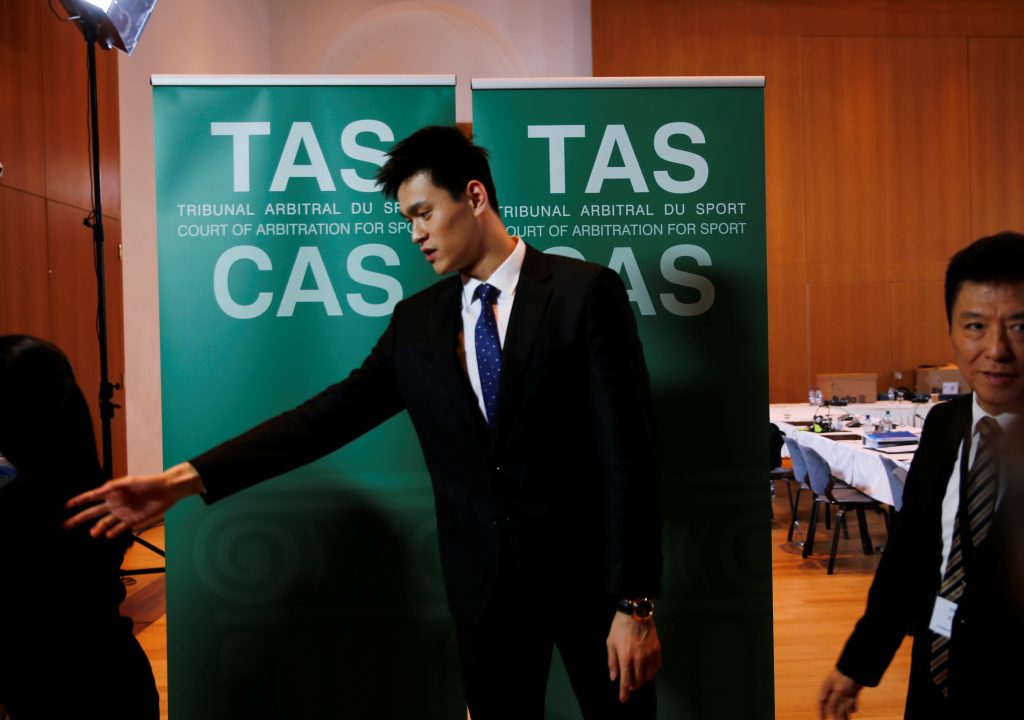
Then, there is China’s long history of performance-enhanced swimming, a sport with symbolic significance to its dictator-class, in particular. It includes the confusing tale of Sun Yang (孫楊), a former TMZ-user and the country’s first men’s Olympic gold medalist in the pool. Aside from incredible claims regarding Sun in 2020 that CHINADA had jeopardized its own processes by staffing a sample-collection team with a construction worker, not a trained tester, the anti-doping agency passed off the earlier TMZ violation by the same athlete as “not very serious” after delaying notification of his suspension for that offense until after the 2014 Asian Games, at which he topped the podium three times. This is the body whose word we are expected to take at face value now.
WADA held firm against Sun to see him banned, and its explanations of its handling of the current controversy may well reflect honesty. However, in the wake of the Russia debacle, it has to accept that scrutiny towards the athletic setup in repressive regimes is justifiably high, and the optics of financial and personnel tie-ins between them and sports fairness bodies will inevitably spark distrust, especially given the deeply uncomfortable recent proximity between the Chinese Communist Party and the International Olympic Committee. It must also understand that, under such circumstances, including the almost total information control that pervades a system like China’s, the oversight of international media is an essential component of sporting integrity, which, therefore, should be treated with tolerance, not condemnation.
Putin learned from the Olympics that he could act with impunity, and we have all been witnesses to what happened next. Stocking up on both gold medals and gold bars, a possible precursor to an attack on Taiwan, China President Xi Jinping may be acquiring similar knowledge.





Leave a Reply