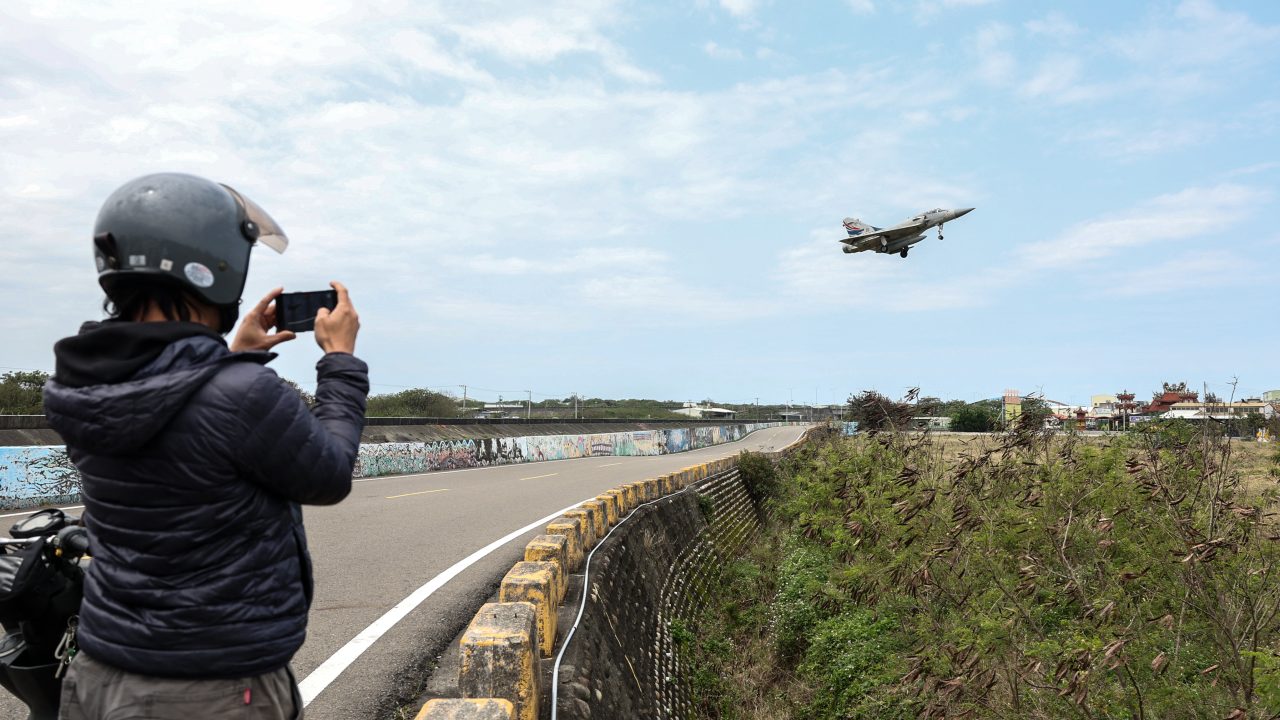
The Chinese Nationalist Party (KMT) supports increasing defense spending, one of its legislators said this afternoon.
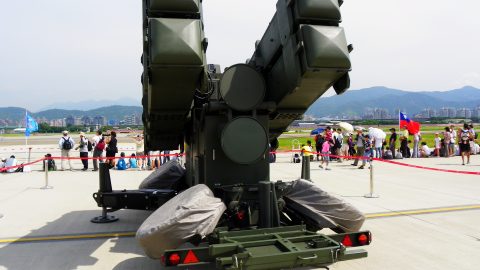
Speaking at an event for foreign media hosted by the Taiwan Foreign Correspondents Club, retired admiral and current KMT Legislator Chen Yeong-kang (陳永康) said this doesn’t only mean spending the money on hardware — spending on salaries as well as logistical support, training, education and spare parts also needs to increase.
Whether Taiwanese political parties support increased defense spending has been a hot political issue this year. This has been spurred on by calls from U.S. President Donald Trump and members of his administration for Taiwan to increase defense spending to five or even ten percent.
Taiwan’s military budget is currently nowhere near those numbers. Nor is it likely to be soon. Neither party wants to be seen by the U.S. as not trying to get closer to those higher figures. But are they being honest about the amounts they are spending?
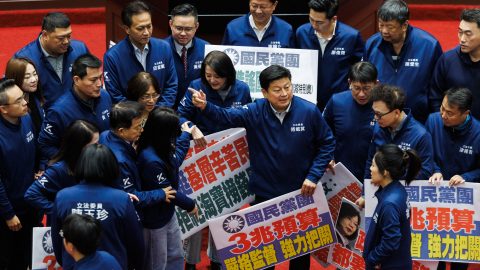
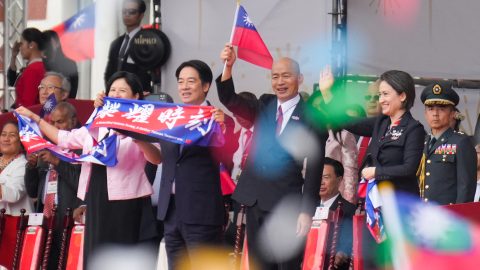
Taiwanese President Lai Ching-te (賴清德) said the 2025 defense budget was going to be the largest ever. But then the budget was cut by the KMT-controlled Legislative Yuan. U.S. Senator Dan Sullivan said the KMT is “playing a dangerous game on their defense budget.”
However, the KMT says that they passed a “record-high national defense budget.”
So who is telling the truth?
The answer, of course, is that it’s complicated.
Both the KMT and Lai’s Democratic Progressive Party (DPP) are being careful to say things that are not technically incorrect, but both sides are obscuring other truths that would make them look bad.
First of all, the budget the Lai administration proposed last year for 2025 was the largest ever by dollar amount, at $19.7 billion (at today’s exchange rate). But that represented 2.45% of Taiwan’s projected 2025 GDP. In 2024, Taiwan spent approximately 2.5% of its GDP on defense.
So Lai’s proposed budget was an increase in dollars but a decrease in GDP share, and historically Taiwan had spent much higher than 2.45%.
Lai, of course, has subsequently said that he wants to increase defense spending to 3% of GDP this year, and will attempt to use special budget measures to achieve that. But it should not be forgotten that his government did not initially plan for this, and that is nothing to do with the KMT.
In the Legislative Yuan, the KMT and junior coalition partner the Taiwan Peoples’ Party (TPP) made a cut of $260 million to defense spending. This relatively small cut means that the spending they passed is still the largest dollar amount ever. In effect they are thus making the same claim as Lai and the DPP.
However, the KMT-controlled legislature also froze $2.7 billion of defense spending, a much larger amount. If this freeze is counted as a cut, it would reduce Taiwan’s defense spending to 2.08% of GDP and a lower dollar amount than 2024.
But should a freeze be counted as a cut?
The point of a freeze is that it allows the legislature to ask the executive to justify that part of the budget. If the executive gives the Legislative Yuan or the relevant committee the reassurance they want, the item should be unfrozen.
In recent years, the legislature and the executive have been controlled by the DPP, so while freezes were common, unfreezing was routine.
But now, Taiwan’s branches of government are at loggerheads. There are bitter battles between the executive and the legislature, and the budget is one part of this. The KMT says that these freezes will easily be undone when the correct reports are made. The DPP is not so sure, although people in and around the party seem loath to assert that the funding will never be unfrozen.
Whether the legislature has cut defense spending below last year’s rests on this point. If the KMT and TPP don’t unfreeze a substantial amount of the money, it is fair to argue that in practice it was a cut.
At the Taiwan Foreign Correspondents Club event today, Domino Theory asked Legislator Chen Yeong-kang, who is also a member of the Foreign Affairs and National Defense committees, whether the money would be unfrozen. He said that the other side has the tools to attempt to unfreeze it, that they simply have to submit a written or verbal report within three months.
It’s been two-and-a-half months now. We should soon find out whether it will be so simple.


Leave a Reply