Anyone reading this website will know that the debate on Taiwan’s geopolitical position splits in two broad directions. There are those convinced that China is likely to attempt an invasion or blockade of Taiwan at some point in the next decade, and there are those who suggest the prospect of invasion is remote and China’s hegemonic aspirations are a phantom assumption, floating around a U.S.-made imaginary.
Rarely if ever have I thought my summer holidays have anything to add to that debate, but I’ll be frank with you: this time they just might.
On a one month Interrail tour through some of the worst hostels ever known to man, this writer visited over a dozen major European cities and towns. By virtue of personnel (the friends I traveled with are Taiwanese) and my job (typing words about Taiwan), we ended up talking to people across all of those locations about Taiwan’s situation. And we learnt one thing above all others: most average Europeans still have no idea that any debate is going on at all.
This may not be exactly news. The Center for Strategic and International Studies has previously suggested that there is “a deficit of knowledge regarding Taiwan in global discourse.” But talking to people in the flesh adds a visceral layer of understanding to that mathematical phrasing.
At the start of the trip, in Hamburg, we attended an extremely middle-class wedding, with lots of guests who work in big business and lots of guests who met at good universities in the U.K. and Germany. These are the kinds of people you might expect to be consuming the most news. But when we made reference to China regularly encircling the place we live with fighter jets, one guest — a teacher from the U.K. in her early 30s — shook her head and said “I’m so sorry,” as if she was hearing it for the first time.
That experience was jarring, because it marked a huge contrast with discussion of the Chinese planes in Taiwan, which often comes tinged with a cynical roll of the eyes or a worn down shrug of indifference. But in terms of the lack of awareness it flagged up, it was a sign of things to come.
For the most part, within briefer interactions, Taiwan just acted as a relentless smalltalk killer because again and again no-one knew what to say about it.
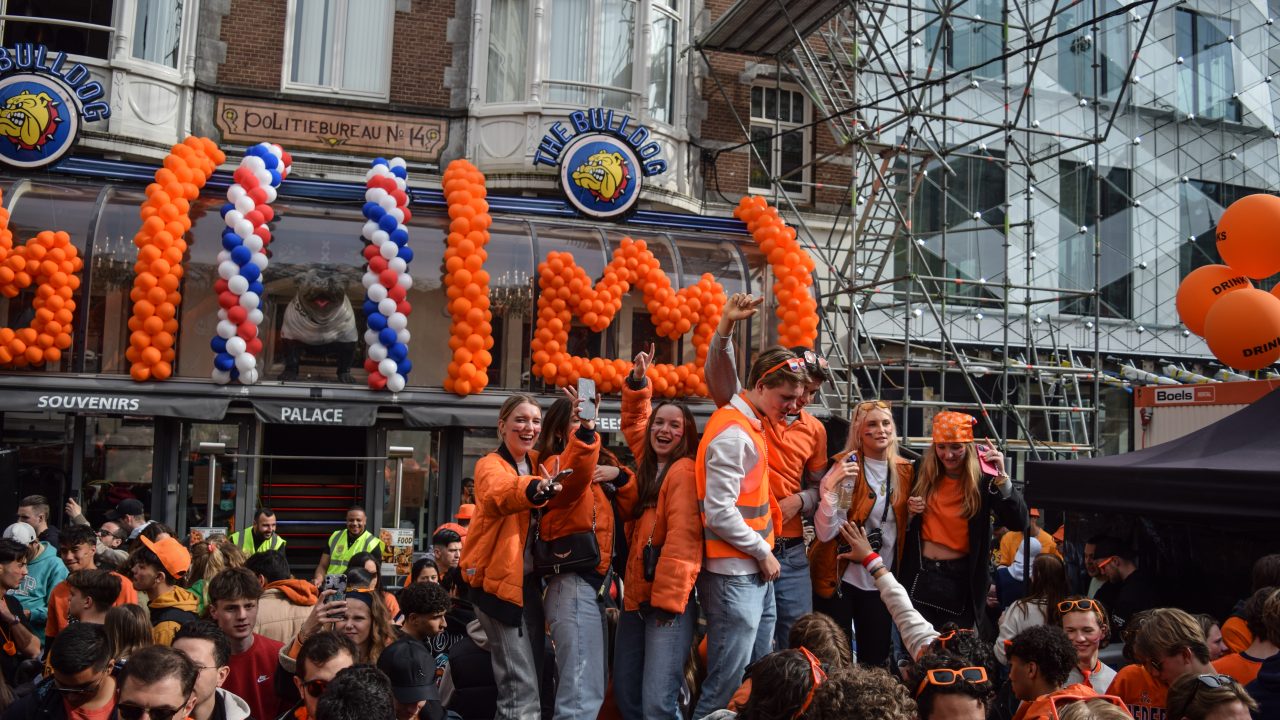
In Amsterdam, staff at mini-marts and souvenir shops asked where my Taiwanese friend was from and when she answered their faces went blank and the only thing they could think to say was “Oh.” On a train through the Alps, the dining car attendant who was secretly watching the Champions League final on his phone engaged in cheerful football banter until asking where my Taiwanese friend was from led to another “Oh.”
A recurring variation on the same theme was people like the Turkish jazz musician at the wedding in Hamburg who went with: “Oh, I know Taiwan” — with the “know” part seeming to mean “I have heard the name, please don’t ask me anything else about it because I don’t actually know.”
The most memorable version of this was at a bar in Zurich, where a wise-cracking waiter asked two of us where we were from. My Taiwanese friend answered first and the waiter gave the now familiar “Oh.” But then a moment later his face lit up when I said that I was from Birmingham. “Ah, you Peaky Blinder, you!” he joked. In other words, Birmingham, through the worldwide television phenomenon Peaky Blinders, had more cultural cut through than Taiwan.
To be sure, there were notable exceptions. In Amsterdam, one bar owner in his 50s heard that my three friends were from Taiwan on his way to get our drinks, immediately turned back and said “Ah, we are all with you!” Also in Amsterdam, a delivery driver we met at a tourist spot said he understood how it must feel for Taiwanese people to be treated as Chinese because of his own background. His family was from Bangladesh but he had been born in and lived his whole life in the Netherlands.
It is also true that the people who did “know” know Taiwan tended to offer at least vague messages of support. The owner of a convenience store in Llandudno, Wales, gave it a perfunctory nod of solidarity in the middle of a monologue lamenting the alleged influx of American money into Cuba. And the “businessman” we met at a capsule hostel in Prague gave it even more than that. Having woken up the entire hostel the night before with alcohol-aided demands for assistance at 4 a.m., the next night we met him in the kitchen area, halfway through a bottle of vodka. Alongside telling us that the next day he was going to make an unnamed business deal that would make or break his life, and that his parents had always said he would never amount to anything, he introduced us to his Ukrainian friend (who didn’t speak English) and assured us that he, of course, truly understood Taiwan’s situation.
Despite that vodka-induced enthusiasm, however, the prevailing wind overall was an obvious lack of knowledge. A friend of a friend in London felt it was “crazy” when she heard travel between China and Taiwan tends to be tightly regulated. The owner of a pizza shop in Llandudno who said he “knew what was going on” with regards to Taiwan still went on to mix up Taiwan and China in his follow-up quips.
The anecdotal takeaway from the trip was extremely clear then: as much as it can feel like Taiwan has been at the top of the news in recent months and years, it still manages not to be on many Europeans’ minds at all. If that’s not the result of about twenty coincidences in a row, it means that whatever geopolitical storm is brewing to their east, the Taiwan debate is going on without many Europeans knowing what it is.




Leave a Reply