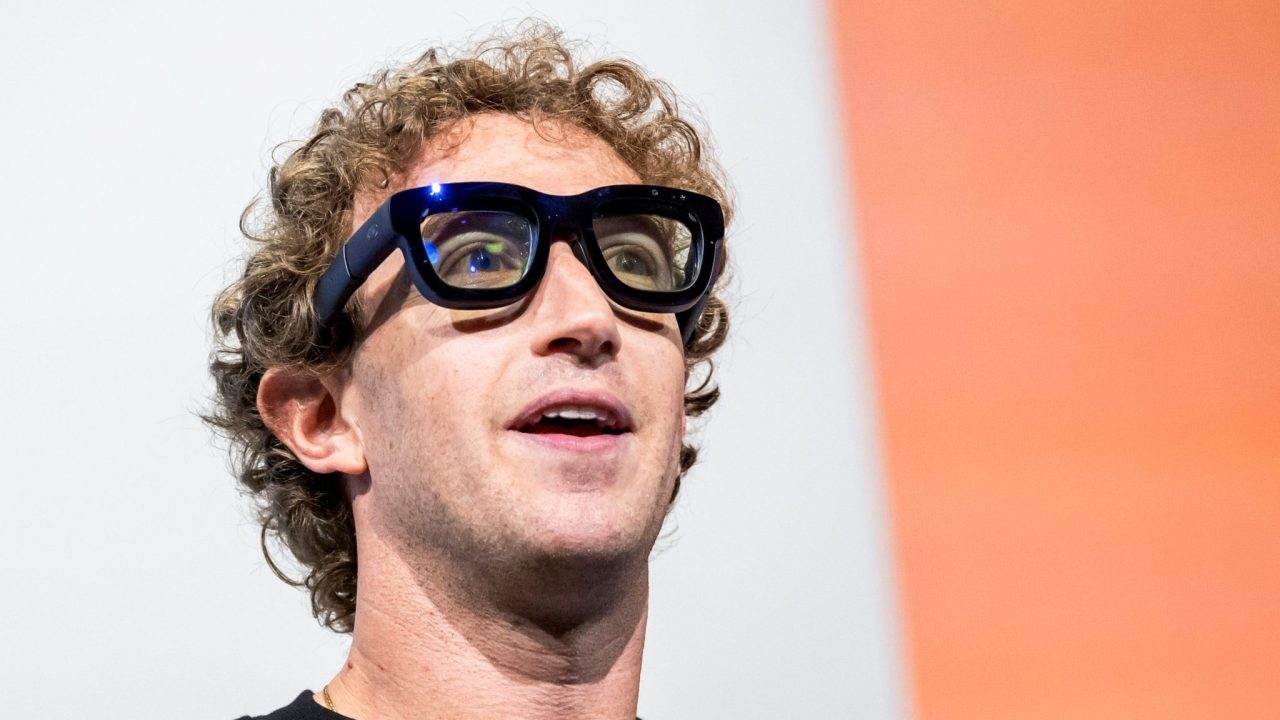
In her new memoir “Careless People,” Sarah Wynn-Williams, a former global public policy director at Facebook, details the shocking compromises the company was willing to make on censorship and data in order to get access to the China market. Taiwan even played a role. Her account is moving but in some ways, unsatisfying.
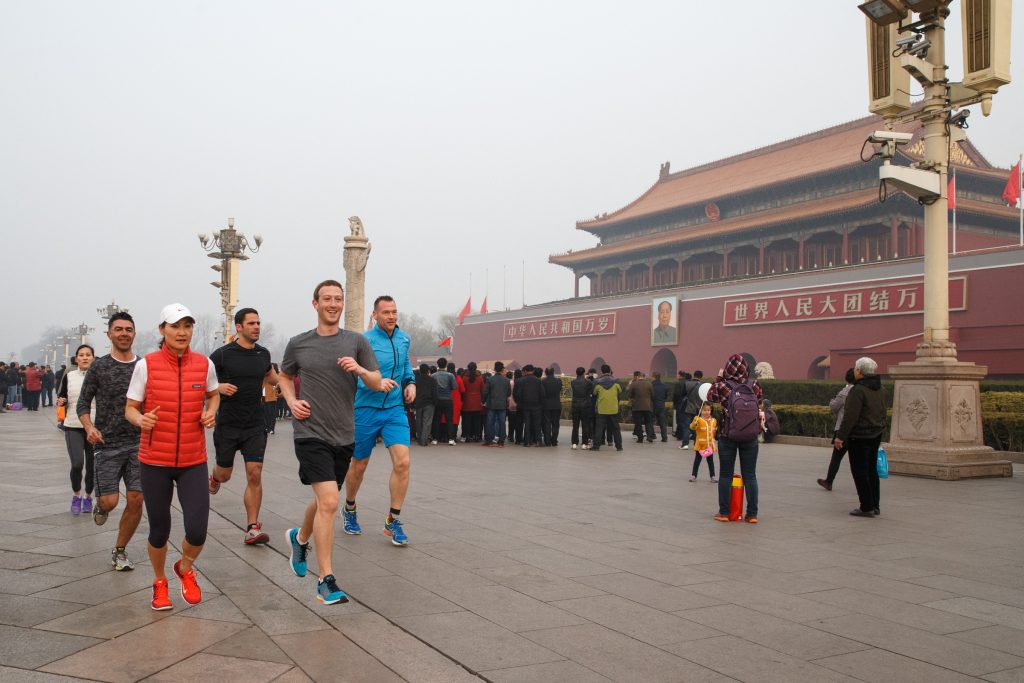
Wynn-Williams worked at Facebook between 2011 and 2017 during the height of its efforts to reenter China after it was banned in 2009 for stoking unrest in Xinjiang. By 2014, Facebook had rapidly expanded its business across the world. For Mark Zuckerberg, the final frontier was China.
Facebook created a value proposition for Beijing. Wynn-Williams says she came across the documents outlining this proposition while she was installed to run the China team in 2017. Facebook was willing to provide what Wynn-Williams termed a “white-glove service for the CCP,” using an acronym for the Chinese Communist Party, catering to China’s demands on censorship and data. At one point, Facebook was willing (and even preferred) to do the content moderation for China itself, despite explicitly acknowledging in an internal document that this approach would lead “Facebook employees [to] be responsible for user data responses that could lead to death, torture and incarceration.”
Ultimately, Facebook brought in Hony Capital, a Chinese private equity firm, to store Chinese user data and establish a content moderation team. Wynn-Williams writes that Facebook developed censorship tools for Hony to carry out Beijing’s censorship requests. This included facial recognition, photo tagging and other content moderation tools, as well as an emergency switch to block specific regions in China from accessing the app. Wynn-Williams says Facebook built a “virality counter” whereby “censorship tools would automatically examine any content with more than ten thousand views by Chinese users.” This mechanism had already been implemented in Taiwan and Hong Kong, according to the documents.
This last part stood out to me the most. It’s unclear whether this “virality counter” led to content removals or any other forms of content restriction in Taiwan. It’s also unclear whether this was implemented with consent from the Taiwanese government. Although the passage implies that the tool was deployed in Taiwan in such a way that would parallel its use in China, the lack of clarity makes it difficult to resolutely conclude what Wynn-Williams seems to want us to conclude — that Facebook beta tested bespoke censorship tools for the Chinese Communist Party in Taiwan.
It could be the case that Facebook used this tool in Taiwan for the sake of “democracy.” In both jurisdictions, Facebook has (or would have) a responsibility to purify the information environment. Online forums like Facebook are vulnerable to information manipulation. This is especially true in Taiwan, where Facebook is one of the most popular social media platforms and where Chinese disinformation campaigns strike the hardest.
Facebook has been vocal about its efforts to help Taiwan combat disinformation, particularly during election season. In a report documenting Facebook’s efforts to help protect the integrity of Taiwan’s 2020 elections, the company wrote, “‘Power to the People’ reflects the democratic value of Taiwan. Similarly, Facebook’s mission is to give people the power to build community and bring the world closer together.” The report went on to discuss the importance of combatting viral misinformation.
Regardless of what the “virality counter” mechanism looks like in practice, to use Taiwan as a case study in a censorship pitch to the Chinese Communist Party is unfair and disingenuous. Despite the fact that Taiwan is subject to more disinformation than any other place in the world, Taiwan is highly sensitive to censorship and staunchly committed to upholding freedom of speech. Even though it may face increased risks vis-a-vis TikTok, for example, Taiwan has been very reserved in its attempts to regulate it.
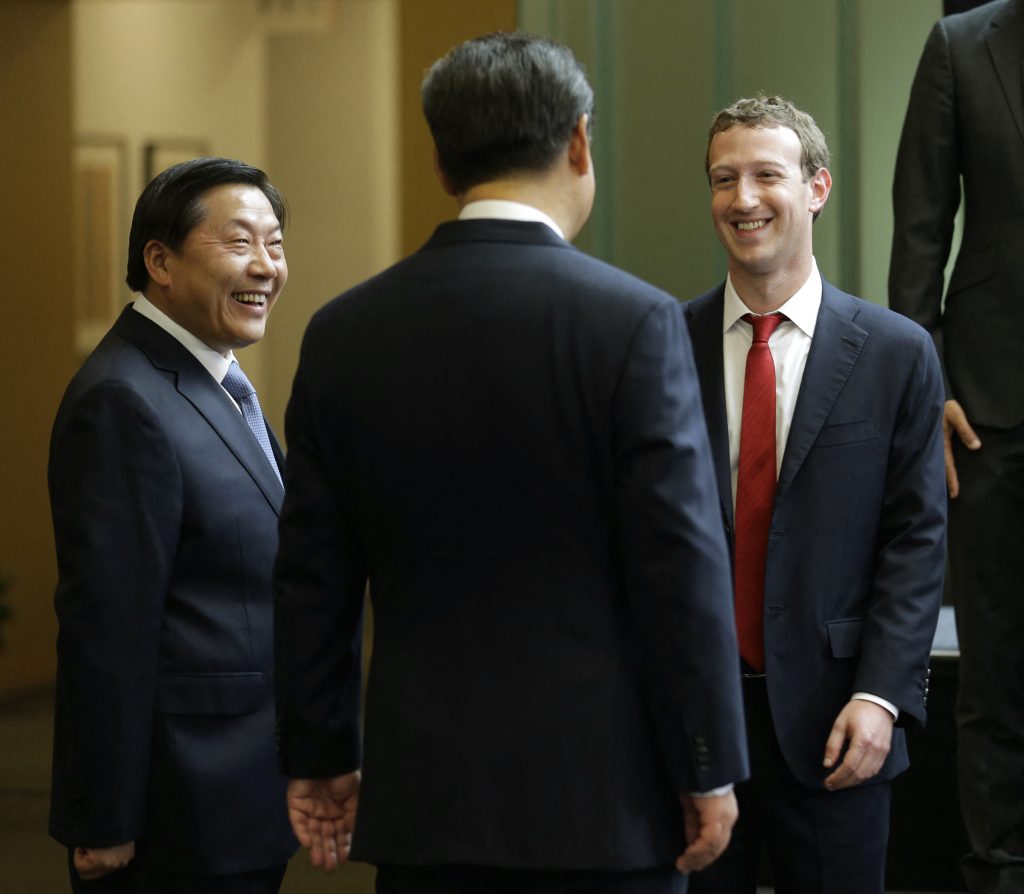
Wynn-Williams’ account ends around 2017 when she was fired. Unfortunately, this means that her memoir doesn’t cover Facebook’s about-face from its China strategy around 2018 and 2019. This shift was publicly documented in a speech Zuckerberg gave at Georgetown University in October 2019, in which he decried Chinese censorship and said that China’s misaligned vision for the internet was one of the reasons Facebook was abandoning its ambitions there.
Given that Zuckerberg’s speech took place two years after Wynn-Williams left, this gap in our understanding of Facebook’s inner workings gives just enough wiggle room for Meta — rebranded as Facebook’s parent company in 2021 — to stick with the narrative that they changed their China strategy for principled reasons.
With regard to the Wynn-Williams’ book as whole, Meta stated that it is a “mix of out-of-date and previously reported claims about the company.” But Meta is clearly good at telling partial truths.
While it’s true that Facebook’s development of censorship tools for the Chinese government had been previously reported in 2016 and 2017, seeing the emails and documents laid out conveys a powerful sense of the hypocrisy that is going on here — how words are twisted and information is omitted to obscure reality. While Facebook built censorship tools for China, it framed these efforts to enter the China market using terms that are palatable to Western democracies, such as “making the world more open and connected.”
It seems more likely that Facebook’s new willingness to criticize China was a pragmatic — rather than a principled — shift away from a country that ultimately didn’t want to let them in. In 2018, just one day after Facebook got permission to open a subsidiary in China, this permission was revoked. The New York Times reported that the Cyberspace Administration of China felt that it had not been consulted closely enough. Per Wynn-Williams’ account, the new head of the administration, Zhao Zeliang (赵泽良), was less keen than his predecessor on Facebook reentering China. And by this point, Chinese social media giants like WeChat had filled the void left by Facebook, Twitter and the like.
Across the Pacific, Zuckerberg might also have been motivated to get tough on China in order to align himself more closely with the Trump administration and the growing hawkish consensus in Washington. Before a congressional antitrust hearing in 2020, Zuckerberg accused China of stealing American technology and declared that Facebook is a “proudly American” company. Zuckerberg had failed to get Facebook back into the China market anyways — why not turn this into an opportunity to make nice with an administration that thinks his company is too powerful?
By the end of the book, I was exhausted by Facebook’s constant use of distorted, value-laden explanations to publicly justify its decisions. Wynn-Williams wants us to understand that Facebook can’t be trusted. Perhaps a fairer conclusion is that corporations can’t be uncompromised moral actors. Actions speak louder than words.





Leave a Reply