Jimmy Lai Speaking in Court
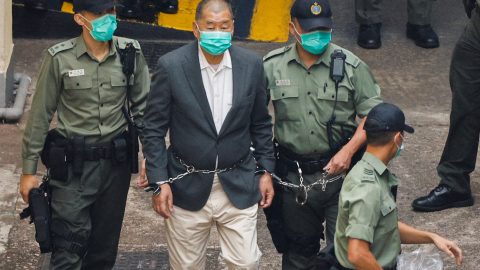
Since his national security trial restarted November 20, Jimmy Lai (黎智英) has been answering questions about whether or not he asked the U.S. to sanction Hong Kong and his role in the pro-democracy protests that surrounded the passing of the 2020 National Security Law.
Faced with a life sentence on two different charges under the same National Security Law, the 76-year-old has denied trying to influence foreign policy in Hong Kong and defended the idea of “delivering freedom” through pro-democracy newspaper Apple Daily. However, having initially denied discussing sanctions on Hong Kong with former U.S. secretary of state Mike Pompeo, he said he “must have” done so after being presented with an Apple Daily article which quoted him saying so at the time.
Lai’s son Sebastien Lai (黎崇恩) has said the trial is “a complete show trial.” His lawyers have said he has been mistreated in custody.
U.N. Working Group Calls for Lai’s Release
Prior to the trial’s restart, the U.N. Working Group on Arbitrary Detention called for Lai’s immediate release. It said it found multiple violations of Lai’s fundamental rights and freedoms, and that his detention was unlawful and arbitrary.
Sebastien Lai said: “I hope the Working Group’s ruling will strengthen the resolve of governments around the world who support freedom, democracy and human rights to secure my father’s freedom, and save his life.”
European Parliament Passes Lai Resolution
On November 28, members of the European Parliament (MEPs) passed a resolution calling for Hong Kong authorities to “immediately release Jimmy Lai and all pro-democracy activists.” The resolution also called for the repeal of the 2020 National Security Law and condemned the application of the National Security Law beyond Hong Kong’s borders, which it said had seen “increasing repression by Chinese and Hong Kong authorities aimed at diaspora communities in the EU.”
These calls were further backed by a request for sanctions. “MEPs urge the Council to review its 2020 conclusions on Hong Kong and impose sanctions on Hong Kong and Chinese officials responsible for human rights violations,” the resolution stated.
British Prime Minister Backs Lai
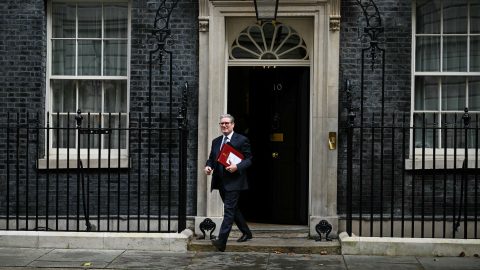
In his first meeting with Chinese President Xi Jinping (習近平) last month, British Prime Minister Keir Starmer raised the issue of Jimmy Lai’s “deterioration.” However, critics have noted that Starmer did not actively call for Lai’s release.
“I’m very pleased that my foreign secretary and foreign minister Wang [Yi (王毅)] met recently to discuss respective concerns including on human rights and parliamentary sanctions, Taiwan, the South China Sea and our shared interest in Hong Kong. We are concerned by reports of Jimmy Lai’s deterioration,” Starmer said at the G20 event in Brazil.
Taiwan Civil Rights Groups Back Hong Kong 47 After Sentencing
Civil rights groups held a press conference in Taipei on November 25, calling for the release of the Hong Kong 47. The previous week, 45 of 47 Hong Kong pro-democracy figures charged with conspiracy were sentenced to serve prison time for their parts in organizing an illegal poll to choose candidates in local elections.
Director of the Peng Foundation for Culture and Education Lo Chun-xuan (羅浚晅) said the verdict was the “death knell” for Hong Kong’s democracy. He added that it served as proof of the Chinese Communist Party’s anti-democracy and anti-human rights positions, as well as the superficiality of its “one country, two systems” policy.
Property Price Fall Attributed to Crackdown
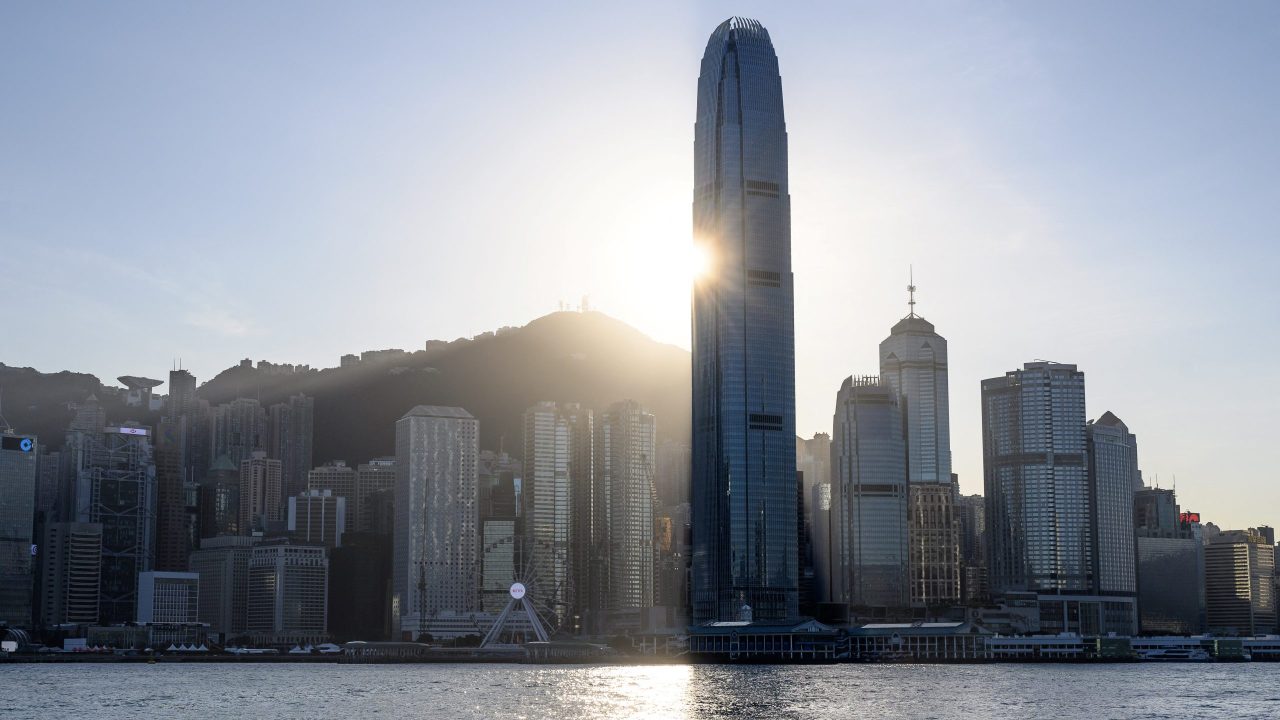
Hong Kong house prices that have fallen by more than a quarter since the end of 2021 have been partly attributed to “draconian national-security laws and a lack of clarity about the city’s role within, rather than alongside, China’s economy.” The Economist has reported that alongside issues such as global interest rate rises and more people working from home, the security laws have created an uncertain future for international investors. The same report also pointed out that office vacancy rates are at a 25-year high and rental prices have fallen by 40 percent from a peak in 2019.


Leave a Reply