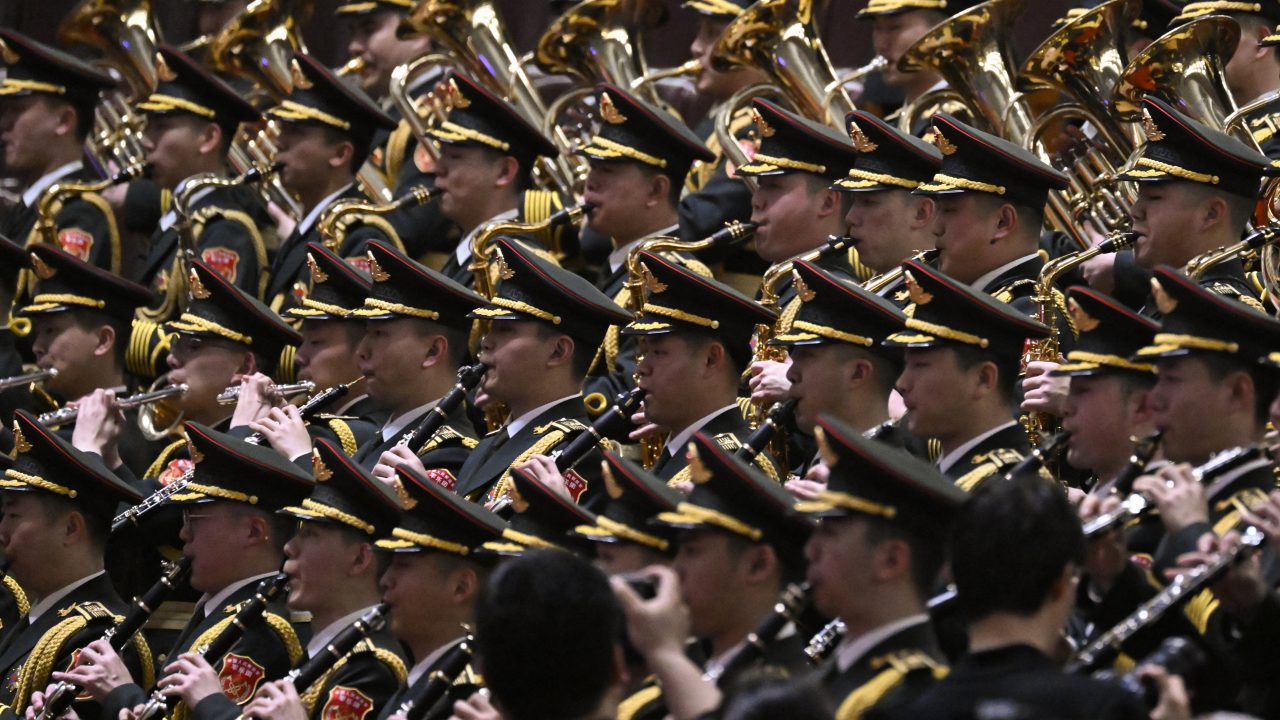
On April 19, 2024, the People’s Liberation Army (PLA) underwent a major reorganization. The PLA Strategic Support Force (PLASSF) was disbanded and replaced by a new PLA Information Support Force (PLAISF). Various other constituents of the now-defunct PLASSF have been subordinated under the Central Military Commission. The latest streamlining of the Chinese Communist Party’s (CCP) armed wing underscores the regime’s efforts to adapt to new trends in military modernization.
The new PLAISF has also been elevated to “deputy theater command” grade — a higher status than its previous designation as the old Information Communications Base under the PLASSF. Broadly speaking, the PLAISF is responsible for the PLA’s operations in the information domain, which includes strategizing data and information security as the Chinese military shifts towards a network-centric force. This reform shows the growing attention placed on modern warfare in the cyber, space and information domains in the CCP’s restructuring of the PLA.
An informatized military refers to how the various service branches and theater commands would collect and share data with one another, as the PLA also strives towards intelligentization. This serves as yet another testament to the PLA’s continuous efforts to adapt to an already heavily informatised operational environment — as the world’s leading militaries prepare for “intelligentized warfare” on the horizon.
The centrality of information in warfare and its important role in the PLA’s history is not new. Since its inception in 1927 as the Chinese Workers and Peasants’ Red Army, control over information had proved indispensable in ensuring the CCP’s survival after its defeat to the Kuomintang in the Jiangxi Soviet in late-1934.
Following Generalissimo Chiang Kai-shek’s (蔣中正) fifth encirclement campaign against the Jiangxi Soviet between 1933 and 1934, the CCP central leadership and its depleted forces embarked on the Long March before reaching a safe haven in northern Shaanxi in 1935. The restructuring of the CCP’s intelligence capabilities — which were lauded by former premier Zhou Enlai (周恩來) as a “lantern” in the “dark night” in saving the Party — had seen the formation of the Second Bureau under the former General Staff Department (GSD) a few years earlier.
As a response to the rudimentary intelligence that led to communist losses, the Second Bureau consisted of highly specialized units aimed at collecting and intercepting Kuomintang (KMT) intelligence. The Second Bureau’s importance was reflected in its equal status to the GSD’s First Bureau, which was responsible for conducting warfare. Depending on the operational environment, elements of the Second Bureau functioned on a dual track — from being autonomous and highly agile units, to coming under the GSD’s direct command when the situation required.
The PLA’s latest restructuring likely stems from the tacit recognition of the growing importance of informatized and intelligentized warfare as advanced technologies enter the modern battlefield.
Just as the Red Army had developed its signals intelligence capabilities in response to the stronger KMT forces in the earliest phase of the communist revolution, the PLA is likely responding at present to the modernisation of the world’s other advanced militaries. Beijing is now playing catch-up in terms of bolstering its own offensive and defensive information capabilities.
By elevating the grade of the PLAISF from that of its predecessor, the Information Communications Base, to deputy theater command grade, the ISF now joins the other three branches at this grade — the Aerospace Force, Cyberspace Force and the Joint Logistics Support Force.
The PLA also appears to be increasing the interconnectedness between the information, space and cyber domains and its four theater command grade services — Army, Navy, Air Force and Rocket Force. This would likely increase the interoperability between the services and the branches, as well as bridge the gap in supporting the PLA’s mastery over information across the various operational domains.
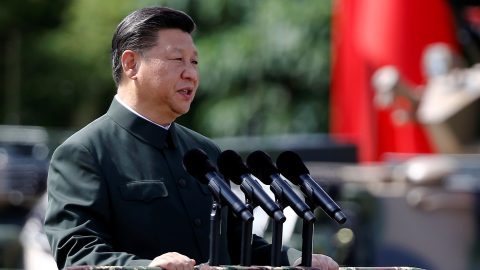
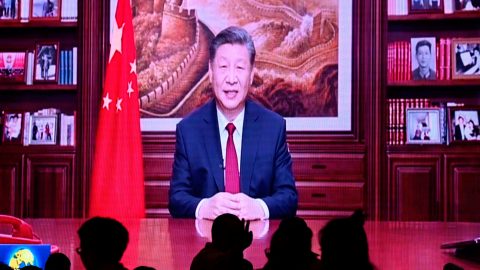
In clarifying the rationale for this latest restructuring, the Chinese balloon incident — where an unmanned aerial object drifted into U.S. airspace in early 2023 — possibly points to a long-overdue change in the former PLASSF’s force structure. According to U.S. intelligence, the event had been deemed a mistake caused by errant PLA officers overseeing near-space reconnaissance, causing embarrassment to Chinese President Xi Jinping (習近平).
The incident could have further accentuated another area of weakness acknowledged by the PLA in its 2019 White Paper. While it has worked to enhance its technological prowess, such as medium- and long-range strike capabilities, controlling those technologies and keeping abreast of battlefield situations remains weak owing to its low-level capabilities. The grade elevation of the various departments formerly under the PLASSF — especially the PLAISF — reflects Chinese defense planners’ efforts to harness and hone the PLA’s control of the information sphere.
The dismantling of the PLASSF represents a step closer towards achieving the vision of seamless interconnectedness between the different service branches of the PLA.
Recent changes aside, revisiting the CCP’s early exploitation of intelligence on the battlefield also informs us about the latest changes to its armed wing. By giving intelligence pride of place in the Party army, the regime ultimately is reaffirming that knowledge equals power.
Chia Shimin is a recent graduate from the Master of Science programme at the S. Rajaratnam School of International Studies, Nanyang Technological University, Singapore.
James Char is Assistant Professor with the China Program and Deputy Coordinator of the Master of Science (Asian Studies) program at the S. Rajaratnam School of International Studies, Nanyang Technological University, Singapore.
This article is republished from East Asia Forum under a Creative Commons license. Read the original article.



Leave a Reply