U.S. Phones Hacked
More than a million people in the U.S. have had their phones hacked by Chinese hackers, according to the FBI and Homeland Security’s cyber officials. The hackers targeted a larger number of people before honing in on a smaller number of “important, high-profile” Americans, according to ABC News. China was then able to obtain audio calls and text messages from some of those people.
“This is the worst telecom hack in United States history. The Chinese have been into our telecom networks since at least 2023,” said Virginia Senator Mark Warner, chairman of the Senate Intelligence Committee.
Xi Says Mandarin Should Be Spoken in Border Regions
Mandarin, the most common Chinese language, should be “spoken more broadly” in China’s border regions, President Xi Jinping (習近平) said at a Politburo study session last week.
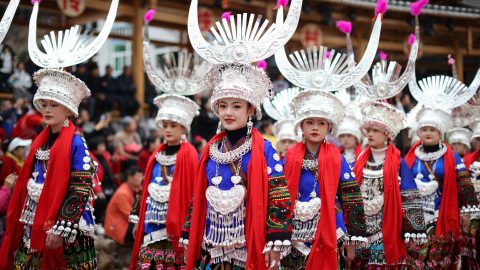
“We should continue to deepen efforts on ethnic unity and progress, actively build an integrated social structure and community environment, and promote the unity of all ethnic groups — like pomegranate seeds tightly held together,” Xi said.
Radio Free Asia pointed out that in 2021 China’s Ministry of Education, National Rural Revitalization Bureau and National Language Commission said that by 2025, China aims for Mandarin to be spoken and understood in 85 percent of the country as a whole and in 80 percent of rural areas.
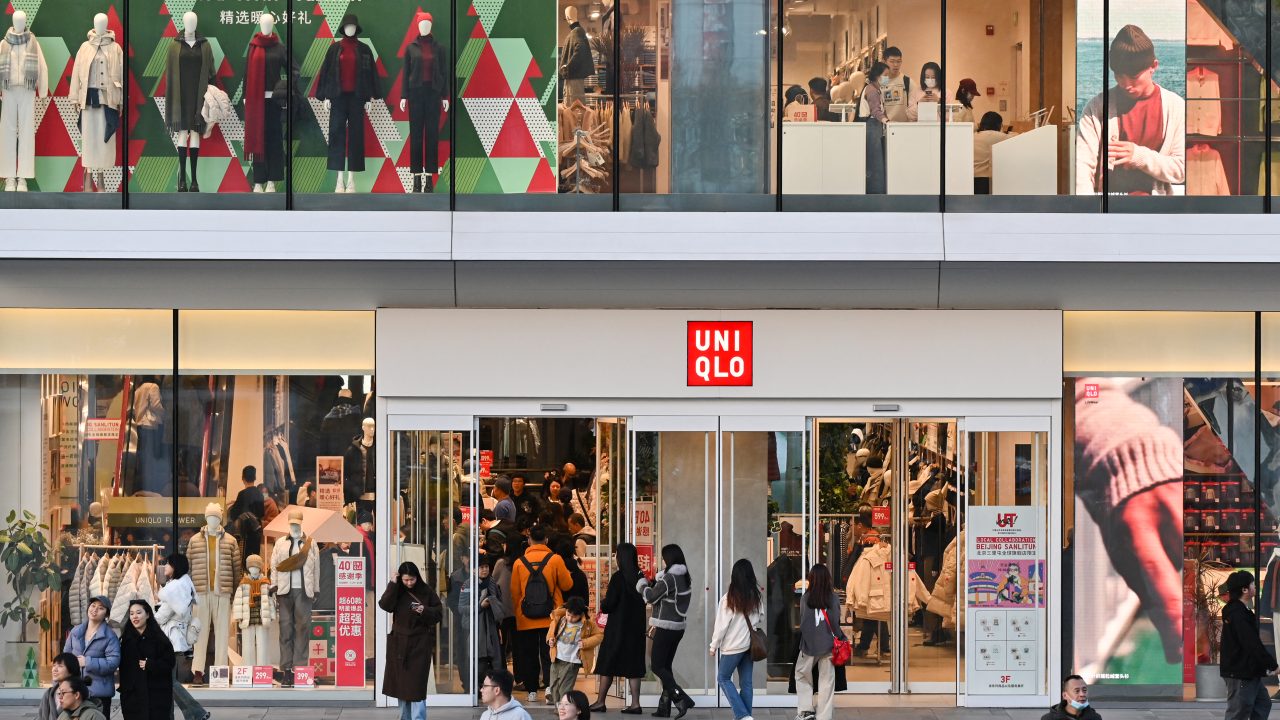
Uniqlo Doesn’t Use Xinjiang Cotton
Global fashion outlet Uniqlo has publicly said it does not use Xinjiang cotton for the first time. In 2022, when the U.S. brought in regulations banning its use, chief executive Tadashi Yanai refused to comment on whether the brand used the cotton or not, saying his company wanted to be “neutral” between the U.S. and China, but in an interview with the BBC in Tokyo last month Yanai said: “We’re not using [cotton from Xinjiang],” although he declined to discuss the issue further.
China remains Uniqlo’s biggest manufacturing hub, and Yanai said the firm has plans to increase its number of stores in China.
Delivery Company Used by Shein and Temu Underpaying Workers
UniUni, a delivery company that provides last-mile delivery services for Chinese e-commerce platforms Shein and Temu, has been accused of paying drivers less than minimum wage.
Both Shein and Temu have regularly been criticized for their rights records. Most recently, in August, Shein revealed that it found two cases of child labor in its supply chain last year.
Shein’s business model “involves subcontracting the manufacturing of garments down a chain of smaller producers in China — with little transparency and accountability for the pay or conditions endured by workers — and where there is no legal right to assembly or to unionise,” Amnesty International summarized in June.
Two Companies Banned by U.S.
The U.S. Commerce Department added two new Chinese companies to its banned entities list last week.
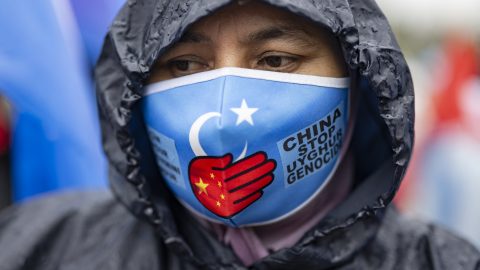
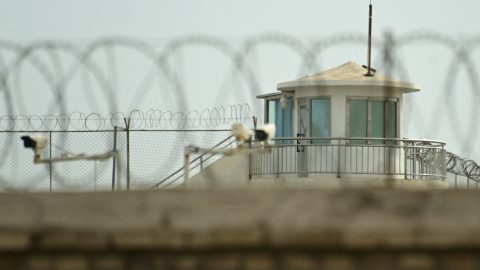
Zhejiang Uniview Technologies (宇視) was added because “it enables human rights violations, including high-technology surveillance targeted at the general population, Uyghurs, and members of other ethnic and religious minority groups.”
Beijing Zhongdun Security Technology Group (北京中盾安防科技集團有限公司) was added for selling products that “enable China’s public security establishment to carry out human rights violations.”
Canada Sanctions Officials
Last week, Canada sanctioned eight Chinese officials for involvement in human rights violations in Tibet and Xinjiang, and against followers of Falun Gong (法輪功), a religious movement banned in China.
“Canada is deeply concerned by the human rights violations in Xinjiang and Tibet and against those who practice Falun Gong,” Canadian Foreign Minister Melanie Joly said.
International Human Rights Day Calls
On International Human Rights Day (December 10), numerous figures called China to address rights issues.
The EU Delegation in China released a statement calling on China to “respect, protect, and fulfil human rights for everyone, including persons belonging to ethnic, religious, and linguistic minorities.” It highlighted the treatment of Uyghurs and Tibetans, called for the eradication of the death penalty, and a guarantee of fair trials and due process for all.
Protesters from Hong Kong, Inner Mongolia, Xinjiang, and Tibet held a protest outside the Chinese Embassy in London, calling for the British government to confront China over rights abuses.
U.S. Ambassador to China Nicholas Burns called on China to “halt its ongoing abuses in Xinjiang, Tibet, and Hong Kong and [reiterated the U.S.’s] deep concern about the PRC’s restrictions on fundamental freedoms and use of transnational repression.”
Xi Inauguration Invite a ‘Slap in the Face’
President-elect Donald Trump’s invitation for Xi Jinping to attend his inauguration has been described as a “slap in the face to Uyghurs.”
“For Uyghur Americans, the symbolism of Xi’s invitation to attend such a high-profile event … feels like a betrayal — a signal that the U.S. may deprioritize human rights advocacy in favor of smoothing over relations with Beijing,” Julie Millsap, formerly of the Uyghur Human Rights Project, wrote in The Diplomat.
Chinese Weapons Makers Selling Weapons in U.S.
Chinese weapons makers selling weapons used for policing in Xinjiang are also selling weapons in the U.S., Europe and India, according to the International Consortium of Investigative Journalists.
World’s Largest Solar Farm Criticized
The world’s largest solar farm has been criticized for its positioning in Xinjiang.
“Who will truly benefit from this project?” asked Elfidar Iltebir, a Uyghur-American activist born in Urumqi and president of the Uyghur-American Association. “How many Han Chinese workers will be transferred to the region, further diluting the Uyghur population? How much Uyghur land, including graveyards and homes, has been repurposed for this solar farm?”





Leave a Reply