
Attacks on Canada-Based Dissidents Rise
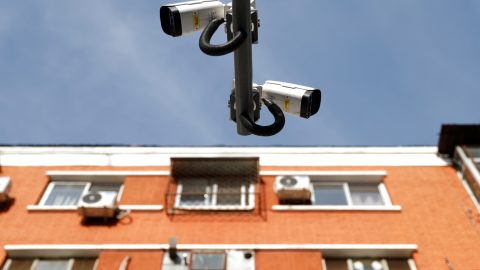
Targeted attacks against Chinese dissidents living in Canada are “on the rise,” according to a report from CBC News commissioned as part of a wider International Consortium of Investigative Journalists (ICIJ) project. It said those who spoke out in Canada about issues such as Xinjiang or Taiwan had their families back in China targeted with threats to ensure they stopped speaking out.
“You’ve got a foreign government that is causing Canadian citizens and permanent residents to not feel safe in Canada, to not feel they can exercise their own rights and freedoms and speak out,” Michael Kovrig, a former diplomat and expert on Asia who was detained by China for more than 1,000 days, told CBC News.
Liu Pengyu (劉鵬宇), spokesperson for the Chinese embassy in the U.S., told the ICIJ that “There is no such thing as ‘reaching beyond borders’ to target so-called dissidents and overseas Chinese… [T]he Chinese government strictly abides by international law and the sovereignty of other countries.”
Infiltration of Activist Groups
China’s government is using spies to infiltrate dissident groups and feed back information to its security services, according to a new report by the ICIJ. Forty-eight targets of China’s transnational repression told the ICIJ they believe they have been spied on, have been asked to spy on others or know of people asked to become informants.
“They’re reaching out globally in every way to try and destroy opposition, and intelligence is one of them,” Nicholas Eftimiades, author of the book “Chinese Espionage Operations and Tactics,” said.
At their meeting in June, the leaders of the Group of Seven industrialized nations issued a joint statement condemning transnational repression “as an important vector of foreign interference” and pledged to boost cooperation to protect their sovereignty and the targeted communities.
U.K.’s China Audit
The U.K. Labour government’s China audit described the repression of Hong Kongers as one of the key “threats” from China that the U.K.’s China policy must seek to address, according to a summary given by Foreign Secretary David Lammy in parliament last week.
Lammy also said the U.K. will “never shy away from shining a spotlight on human rights, notably the situations in Xinjiang and Tibet” and will “insist that China honours its commitments under the Sino-British Joint Declaration, including by repealing the National Security Law and releasing [Apple Daily founder] Jimmy Lai (黎智英).”
EU-China Human Rights Dialogue
The 40th EU-China Human Rights Dialogue took place on June 13 in Brussels. Ahead of the dialogue, Human Rights Watch called for it to be suspended and “replaced by more meaningful and impactful measures.” An EU statement on the dialogue said “Discussions covered … fundamental freedoms, labour rights, judicial independence, economic and social rights, and human rights related activities in multilateral fora.”
The EU said it had challenged China over “persistent restrictions” on freedom of expression, religion or belief, peaceful assembly, and the right to equality and non-discrimination, as well as “restrictions on labour rights, the use of forced labour and labour transfer programmes.”
The EU also brought up the cases of a number of individuals, including Jimmy Lai and citizen journalist Zhang Zhan (張展), currently re-detained after an initial four years in prison following her reporting on the breakout of COVID-19 in Wuhan.
Hungary and China Share Views on Rights
A delegation of Chinese officials and academics attended a seminar on international human rights in Budapest at the end of June. Chinese Ambassador to Hungary Gong Tao (龚韬) said they had focused on principles of non-interference and mutual respect, saying both countries firmly oppose politicizing human rights issues and reject double standards.
Hungary remained the largest recipient of Chinese foreign direct investment into Europe last year and has pushed against EU regulations monitoring supply chains for human rights and environmental infringements.
Persecution of Rights Lawyers
Rights groups including Amnesty International used the 59th session of the U.N. Human Rights Council to bring up the persecution of human rights attorneys in China. In particular, they raised the cases of lawyer Gao Zhisheng (高智晟), who was forcibly disappeared in 2017, and Ding Jiazi (丁家喜), who was sentenced to a year in prison in 2023 for attending a meeting of lawyers.
Tibetan Education
There are more than 800,000 students in boarding schools across Tibetan areas of China, according to the Tibet Action Institute. These schools, which begin at preschool age, teach in Mandarin and their lessons “glorify the Communist Party and Chinese identity,” according to a recent report in The Wall Street Journal.





Leave a Reply