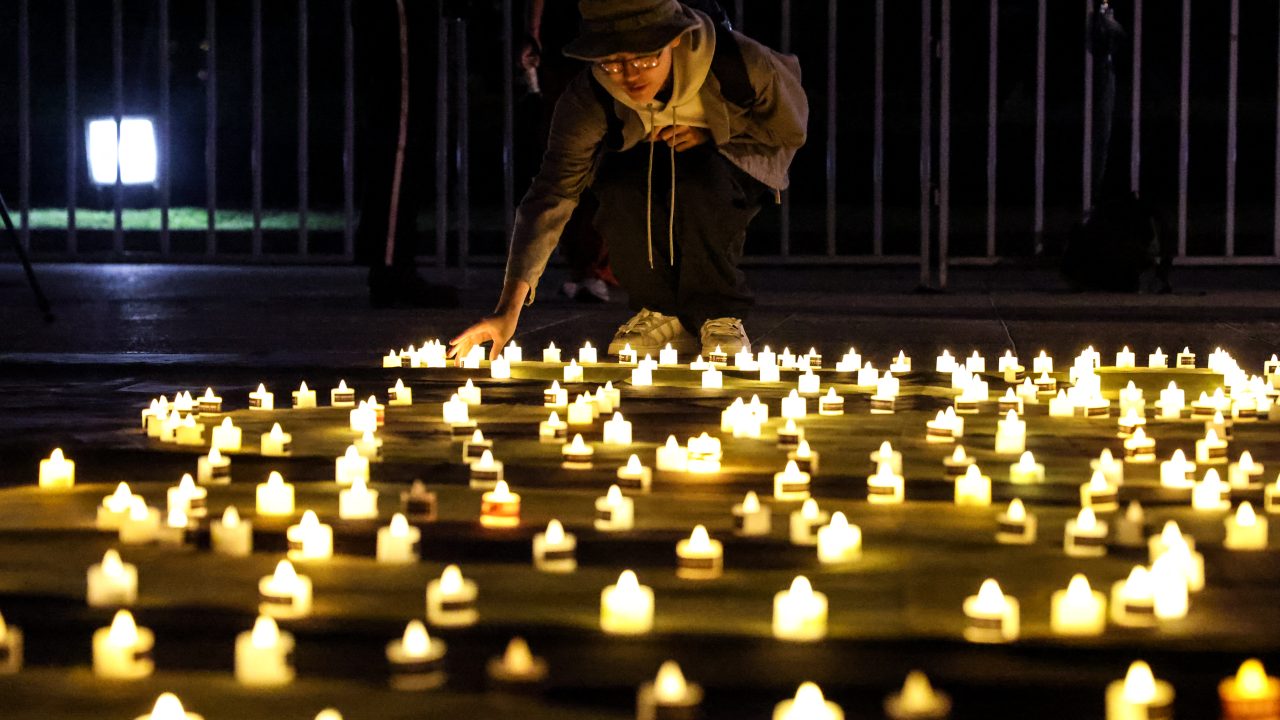
Tiananmen Square 36th Anniversary
U.S. Secretary of State Marco Rubio said the world will “never forget” the Tiananmen Square crackdown on June 4, 1989, in which hundreds of protesters are said to have been killed by troops and tanks. “Today we commemorate the bravery of the Chinese people who were killed as they tried to exercise their fundamental freedoms, as well as those who continue to suffer persecution as they seek accountability and justice for the events of June 4, 1989,” Rubio added.
Chinese foreign ministry spokesperson Lin Jian (林劍) responded by saying Beijing had “lodged a solemn protest” over Rubio’s comments. Lin said the comments “maliciously distort historical facts … and seriously interfere in China’s internal affairs.”
In a statement about the anniversary and crackdowns on remembrance events in Hong Kong in particular, the Human Rights Foundation said: “remembrance itself has become a form of resistance, carried forward by digital tools, diaspora communities, and a new generation committed to preserving the truth.”
Human Rights Watch called on China to address the events 36 years on. Human Rights Watch’s China researcher Yalkun Uluyol said: “The Chinese government has never owned up to the Tiananmen Massacre, much less provided redress for victims and their families. Beijing’s enforced amnesia has deepened authoritarian rule in China, yet it has not extinguished demands for the truth, democracy, and respect for human rights.”
EU-China Human Rights Dialogue
The 40th EU-China Human Rights Dialogue is planned for June 13 in Brussels. Ahead of the dialogue, Human Rights Watch called for it to be suspended and “replaced by more meaningful and impactful measures.” It said Chinese officials “do not engage in the dialogue with a view to consider changing policies and adopting reforms as necessary to implement their human rights obligations.” Nevertheless, with the dialogue going ahead, Human Rights Watch said the EU should call for action in Xinjiang, Hong Kong, Tibet and against surveillance across China.
Mental Health Law Used Against Activists
Victims and activists say involuntary hospitalization is “common” in China, following the enactment of the Mental Health Law of the People’s Republic of China (中華人民共和國精神衛生法) in 2013. The Guardian spoke to a number of people who had been sectioned on mental health grounds following involvement in protests, and noted that more than 100 people have attempted to bring legal cases related to involuntary hospitalization against hospitals, police or local governments between 2013 and 2024.
China Leads World Fishing Numbers
On the International Day for the Fight Against Illegal, Unreported and Unregulated Fishing, conservation group Oceana released a report showing China’s “57,000 … industrial fishing vessels dominated 44% of the world’s visible fishing activity.”
“To protect our oceans and fisheries, we must know who is fishing and where,” said Max Valentine, illegal fishing and transparency campaign director and senior scientist at Oceana. “It is critical that we have eyes on the seas, paying close attention to the world’s largest fishing fleets, especially from China, which have been linked to illegal, unreported, and unregulated fishing and human rights abuses at sea. The sheer scale of China’s distant-water fleet has a profound impact on marine ecosystems worldwide,” he added.
In April, China signed up to the United Nations Food and Agriculture Organization’s Agreement on Port State Measures, the only legally binding international treaty in the world to target illegal, unreported and unregulated fishing. But Valentine told Domino Theory that the test of this progress would come in the implementation, “If not, this ratification will only be lines on a paper instead of action on our oceans.”
Calls for Scottish Parliament Presiding Officer to Bring Up Human Rights
Members of the Scottish Parliament called on the parliament’s presiding officer, Alison Johnstone, to bring up China’s human rights record ahead of a rescheduled meeting with China’s consul general in Scotland, Zhang Biao (張飆). The meeting had originally been scheduled for June 4, but was then moved.
“Where such meetings are required, I would trust that the human rights issues are always addressed directly in discussions,” a letter from Scottish Greens co-leader Patrick Harvie said. “This is not only important in relation to inter-governmental meetings; as a democratic body it is important that the Parliament itself speaks up for democratic values, especially when meeting with regimes which suppress pro-democracy movements.”
China Elected to U.N. Economic and Social Council
Last week, China was one of 54 countries to be elected to the U.N. Economic and Social Council. The Economic and Social Council deals with economic, social, cultural and health matters as well as human rights and fundamental freedoms. The U.N. Charter gives the council power to “make recommendations for the purpose of promoting respect for, and observance of, human rights and fundamental freedoms for all.”
U.N. Human Rights Council Schedule
The International Service for Human Rights has called on the U.N. Human Rights Council to “request information about concrete action taken regarding the situation in Xinjiang,” as well demanding the “prompt release” of a large number of “rights defenders” who have been imprisoned. The U.N. Human Rights Council will meet from June 16 to July 9.




Leave a Reply