
Forced Urbanization of Tibetans
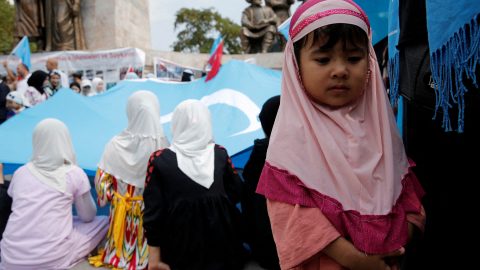
Since 2016, officials in China have increasingly been using coercive tactics to force Tibetan villagers to relocate to areas hundreds of kilometers away from their homes, according to a new report by Human Rights Watch. The report said herders are often being moved to farming areas and farmers are being moved to either urban or adjacent areas “where they will be entering the labor market without the Chinese language skills or the vocational experience to do so.”
According to the report, news articles within China describe significant reluctance to relocate in many rural villages. Tactics used to force villagers to move include “repeated home visits; denigrating the intellectual capacity of the villagers to make decisions for themselves; implicit threats of punishment; banning of criticism; and threats of disciplinary action against local officials who fail to meet targets.”
Chinese Students Abroad Targeted
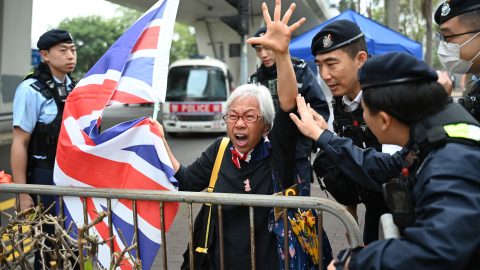
Students from Hong Kong and China are being targeted by Chinese authorities for engaging with political issues while abroad, according to a new report by Amnesty International. Interviewed students describe being photographed and followed after attending protests. They also say their families have been targeted and threatened by police back in China.
More than half of the students Amnesty spoke to for the report said they regularly self-censored their online output on non-Chinese platforms because they feared Chinese authorities were watching.
Digital Silk Road Exporting Authoritarianism
China’s “Digital Silk Road,” which helps countries such as Cambodia, Malaysia and Vietnam to access infrastructure such as submarine cables, satellites and 5G connectivity, is being used to facilitate authoritarian governance in these countries, according to a new report by U.K.-based think tank Article 19.
“[In] the hands of authoritarian states, the infrastructure built by Chinese companies can support policy changes to exert greater control over the internet, through mass data gathering, surveillance and censorship,” a summary on the group’s website outlined.
Volkswagen Response on Uyghur Forced Labor Link
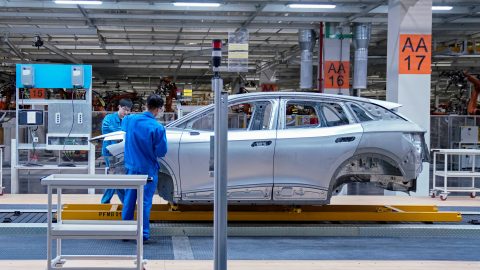
Volkswagen has said a small electronic part produced by a sub-supplier has been replaced in all cars on sale globally in response to Human Rights Watch saying it had failed “to adequately investigate potential links between its supply chains in China and forced labor.”
The response comes after a number of links between Volkswagen and Uyghur forced labor had turned up in recent months, including Volkswagen telling U.S. customs officials about the small electronic part mentioned in the new statement. The sub-supplier of the part was listed by U.S. authorities in December 2023 as being connected to Uyghur forced labor.
Forced Return of North Korean Refugees
Around 60 North Korean refugees were returned to North Korea following a meeting between its leader, Kim Jong Un, and China’s third-highest ranking official, Zhao Leji (趙樂際), last month. Human Rights Watch has said they are at “grave risk of enforced disappearance, torture, sexual violence, wrongful imprisonment, forced labor, and execution.”
Rare-Earth Extraction in Myanmar
The vast majority of China’s rare-earth imports come from Myanmar, and this means its industry is being fueled by human rights abuses, according to Global Witness. “The reports that we have from community members of damage to skin and to internal organs are consistent with findings, scientific studies into the effect of these chemicals on people,” said Ben Ayre, head of data investigations at Global Witness.
Illegal Fishing Appears Alongside Mistreatment of Crews
The Environmental Justice Foundation has said “urgent action” is needed to limit the impact of China’s fishing fleet after interviewing hundreds of fishers from Chinese boats and finding violent abuses of crews alongside the intentional killing of endangered wildlife.
Xinjiang Cotton Found in Almost Twenty Percent of Merchandise
Xinjiang cotton was discovered in 19% of merchandise sold in the U.S. and globally, according to a new study published at the start of May. The U.S.’s Uyghur Forced Labor Prevention Act is designed to prevent cotton imports coming “wholly or in part” from Xinjiang from entering the U.S., which it says is because of the use of forced labor in the region.



Leave a Reply