
This roundup of human rights issues in China focuses on school teachers being told to hand in passports and the structure of China’s state surveillance system.
European Parliament Condemns Rights Violations in Xinjiang
Last week, the European Parliament passed an emergency resolution which “strongly condemns the [People’s Republic of China’s] violations of the human rights of Uyghurs and people in Tibet, Hong Kong, Macau and mainland China.” The resolution condemned the “unjust imprisonment” of Uyghurs, in particular Ilham Tohti, who worked to promote dialogue between Uyghurs and Han Chinese people, and Gulshan Abbas, whose sister is a Uyghur human rights activist in the U.S.
China’s Foreign Ministry spokesperson Mao Ning (毛寧) said that the accusations were unfounded and that the European Parliament had turned a “blind eye” to rights violations in Gaza. “We strongly urge the European Parliament to immediately stop making up lies to smear China, stop interfering in China’s internal affairs and judicial sovereignty in the name of human rights, and stop applying double standards on human rights issues,” she said.
School Teachers Told to Hand in Passports
China’s government is telling increasing numbers of school teachers to hand in their passports in order to limit their ability to travel abroad, according to a Financial Times report. The report is based on interviews with Chinese public sector workers and notices from education bureaus in half a dozen cities.
Under a system known as “personal travel abroad management,” local government officials are able to decide who can travel abroad, when and to where. Regulations allowing this kind of intervention in travel plans were initially introduced in 2003, according to the Financial Times, and in the case of the city of Wenzhou pre-travel instructions tell teachers that they are to avoid contact with “hostile foreign forces.”
Effective Propaganda?
A Yale University study has found that Chinese government propaganda “excelled” at boosting external support for its political and economic systems. Over 6,000 participants from 19 different countries were exposed to Chinese messaging, and the result was that it tripled the proportion of respondents who preferred the Chinese political model to its U.S. counterpart, when compared to a placebo group. It also almost doubled the preference for China’s economic model over the U.S.’s.
Previously Chinese propaganda efforts have largely been characterized as failing.
Citizen Journalist Re-Arrested
In June, citizen journalist Zhang Zhan (张展) was released after four years in jail. But now Zhang, who was jailed for covering the COVID-19 pandemic in Wuhan, has been re-arrested. The Rights Defence Network says it has confirmed with multiple sources that she is set to be put on trial.
Taiwanese Citizens Detained in China
Weeks after Taiwanese rights groups said 857 people from Taiwan have been forcibly disappeared or arbitrarily arrested in China over the past decade, China’s Taiwan Affairs Office has said four Taiwanese executives working for Foxconn at Apple’s “iPhone City” have been detained for allegedly accepting bribes and embezzling funds. Taiwan’s Mainland Affairs Council said it did not rule out an abuse of power by local officials.
Uyghur Filmmaker Jailed
Ikram Nurmehmet, a Uyghur filmmaker and activist, has been jailed for six-and-a-half years by Chinese authorities, according to a court official who spoke to Radio Free Asia. Nurmehmet was accused of “separatism” and “terrorism” based on alleged links to organizations promoting Xinjiang independence from his time in Turkey. He was tried in the Urumqi People’s Intermediate Court.
Chinese Communist Party Officials Sanctioned for Banned Books
A string of corruption cases against Chinese Communist Party officials have used accusations of reading banned books as part of internal disciplinary procedures, according to The Guardian. Thus far they have not involved criminal charges.
Sentinel State
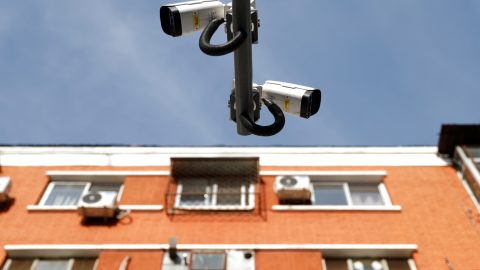
China’s surveillance systems rely on manpower and self-censorship as much as surveillance technology, according to prominent Chinese-American political scientist Minxin Pei’s (裴敏欣) newly published book “The Sentinel State: Surveillance and the Survival of Dictatorship in China.”
In an interview with China Media Project, Pei also described the decentralized nature of surveillance in China. “China’s strategy involves decentralizing tasks horizontally across various security agencies, and vertically by incorporating civilian involvement,” Pei said. “These civilians, while formally part of the security apparatus, take on key surveillance functions. This creates a unique system where surveillance is distributed and multifaceted, allowing the government to maintain control without the vulnerabilities that come with a single, centralized authority.”




Leave a Reply