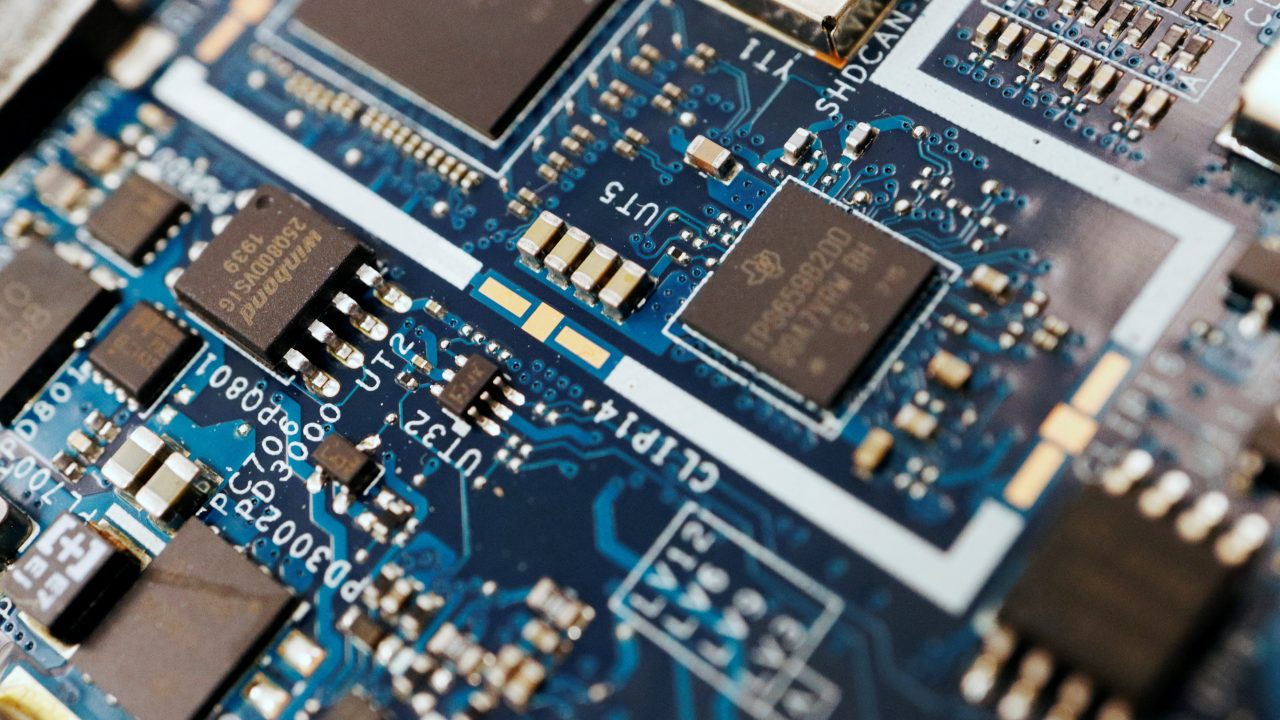
Taiwan’s semiconductor industry, specifically TSMC, is likely responsible for the device you’re reading this article on. But also the car you drive and the fighter jets that protect your country. Some believe Taiwan’s semiconductor industry is so important to the world’s economies and militaries that it could deter China from invading Taiwan. This is the “silicon shield” argument, and it has two parts. First, China would not invade Taiwan for fear of jeopardizing its own chip supply. Second, China is unlikely to invade because the U.S. and others also rely heavily on chips produced in Taiwan, and these countries might intervene to secure their chip supply.
Recently, TSMC’s expansion abroad, particularly to the U.S., has been putting the silicon shield into question. “When the U.S. decided to ask … or, should I say, demand TSMC come to the United States, some commentators argued that this very act of TSMC being lured away from Taiwan could … weaken the silicon shield,” said Jason Hsu (許毓仁), a visiting fellow at the Hudson Institute and former legislator-at-large in Taiwan’s Legislative Yuan. But the claim that Taiwan is less secure now and the validity of the silicon shield concept itself are controversial among politicians, academics and industry leaders in Taiwan. Even the Taiwanese public is split on this issue.
While experts are generally in agreement that the first plank of the silicon shield theory — regarding China’s interest in accessing Taiwan’s chips — is outdated and misguided, the second plank is much more complicated. Some scholars interviewed for this article believe that chips play a limited role in the U.S.’s interest in protecting Taiwan, while others think that TSMC’s expansion into the U.S. actually enhances Taiwan’s security. Many of these scholars agree that even if the silicon shield is true in theory, there is little risk of it being weakened by TSMC’s ventures abroad, because Taiwan will remain the epicenter of advanced chip manufacturing. Looking ahead, experts encourage the Taiwanese government to leverage the semiconductor industry to its advantage, but caution against imposing too much geopolitical pressure on TSMC.
At the end of the day, “Making money is the most important thing in Taiwan. We need to make money to compensate for political isolation. Without economic prosperity, Taiwan has no place to play in the world,” said Shih-Chang Hung (洪世章), a professor of technology and innovation management at National Tsing Hua University.
The Flaws in the First Plank of the Silicon Shield Argument
Although popularized by former Taiwanese president Tsai Ing-wen (蔡英文) in a 2021 article for Foreign Affairs, the silicon shield concept actually originated in a prescient op-ed written over 20 years ago by journalist Craig Addison. The argument that Taiwan’s role in providing chips to China deters invasion was more accurate back when Addison first articulated it in 2000, said Hsu. Around that time, China was on the rise but needed help boosting its technology sector, particularly from Taiwan. TSMC was eager to expand into China to take advantage of the low labor costs, a growing market, and tax and operational incentives provided by the Chinese government. Due to this interdependence, China “would not destroy TSMC, or seize Taiwan,” Hsu added.
But the situation has changed. While China still relies on Taiwan for about 36% of its imported chips, it is having increasing difficulty acquiring advanced chips manufactured by TSMC due to U.S. export controls. And China has been working toward self-sufficiency in the semiconductor supply chain. Although it is nowhere near its goal of 70% indigenous production by 2025, China wants self-sufficiency more than it wants access to the most advanced technology, said Kuanchu Chou (周冠竹), a PhD candidate at National Chengchi University focused on international political economy. China is working hard to get there, recently establishing a new $1.2 billion chip investment fund.
Other Taiwanese scholars and politicians think this portion of the silicon shield argument has always been flawed, because China’s motives regarding the potential annexation of Taiwan are totally independent from semiconductors. “China would do it [invade Taiwan] for national nationalism or national pride, not for TSMC,” said Chien-Huei Wu (吳建輝), a researcher at Academia Sinica specializing in supply chain resilience and U.S.-China competition. TSMC’s leadership agrees, at least publicly. Mark Liu (劉德音), then-chairman of TSMC, said last year in an interview with The New York Times that “China will not invade Taiwan because of semiconductors. China will not not invade Taiwan because of semiconductors.”
The U.S. Defense of Taiwan Over Chips: A More Complicated Picture
According to the silicon shield theory, TSMC’s expansion abroad — currently to Germany, Japan and the U.S. — is weakening Taiwan’s national security by making it less vital to potential allies who could defend the island during a Chinese invasion.
This argument is controversial among politicians, academics and industry leaders in Taiwan for a number of reasons. First, there are other reasons — unrelated to chips — why the U.S. would protect Taiwan. According to Wu, the U.S.’s interest in Taiwan is about maintaining global leadership. If China takes Taiwan, then China is in direct confrontation with Japan, which shares a joint defense treaty with the U.S. As Taiwan is a prominent democracy and a recipient of U.S. support, its annexation would also damage U.S. credibility as a democratic leader in the Indo-Pacific.
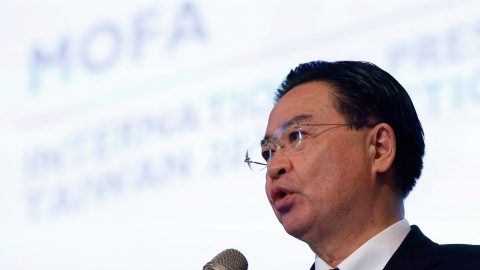
Others believe that TSMC’s expansion is actually improving Taiwan’s security by aligning it with powerful, democratic economies. The Taiwanese government has not been shy about leveraging chips to call attention to Taiwan’s role in the world and its need for support. Last year, former Taiwanese foreign minister Joseph Wu (吳釗燮) said that countries who benefit from TSMC face a “philosophical” issue: “Even though we are not selfish in stopping TSMC making investment in other countries, we certainly hope that other countries who want to attract TSMC … can also think about the situation Taiwan is in.” Kristy Hsu (徐遵慈), director of the Taiwan ASEAN Studies Center at the Chung-hua Institution for Economic Research, believes this “chip diplomacy” is perceived by most people in Taiwan to be the reason why Japan, the U.S. and the EU have shown increased support for Taiwan over the past several years. Indeed, since TSMC and the U.S. government began talks about building an Arizona fab in 2017, new arms sales to Taiwan have been notified to the U.S. Congress at least 41 times, compared to only 27 notifications during the decade prior.
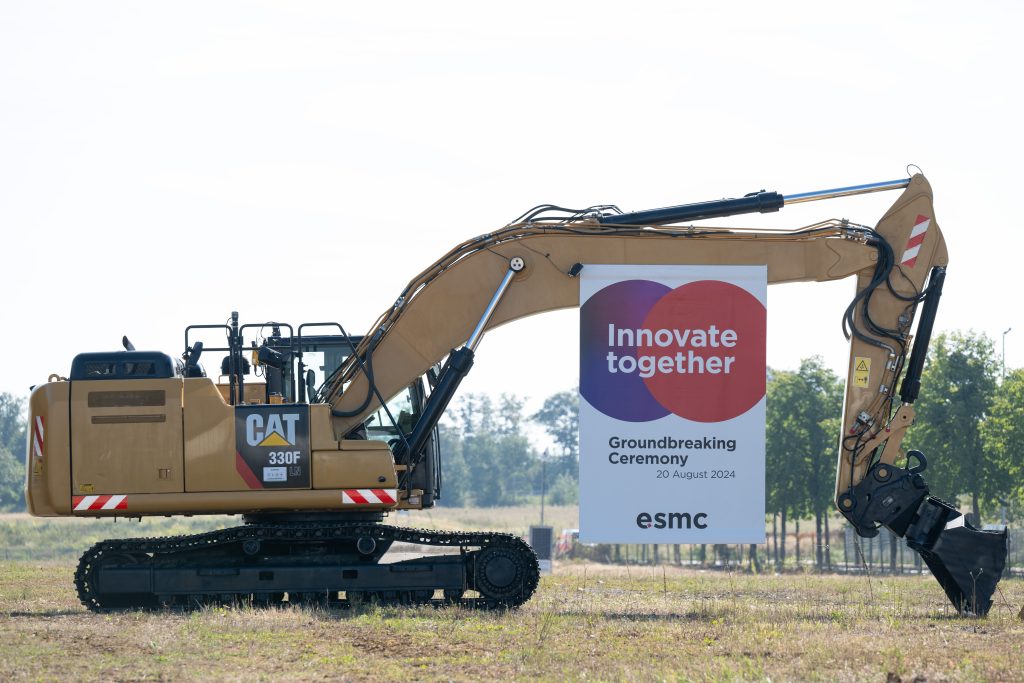
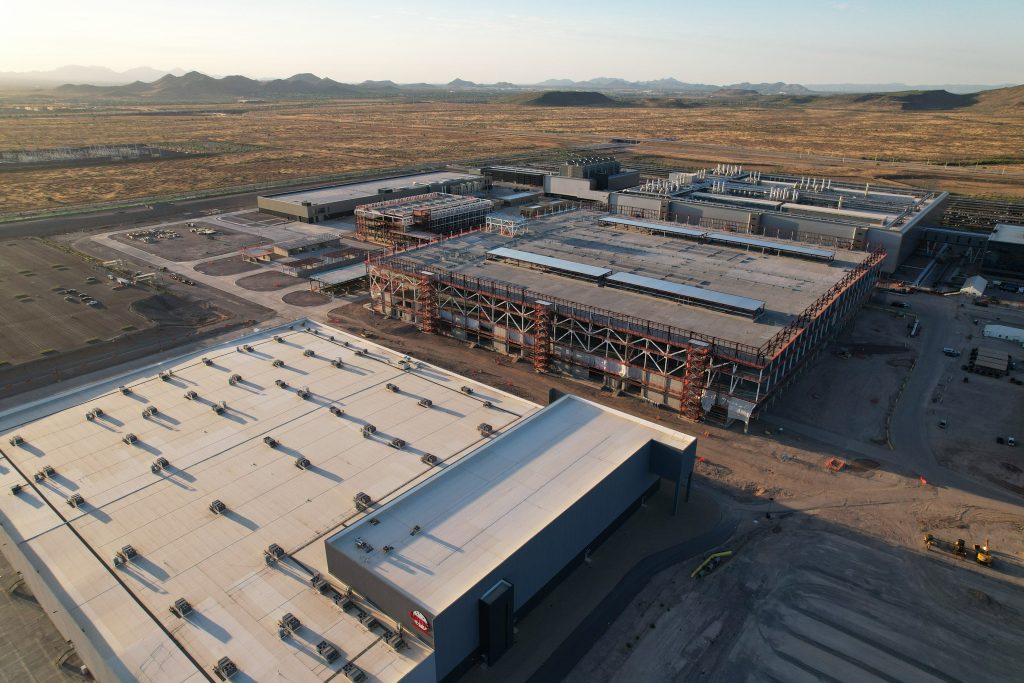
It hasn’t always been smooth sailing for TSMC’s expansion abroad. TSMC’s construction of three new fabs in Arizona is facing widely reported labor issues stemming from cultural clashes. While engineers in Taiwan are accustomed to TSMC’s grueling work culture, which commonly requires 12-hour days and availability at all hours of the night, the U.S.’s labor standards are comparatively “modern,” said Chun-Yi Lee (李駿怡), a professor of Taiwan studies and global development at the University of Nottingham’s School of Politics and International Relations. TSMC founder Morris Chang (張忠謀) once said: “If [a machine] breaks down at one in the morning, in the U.S. it will be fixed in the next morning. But in Taiwan, it will be fixed at 2 a.m.” In fact, former TSMC chairman Mark Liu blamed Arizonan workers’ unwillingness to take long shifts for the significant delays in construction. “Who wants to work 24 hours a day? Americans, obviously, they don’t want to work like that,” said Wu.
In terms of the availability of skilled labor, Taiwan also benefits from its legacy of manufacturing prowess. All the best engineers in Taiwan work at TSMC. But if high-skilled American engineers can “go to Google and play and create, then why would they go to a hard-working foundry such as TSMC,” said Lee.
Beyond labor issues, a lesser mentioned hurdle is that the U.S. chip grants under the 2022 Chips and Science Act have not been granted yet. So far funding has only been proposed, but TSMC is still negotiating terms of the grant. According to Kristy Hsu at the Chung-hua Institution for Economic Research, some people are worried that TSMC and the government won’t negotiate a binding agreement before the U.S. presidential election in November. Under a second Trump administration, an agreement might never be reached, Hsu said.
Even if TSMC Arizona is able to overcome these hurdles, advanced chip manufacturing will likely stay in Taiwan. TSMC Arizona will provide “less than 5% of the total demand in the U.S.,” said Kristy Hsu. And by the time the third Arizona plant is opened at the end of the decade — assuming there are no delays — TSMC will have already been mass-producing 2-nanometer chips for five years and will undoubtedly be much farther along in commercializing more advanced chips. Without Taiwan’s level of infrastructure, momentum and expertise, it will be unbelievably difficult for anyone to catch up. “Chip manufacturing is capital and technologically intensive. It’s not something that you say you’ll do and you will have the next day. It’s not a bubble tea shop,” said Jason Hsu at the Hudson Institute.
What Taiwan Can Do to Effectively Leverage its Semiconductor Industry
Aside from using TSMC to call attention to Taiwan’s need for international support, the Taiwanese government can leverage the semiconductor industry to improve its economic security. There exists now an opportunity for “a new role for the state in terms of how it deals with governments, how it can use soft and hard power … to negotiate and bargain with like-minded partners,” said Yuan-Ming Chiao (焦源鳴), a professor of political theory and cross-strait relations at Wenzao Ursuline University of Languages. Jason Hsu suggested that the Taiwanese government could use semiconductors “as a leverage to demand more policies that are favorable to Taiwan … If the U.S. desperately wants TSMC … we should be able to negotiate a bilateral trade agreement.”
But experts also cautioned against overusing the TSMC card in the political sphere. Ray Yang (楊瑞臨), a consulting director at the Industry, Science and Technology International Strategy Center of the Industrial Technology Research Institute, said that while the geopolitical pressure TSMC faces is mounting, it’s important to not forget that TSMC is a business, and we should treat it as such. Jason Hsu agreed: “Politically, the Taiwanese government should probably refrain from leveraging TSMC too much. This whole concept of TSMC being the sacred mountain or the silicon shield, I don’t think it’s doing any good for TSMC in terms of business … Every little move it makes is now being interpreted as a geopolitical move … Only when TSMC is strong and continues to be competitive and leading edge can Taiwan be strong.”



Leave a Reply