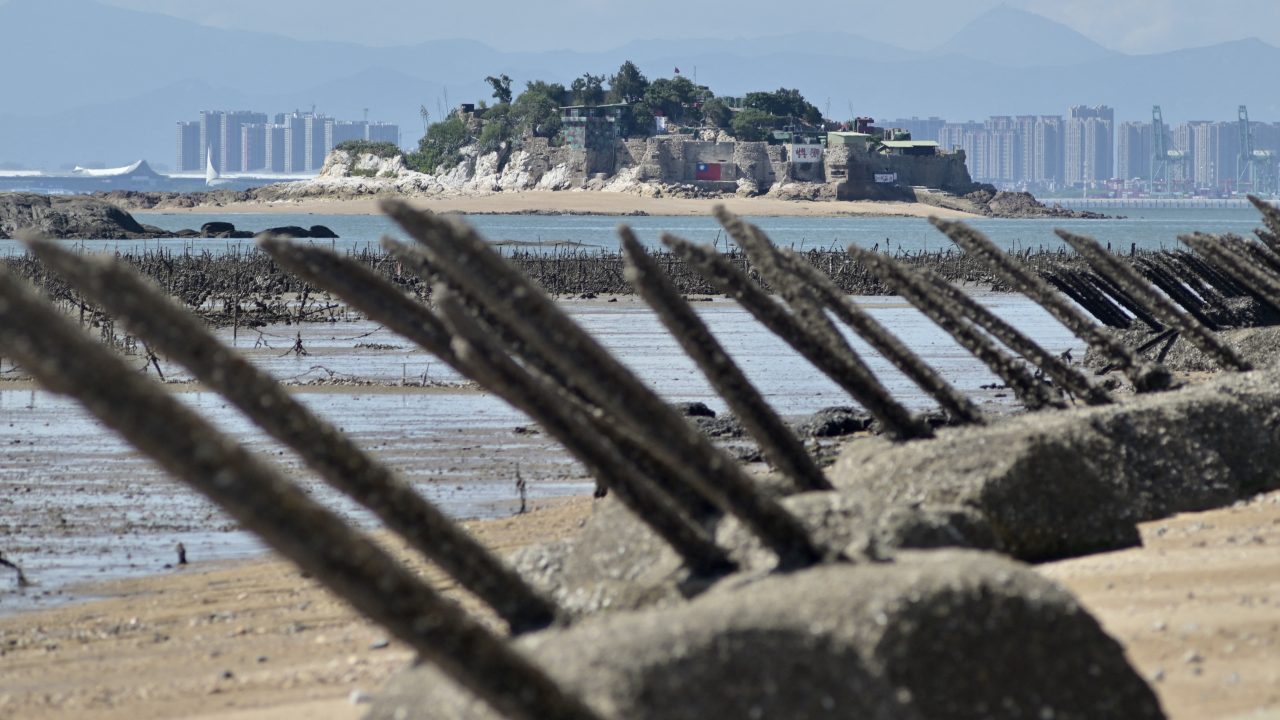
China’s new five-year plan provides a birds-eye view of the country’s economic priorities. But for residents of Kinmen, a Taiwanese island located just a mile off the coast of China, the infrastructure buildout lies in plain sight.
Standing on Kinmen’s shores, many residents will describe a bridge that is being built from the Chinese city of Xiamen toward Kinmen, said Chengyu Yang (楊騁宇), a visiting researcher at National Taiwan University studying the patterns of daily life among Kinmen’s 144,000 or so residents. The completion of this bridge is a daily topic of conversation, and residents integrate the prospect of another logistical link to China into their own planning, business or otherwise. The bridge has become a part of their “personal five-year plans,” Yang said.
But the bridge isn’t real.
Despite being physically much closer to China than to Taiwan’s main island, Kinmen and China were estranged for the better part of the 20th century. In the past few decades, Kinmen has evolved from a Republic of China military outpost to a complicated borderland. For many in Taipei, Kinmen presents a national security risk. For Beijing, it is a staging ground for “peaceful reunification” with Taiwan. For Kinmen residents, cultural, economic and infrastructural connection to China is a lived reality.
Limited contact was established between Kinmen and China in 2001 via the “mini three links”: postal services, transportation and trade. In 2019, Chinese leader Xi Jinping (習近平) proposed the “new four links” to connect China to Kinmen and Matsu — another outlying island governed by Taiwan — through water, electricity, gas and bridge infrastructure. In September 2023, China designated Fujian Province as a “demonstration zone” for implementing policy aimed at deepening integration with Kinmen and Matsu and “advancing the peaceful reunification of the motherland.” By the end of the year, China had begun constructing the “Xiamen-Kinmen bridge.”
This bridge, the same one that Kinmen residents regularly discuss, connects Xiamen island to the soon-to-be-completed Xiangan International Airport. While it’s effectively a local bridge, Chinese propaganda frames it as the first step toward building a bridge to Kinmen. A recent article by the state-run Global Times, for example, describes a day in the life of a young Chinese engineer on the project: “As dusk fell, Peng and his coworkers stood high on the bridge tower, gazing out over the quiet sea, the once‑wide strait seemed to have become ‘shallower.’”
Beijing says it plans to build a second part of the Xiamen-Kinmen bridge that would connect Xiangan airport to Kinmen island. But this would require approval from Taiwan’s central government.
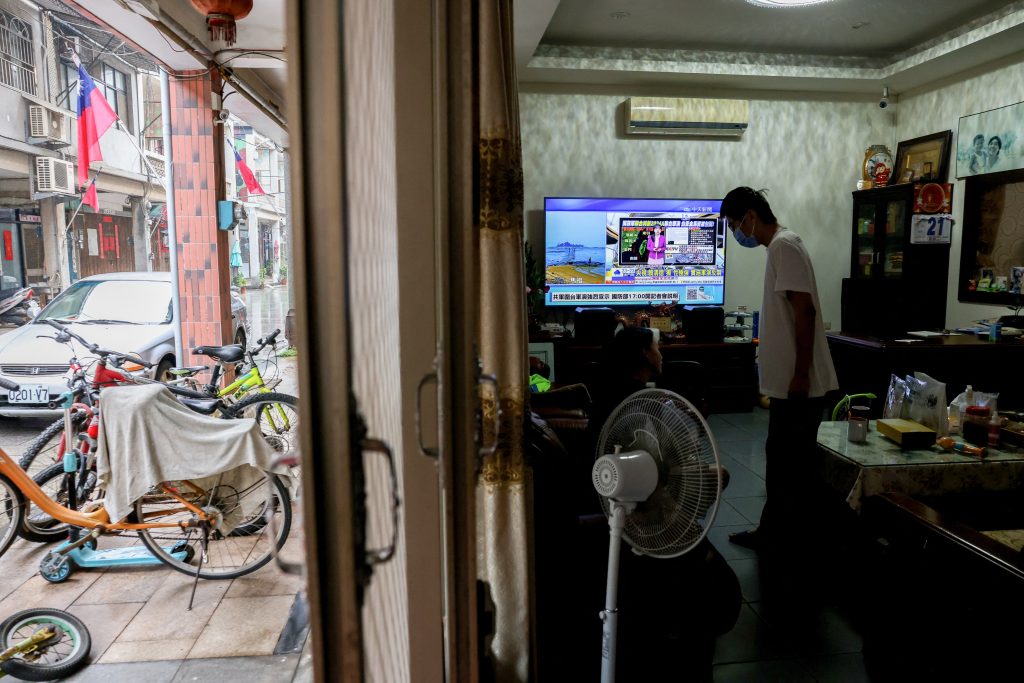
Taiwan previously approved a fresh water pipeline between China and Kinmen despite concerns about over reliance on Chinese infrastructure. But this approval came with conditions, said Mei-hsuan Chen (陳美寰), a postdoctoral researcher at National Taiwan University focused on political ecology. Taiwan decided to contract the construction of the entire pipeline to a Taiwanese company, although technical constraints meant that offshore construction was ultimately subcontracted to a Chinese company. Taiwan also demanded that the signatories to the pipeline be Kinmen and Fujian, so as not to imply that Taiwan and Fujian are administratively equivalent. Taiwan’s Water Resources Agency backed out of the opening ceremony in 2018, and Taipei even asked an engineer to not publish his upcoming article about the project. “The central government, they don’t want to highlight that we have this pipeline with China, we have this collaboration,” said Chen.
Nearly eight years later, Kinmen relies on China for 70% of its fresh water supply. Placed on either end of the pipeline, memorial stones are inscribed with the following message: “People from both sides of the strait are drinking the same river of water.”
While the central government budged on the pipeline to deal with Kinmen’s critical lack of freshwater, Chun-Wei Ma (馬準威), a professor at Tamkang University focused on China’s Taiwan policy, thinks there isn’t room for compromise on the Xiamen-Kinmen bridge, at least right now. It would be too symbolic of integration with China.
Another concern is that the bridge would make Taiwan more vulnerable to Chinese invasion. The Institute for National Defense and Security Research, a military think tank in Taipei, published a report arguing that the bridge would become “a gateway” for People’s Liberation Army special operations and a potential “forward base” for its invasion of Taiwan. For these reasons, “[t]he completion of this bridge represents a strategic retreat for Taiwan and the imminent loss of Kinmen, which Taiwan cannot allow under any circumstances,” wrote Johnson Shan-Son Kung (龔祥生), an author of the report and a research fellow at the institute, in an email to Domino Theory. The Mainland Affairs Council, which manages Taiwan’s policy towards China, clarified last year that there are no plans to greenlight the bridge.
The sentiment in Kinmen is different, where “a lot of people” would welcome easier access to China, said Hsiu-hua Shen (沈秀華), a sociology professor at National Tsinghua University. Kinmen’s economy relies on tourism and trade with China. Culturally, people in Kinmen feel a strong kinship with the city of Xiamen in particular. The addition of a bridge could make it harder to maintain a sense of separation, Shen said.
On the other hand, people in Kinmen are already very much accustomed to living the “dual city life” with Xiamen, said Yang from National Taiwan University. In fact, traffic using the bridge could take an hour and a half to get into Xiamen, so the ferry, which already exists, might still be the quickest option.
Some 40% to 60% of Kinmen residents Yang interviews for his research consider the bridge to be an inevitability. “They are sort of in a state of waiting,” Yang said. They are waiting for a “change of the ruling party.”
But without funding, a construction plan or approval from Taiwan, the bridge remains, for now, in our imagination.




Leave a Reply