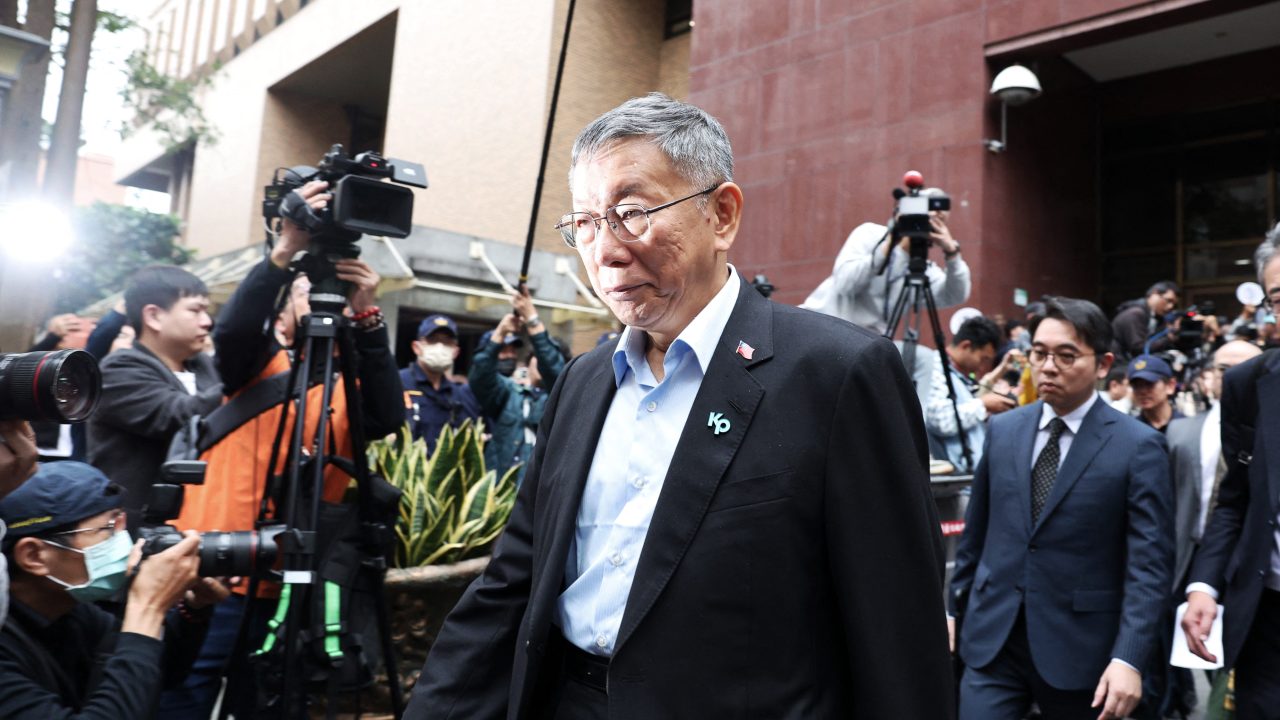
In May 2023, Taiwan’s legislature approved a series of amendments to the country’s elections law, barring citizens convicted of certain crimes from running for public office.
The “black gold exclusion clause” (排黑條款), which applied to those involved in money laundering and organized crime, drew the ire of Ko Wen-je (柯文哲), who had then recently announced his presidential candidacy. “Why not just execute everyone who commits a minor crime?” Ko said at the time.
Today, that same clause is putting the future of Ko’s political career in doubt.
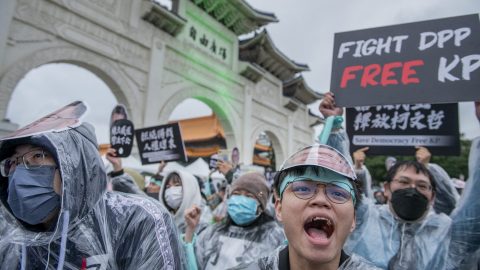
Last month, the Taipei District Court sentenced Ko, the former surgeon and founder of the Taiwan People’s Party (TPP), to 17 years in prison on bribery and corruption charges, stemming from his approval of a real estate development project, in addition to three other cases. Ko is the first major opposition leader in Taiwan’s history to receive a prison sentence.
Ko, who served two terms as mayor of Taipei from 2014 to 2022, is allowed to appeal the ruling, but the legal process could take years.
In the 2024 presidential election, Ko presented himself as a practical-minded alternative to Taiwan’s two major political parties. His message garnered significant public support, drawing 26.5% of the vote in a race won by the Democratic Progressive Party’s (DPP) Lai Ching-te (賴清德).
Some analysts concluded that Ko’s candidacy, which was driven largely by enthusiastic support among young people, actually hurt the chances of the Chinese Nationalist Party (KMT), with which the TPP has been more closely aligned in recent years.
“Younger generations, they are not satisfied with the existing system,” said Chen Fang-yu (陳方隅), a political scientist at Soochow University in Taiwan. “They are tired of the skyrocketing housing prices, inequality. Ko Wen-je represents the new option.”

Despite his ongoing legal troubles, Ko had been widely expected to run for president again in 2028. And under Taiwanese election law as it existed prior to 2023, Ko would have been allowed to.
But according to the “black gold exclusion clause,” those sentenced to prison terms of more than 10 years are barred from running for office, even as their appeal is ongoing.
Wu Jing-qin (吳景欽), a professor of law at Aletheia University in Taiwan, said it was possible that Ko’s sentence could be shortened, or even removed, upon further appeal.
In December 2025, Taiwan’s High Court reversed the conviction of Hsinchu Mayor Kao Hung-an (高虹安), who had been removed from office after being sentenced to seven years on corruption charges in July 2024. She has since returned to office.
But Keng-wei Fan (范耕維), a professor of law at National Dong Hwa University in Taiwan, doubts that Ko’s case could proceed along a similar course. The evidence against Ko “is considered very sufficient” to survive subsequent appeals, Fan said.
Ko’s final hope may be the legislature, which last week began to consider drafts of a new bill that would loosen some of the restrictions imposed by the 2023 elections law amendments. The move comes in response to the Taipei District Prosecutor’s Office’s indictment of 10 lawmakers for their role in physical brawls that took place in the legislature in 2024.
Under the 2023 amendments, those lawmakers would be ineligible to run for office again if convicted, even if they received probation rather than a prison term. The new draft amendments would loosen those restrictions, potentially saving the careers of several politicians from all three of Taiwan’s major political parties.
But unless the scope of those amendments is expanded, Ko won’t be among them.



Leave a Reply