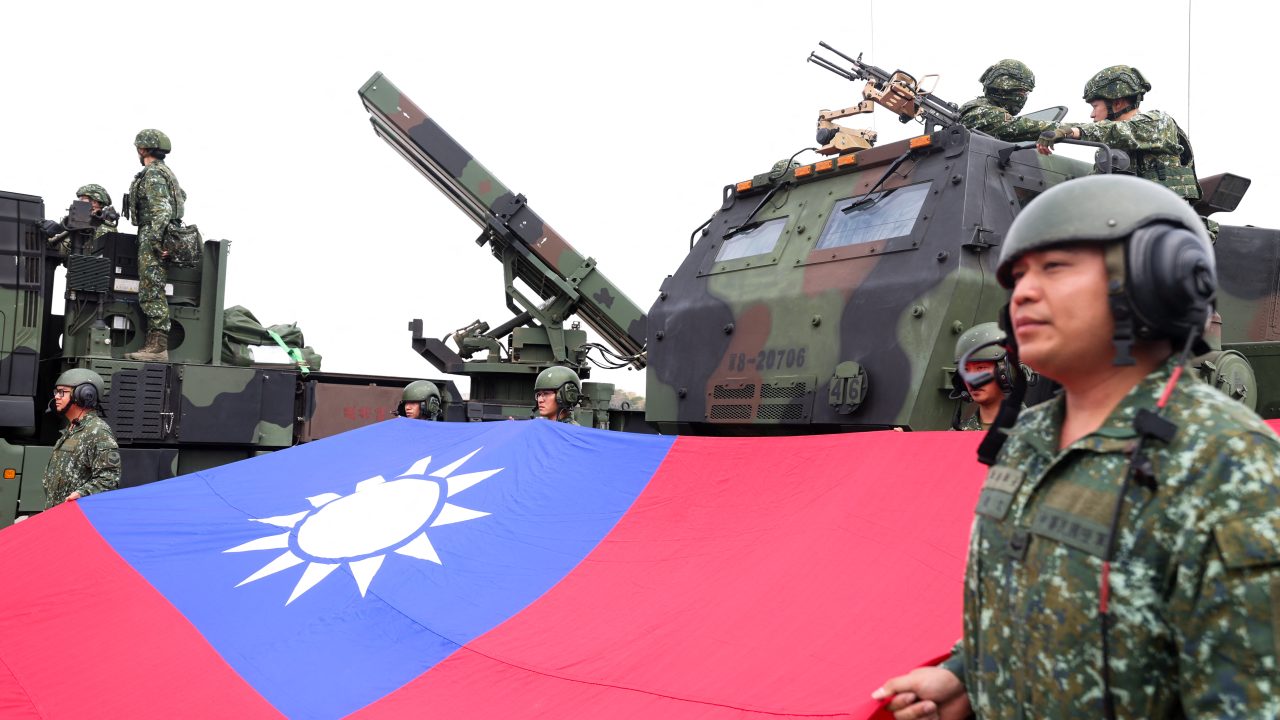
Taiwan’s parliament, the Legislative Yuan, is considering a defense special budget that effectively funds all of the items on the recently-announced $11 billion arms purchase from the U.S.
The “Special Act for Procurement of Plans to Safeguard National Security and Strengthen Asymmetric Warfare Capabilities” (保衛國家安全及強化不對稱戰力計畫採購特別條例) was proposed by the Taiwan People’s Party (TPP), the third-largest party in the parliament and the junior partner in coalition with the Chinese Nationalist Party (KMT).
The act has passed its first reading under the KMT-TPP coalition’s majority, and will now go to the defense committee for consideration.
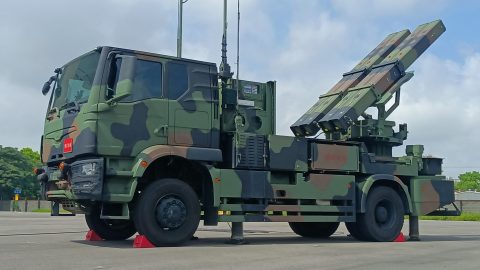
The act contains six items: 60 M109A7 Paladin gun artillery systems, 82 HIMARS rocket artillery systems, anti-tank drone missile systems, 70 Javelin anti-tank systems with 1,050 missiles, 24 Tow 2B anti-tank systems with 1,545 missiles, and “other items that have already received foreign approval for sale,” up to a maximum of 88.1 billion New Taiwan dollars ($2.8 billion). The total amount budgeted for is 400 billion NTD ($12.7 billion).
These six items either exactly match or effectively cover the eight items in the $11 billion arms sale announced on December 17. However, Taiwan’s defense ministry has said the act does not provide funding for the maintenance and support of the weapons.
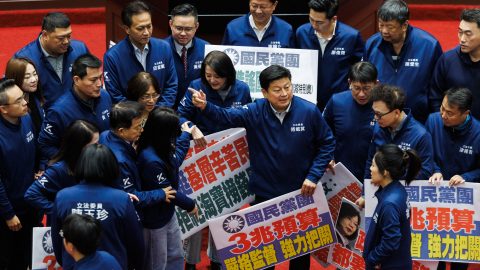
In the same session, the KMT and TPP again refused to consider the $40 billion special budget proposed by Taiwan President Lai Ching-te (賴清德) in November. The KMT-TPP coalition has been repeatedly refused to consider or pass this eight year special budget, leading to accusations that they were undermining Taiwan’s security and its defense ties with the U.S.
TPP Chair Huang Kuo-chang (黃國昌) visited Washington on January 13 for a day of discussions on “national defense and high tariffs.”
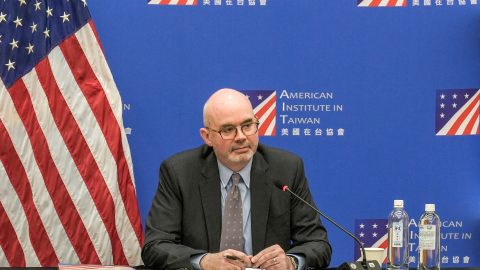
Raymond Greene, director of the American Institute in Taiwan, the de facto U.S. embassy, gave an interview to Commonwealth Magazine published today where he said Taiwan’s defense strategy is heading in the right direction, “and now all it needs is sufficient resources to complete it.” Greene expressed hope that Taiwan’s political parties would “set aside partisan differences and focus on what Taiwan really needs.”
Analysis
The KMT’s chairperson, Cheng Li-wun (鄭麗文), has said she opposes Taiwan increasing defense spending to the five percent in 2030 proposed by the Lai administration. Cheng’s position is that she supports a “reasonable” budget but sees increases sucking Taiwan into an arms race.
Cheng wants to meet Chinese President Xi Jinping (習近平) for talks. Such a meeting is rumored to be planned for early in 2026. Lai’s Democratic Progressive Party (DPP) has suggested China has made a meeting contingent on the KMT blocking increases in defense spending, something the KMT denies.
If the KMT votes this funding into law, which has not happened yet, it looks a lot like the party is supporting Lai’s defense spending in 2026. It is the view of the authors that the $40 billion special budget is a symbolic act that in reality covers preexisting spending commitments. What really matters are the annual regular defense budgets and special defense budgets, which would sum to the eight year amount. From this reading, approving the arms purchase is the thing that matters most in the short term. Concerns about logistics and support should be solvable through other budget items, perhaps even in other years.
The DPP is strongly against this version of the arms purchase funding. But will the Lai administration really tell Trump’s that the $11 billion is approved but not in the way they wanted? It’s hard to imagine.
The fact that this special budget is proposed by the TPP, but passed with KMT support, is noteworthy. Will the TPP get credit from Washington for supporting Taiwan’s defense while shielding the KMT from Beijing’s ire? Could that really work? Or will the act be blocked at its second reading?
And if the KMT has taken the decision to support some version of Taiwan’s increased defense spending, what does that say about Cheng and her chairship? She has signaled thus far that she is repositioning the party closer to China than it was under Eric Chu (朱立倫), but at this first significant test the KMT appears to be right back where it was last year.



Leave a Reply