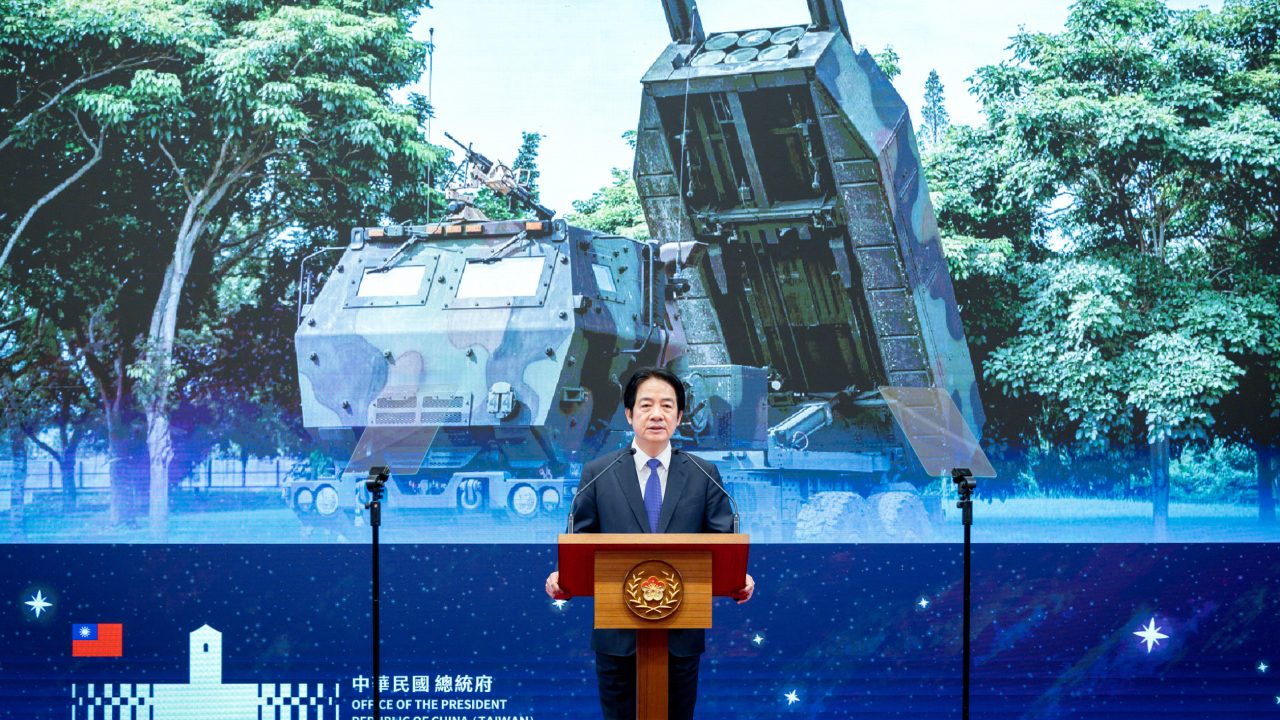
Sticking to a simple New Year’s resolution under normal circumstances is hard enough. Taiwanese President Lai Ching-te’s (賴清德) resolution is not simple and the circumstances of Taiwanese politics are not normal.
As 2026 begins, Lai has vowed to implement his proposed $40 billion special defense budget, along with a slew of other initiatives aimed at strengthening Taiwan’s resilience against Chinese attacks.
“In the face of China’s rising expansionary ambitions, the international community is paying attention to whether the Taiwanese people possess the resolve for self-defense,” he said in a New Year’s address delivered in front of the Presidential Office on Thursday.
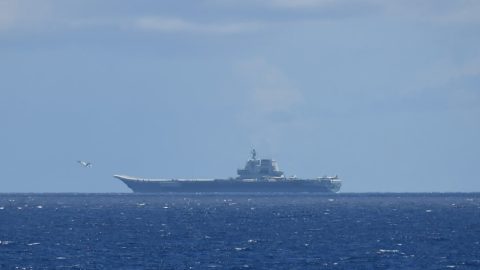
China’s ambitions were on full display in the days leading up to Lai’s remarks, with Beijing launching its latest round of live-fire military exercises around Taiwan. But the most immediate impediment to Lai’s ambitions is his domestic opposition.
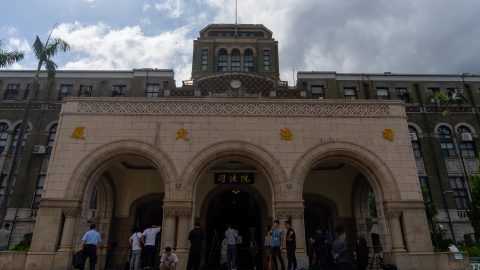
The coalition of the Chinese Nationalist Party (KMT) and the Taiwan People’s Party (TPP) that controls the legislature has repeatedly blocked Lai’s proposals — not just for the special defense budget, but also for judges to replace the seven vacancies on Taiwan’s 15-seat Constitutional Court.
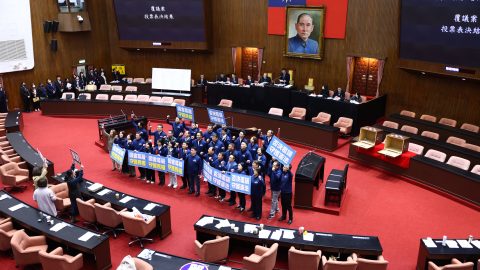
On December 26, the legislature passed a bill initiating impeachment proceedings against Lai, who opposition lawmakers say violated the constitution in refusing to promulgate an amendment to a fiscal spending bill earlier last month. On New Year’s, Lai appeared eager to move on.
“On this new dawn, a time of fresh starts, I believe many of us share the feeling that the 2025 deadlocks ought not to persist into 2026,” he said.
Han Kuo-yu (韓國瑜), the KMT speaker of Taiwan’s legislature, shook Lai’s hand at the event, which marked the new year with the raising of a Republic of China flag over Ketagalan Boulevard in central Taipei.
KMT Chairperson Cheng Li-wun (鄭麗文) was also there, but she stood at a considerable distance from Lai and did not to shake the hands Premier Cho Jung-tai (卓榮泰), whom the legislature has also moved to impeach.
If the event’s political choreography was tricky to interpret, the opposition’s response was not. KMT spokesperson Chiang I-chen (江怡臻) released a statement later that day saying that Lai’s remarks “failed to respond to any of the opposition parties’ demands,” calling his entreaties “emotional blackmail.”
The opposition have demanded that Lai deliver a state of the nation address to the legislature, followed by a question-and-answer session with lawmakers. In his speech Thursday, Lai once again agreed to the former, but not the latter.
William Yang (楊皓暐), a senior analyst at the International Crisis Group, a security-focused think tank, said he doesn’t expect a near-term resolution to Taiwan’s political impasse. “The opposition parties are determined to force the Lai administration to make significant concessions before they might even consider cooperating with his government on defense related issues,” Yang wrote in a message.
“Meanwhile, the Lai administration has also adopted a more hardline approach to push back against pressure from the opposition parties and that approach makes it hard for them to consider any potential concessions without looking weak in the public’s view.”
The public won’t get a chance to officially express their views until this November, when a round of local elections promises to deliver a referendum on the national government’s conduct.


Leave a Reply