KMT in China
Taipei Mayor Chiang Wan-an (蔣萬安) of the Chinese Nationalist Party (KMT) went to China on December 28 for the Taipei-Shanghai Twin-City Forum. Chiang’s counterpart, Shanghai Mayor Gong Zheng (龔正), said that people on both sides of the strait are “bound by blood ties.”
Chiang said in his speech that he hoped in the future when people thought of the Taiwan Strait they would think not of “crashing waves and howling winds, but peace and prosperity.” China launched major military drills the next day.
KMT Chairperson Cheng Li-wun (鄭麗文) said that she wanted to visit and meet Xi when she won the party’s chair election. Rumors have abounded that this trip will happen in early 2026. The KMT will hold a party to party forum with the Chinese Communist Party in Beijing on February 2. That forum, the first in nine years, has recently been downscoped to the think tank level. This suggests it won’t be used as the vehicle for a Cheng trip to China. The accusation that the KMT is blocking Taiwan’s defense budget, though unproven, has been widely leveled at the party.
The Taiwan People’s Party (TPP), the KMT’s coalition partner in the Legislative Yuan, recently sent its chairperson, Huang Kuo-chang (黃國昌), to Washington to discuss defense procurement and tariffs.
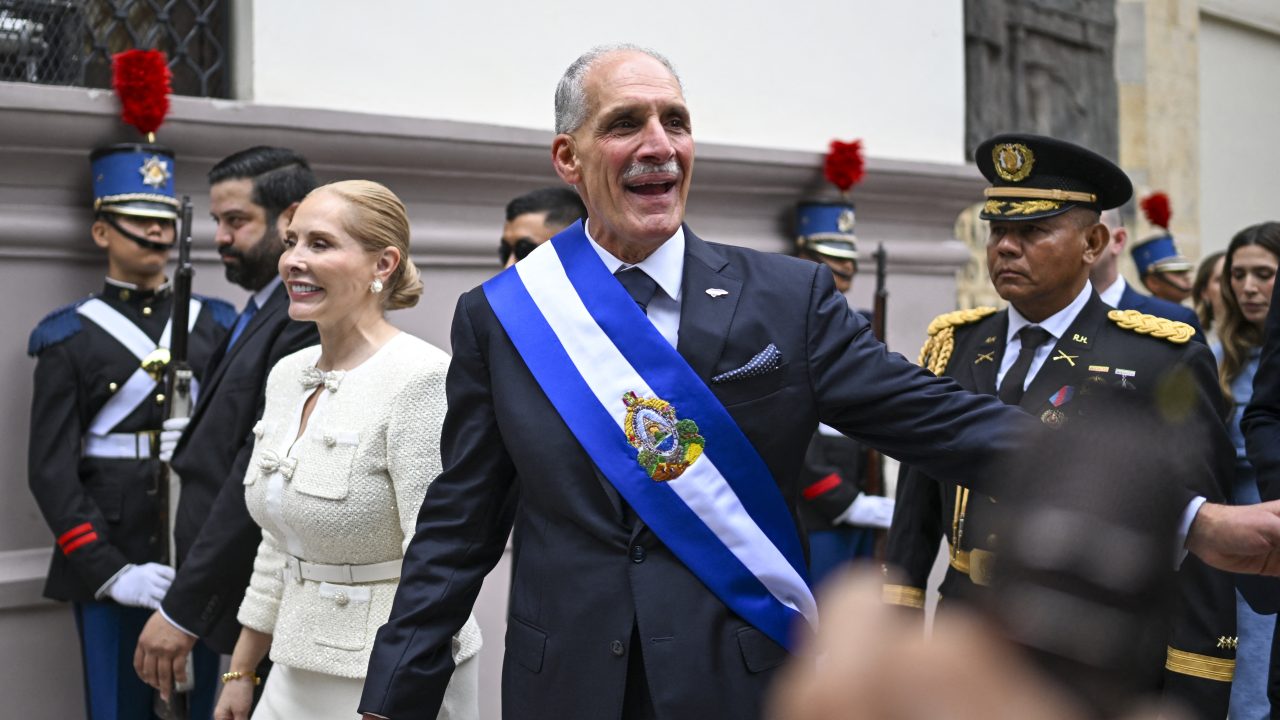
Honduras Primed to Flip?
Honduras has elected a new president, Nasry Asfura, who pledged to recognize Taiwan. Honduras made the flip to China in 2023 but the expected economic benefits haven’t appeared. Taiwanese President Lai Ching-te (賴清德) had reportedly hoped to attend Asfura’s inauguration, but an invitation never arrived. Now the watch to see whether Honduras will flip back begins. It might not be so easy.
International Guests
Taiwan has entertained many delegations of parliamentarians in the past three months. Panamanian lawmakers visited Taiwan in December, the first such visit since Panama recognized China in 2017. The Panama Canal has become one of the flashpoints between China and the U.S. Two Chinese-owned ports, one at either end, were sold to BlackRock, an American company, but China has subsequently blocked the sale from going ahead. China reportedly pressured the Panamanian delegation not to visit Taiwan, and two lawmakers dropped out, but the remainder received assurances from the U.S. embassy in Panama.
A Canadian cross-party delegation visited earlier this month. Their visit coincided with Canadian Prime Minister Mark Carney’s trip to China. The two parliamentarians who were from Carney’s Liberal Party left early, on advice from government. “It’s important that we avoid confusion with Canada’s foreign policy,” a statement from one lawmaker’s office said.
Other parliamentary delegations that have visited Taiwan have come from the EU Parliament, Italy, Denmark, and multiple different trips by Japanese legislators.
European Activities
Taiwan’s parliament, the Legislative Yuan, held inaugural meetings of the Taiwan-Slovakia Parliamentary Friendship Association and Taiwan-Portugal Parliamentary Friendship Association (the membership of both groups appears to be the same).
Slovakia and Taiwan opened a “joint semiconductor laboratory” in Slovakia in December. The opening was attended by Vladimir Simonak, the state secretary of Slovakia’s Economy Ministry, and is a part of the “Taiwan-Slovakia Strategic Industry Development Plan.”
Minister of Economic Affairs Kung Ming-hsin (龔明鑫) visited Czechia and Poland in early December. In Warsaw he attended the opening of the Taiwan Trade and Investment Service Center. Kung’s trip to Poland focused on democratic supply chain partnership. As the previous edition of Power Rankings noted, drones has become a key area of cooperation for the two countries.
Taiwan’s Deputy Foreign Minister Francois Wu (吳志中) visited Europe in November. On November 19 he gave a speech on Taiwan-Europe cooperation, resilience and innovation at the Berlin Security Conference. He then held a meeting with Julie Bynens, secretary general of the Flanders Chancellery and Foreign Office, on November 20, discussing cooperation across a wide range of spheres.
Secret Trip to Israel
Wu reportedly made a secret visit to Israel on the same trip. No details have emerged, and the trip has not been confirmed. Coverage of the trip has tended to focus on Taiwan’s new T-Dome air defense concept and its purported relationship to Israel’s Iron Dome. Experts have pointed out that the new Chiang Kung (強弓) air defense missile that Taiwan unveiled in October bears a striking resemblance to Israel’s Arrow 2 system.
Phoenix Rising
Taiwan and the U.S. announced a trade deal on January 15 that reduced American tariffs on Taiwan to 15% in exchange for $250 billion of investment in the U.S. by Taiwanese companies. That $250 billion reportedly includes $100 billion of investment already promised by TSMC last year. The shift from 20% to 15% is domestically significant in Taiwan because the lower rate is what Japan and South Korea had already received.
TSMC’s Arizona operations are controversial because some in Taiwan, and China, allege that Taiwan’s semiconductor industry is being hollowed out, or that the government is destroying Taiwan’s so-called “silicon shield,” the idea that the world wouldn’t let China destroy Taiwan’s chip industry. But these allegations are disputed.
On January 15, the mayor of Phoenix, Arizona, Kate Gallego met President Lai in Taipei. She was accompanied by Phoenix City Councilwoman Ann O’Brien, who represents the district that is home to TSMC Arizona. A week later on January 23, Lai met Arizona Senator Ruben Gallego, Kate Gallego’s ex-husband. Lai’s remarks to the senator focused on defense, in contrast to the tech-heavy speech he gave when he met the Phoenix mayor.
APEC Update
Last Power Rankings, Domino Theory reported on concerns that China was going to try to force Taiwan to participate in the APEC summit in Shenzhen under Beijing’s preferred name. As with many other international organizations, Taiwan participates in APEC under the name Chinese Taipei. The translation Beijing favors is more akin to China’s Taipei.
On January 13, Taiwan’s APEC senior official and head of the Ministry of Foreign Affairs’ Department of International Organizations, Jonathan Sun (孫儉元), said that he had attended the 2026 APEC Informal Senior Officials’ Meeting as part of a Taiwanese delegation in December, and that they did not receive any kind of treatment that downgraded Taiwan’s sovereignty, with the Chinese side arranging the trip as normal.




Leave a Reply