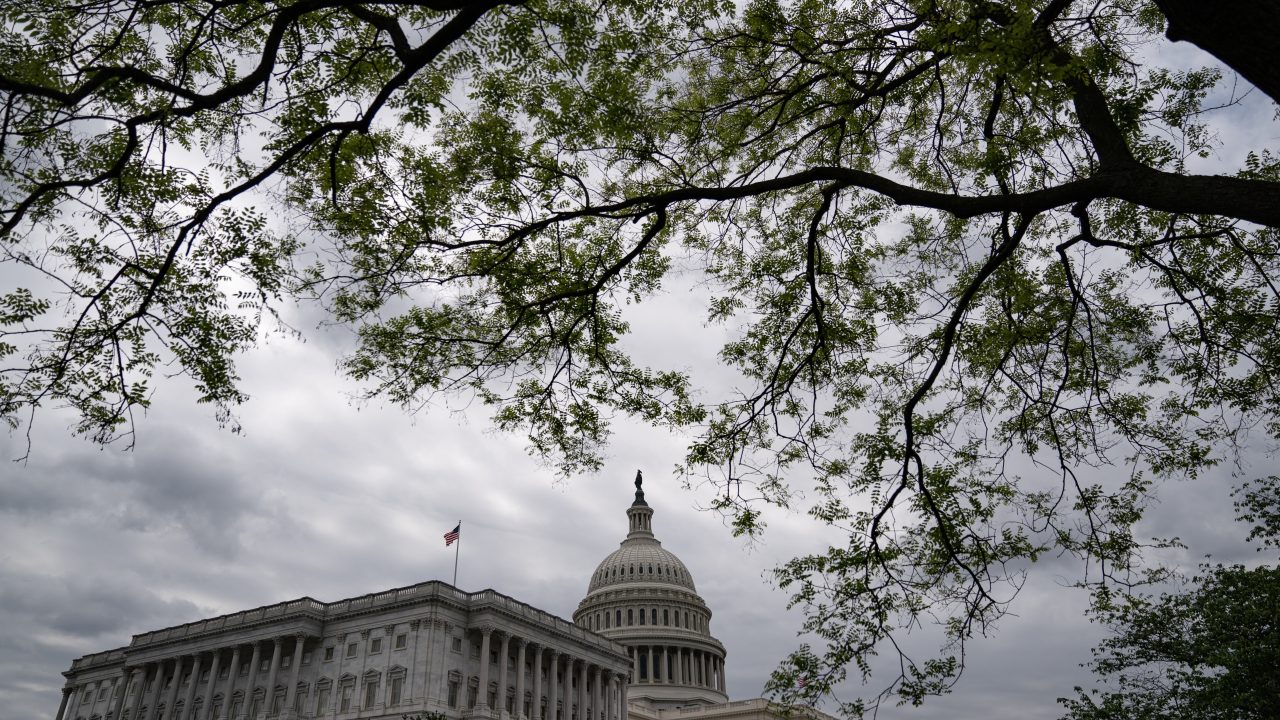
An important piece of new U.S. policy, the Taiwan Conflict Deterrence Act of 2023, passed the House of Representatives last month. Introduced by Congressman French Hill, the bill requires the Treasury Department to report to Congress illicit funds held by Chinese officials domestically or abroad and sanction those individuals, in the event that the president determines China has posed a threat to Taiwan. The officials specified are China’s Politburo and members of the Central Committee who perform any duty directly or indirectly related to Taiwan. The bill also empowers the Treasury Department to sanction the immediate family of Chinese officials found to hold illicit foreign funds.
The Taiwan Conflict Deterrence Act would deter China from invading Taiwan by pressing on a key pain point: the wealth of China’s elite. “The Act makes an important assumption, that the personal wealth of China’s ruling Communist party elite is a pressure point in deterring aggression against Taiwan,” said Rupert Hammond-Chambers, president of the U.S.-Taiwan Business Council. “I believe that the ruling CCP elite are motivated by their wealth and that this legislation can contribute to an overall strategy of deterrence. So, I see [the bill] as potentially practical and actionable as opposed to symbolic.”
However, it’s difficult to speculate exactly to what extent this bill would deter Chinese aggression because we don’t know what information the U.S. has on illicit financial assets held overseas by Chinese leaders, said Tzeng Wei-Feng (曾偉峯), assistant research fellow at the Institute of International Relations at National Chengchi University. Chinese President Xi Jinping (習近平) has been laser-focused on eliminating corruption within his ranks, said Tzeng, as he does not want the U.S. to be able to manipulate Chinese officials. Xi still depends on the Chinese bureaucracy and trusted advisors to make decisions. As such, Chinese officials are required to disclose their personal financial information to their government to demonstrate that their record is clean enough to hold high-level positions.
But it is certainly possible that corruption among China’s high-level leaders has gone unnoticed. China expert Yuen Yuen Ang (洪源遠) argued in her book “China’s Gilded Age” that bribery has increased in China since 2000 due to heavy state involvement in the economy and the system of tying political promotions to economic performance. According to Ang, “access money” is the most prevalent form of corruption in China, whereby corporations bribe officials for benefits like public contracts or favorable regulations, often through large-scale transactions. One study done on the housing purchases of Chinese officials from 2006 to 2013 found that “an average government official’s unofficial income amounts to 83% of her official income” and that unofficial income increases with rank. Chinese officials who have had long careers in the bureaucracy may be hiding corruption they previously engaged in.
Tzeng believes that the groups most vulnerable to the Taiwan Conflict Deterrence Act are members of the PLA — who would be among the key parties deciding whether to annex Taiwan — and family members of Chinese officials. While corruption seems to be particularly persistent and rampant in the PLA, Tzeng thinks the most potent part of the Taiwan Conflict Deterrence Act is that it targets officials’ family members. In China, wealth gained through corruption is commonly hidden by the family — “maybe not their daughter, maybe not their son, but maybe their son’s wife or or their son’s wife’s father,” said Tzeng. Even if just one or two officials in Xi’s ear express a different opinion on attacking Taiwan, that might change the decision.
Beyond the specifics of the act, sending consistent messages to China that signal the U.S.’s commitment to Taiwan is an important element of deterrence. Chang Jaw-ling (裘兆琳), former deputy secretary general of Taiwan’s National Security Council and former deputy representative of the Taipei Economic and Cultural Representative Office in the U.S., pointed out that the major conflicts of the past century — such as World Wars I and II and Russia’s invasion of Ukraine — have been instigated by aggressors who overestimate their ability to succeed. To correct China’s potential misperception of its ability to take Taiwan by force, projecting strength is key. “There’s an old saying that weakness is provocative, we [Taiwan] cannot be too weak,” said Chang.
Shirley Kan (簡淑賢), an independent specialist on Asian security affairs formerly with the Congressional Research Service, said the Taiwan Conflict Deterrence Act shows “sustained and bi-partisan support for Taiwan in the face of increasing PRC pressure and threats.” Since the U.S. severed formal diplomatic relations with Taiwan and adopted the “one China” policy in 1979, it has followed a policy of strategic ambiguity — deliberately leaving unclear how the U.S. would respond to Chinese invasion of Taiwan in order to deter both Chinese aggression and a formal claim of independence by Taiwan.
Matt Salmon, a former U.S. Congressman from Arizona who chaired the House Foreign Affairs Subcommittee on Asia and the Pacific, said this bill reflects a broader shift toward clarity in Washington that includes unequivocal statements of support made by U.S. President Biden, former speaker of the House Nancy Pelosi’s trip to Taiwan and regularized arms sales to the island. The bill is “only part of a much broader picture,” which is “of strong, strong, strong support for the safety and security of Taiwan within the United States,” said Salmon.
The bill signals that “U.S.-Taiwan relations is moving away from strategic ambiguity and towards strategic clarity,” said Hammond-Chambers of the U.S.-Taiwan Business Council. “I believe this is the right course of action, and actionable legislation such as this add to that trend.”




Leave a Reply