As governments and technology companies scramble to join the AI frenzy, the concept of AI sovereignty is becoming a hotly discussed topic. But what exactly does “sovereignty” mean and to what extent is sovereign AI infrastructure beneficial for countries, particularly those that are lagging in AI readiness?
Sovereign AI doesn’t have just one definition, at least to date. An examination of sovereign AI systems by Politico frames the concept in terms of data governance, arguing that AI sovereignty is shaped by regulations regarding data localization and cross-border data flows. The report argues that China and India assert data sovereignty by embracing data localization policies that emphasize national security and protectionism. The American approach, by contrast, leverages the free flow of information across borders to foster innovation and efficiency. This interpretation of sovereign AI parallels what some claim is the origin of the term: China’s digital sovereignty movement. Since the late 1990s, China has promoted the idea that it has the right to deal with digital information and data within its own borders in the way it sees fit.
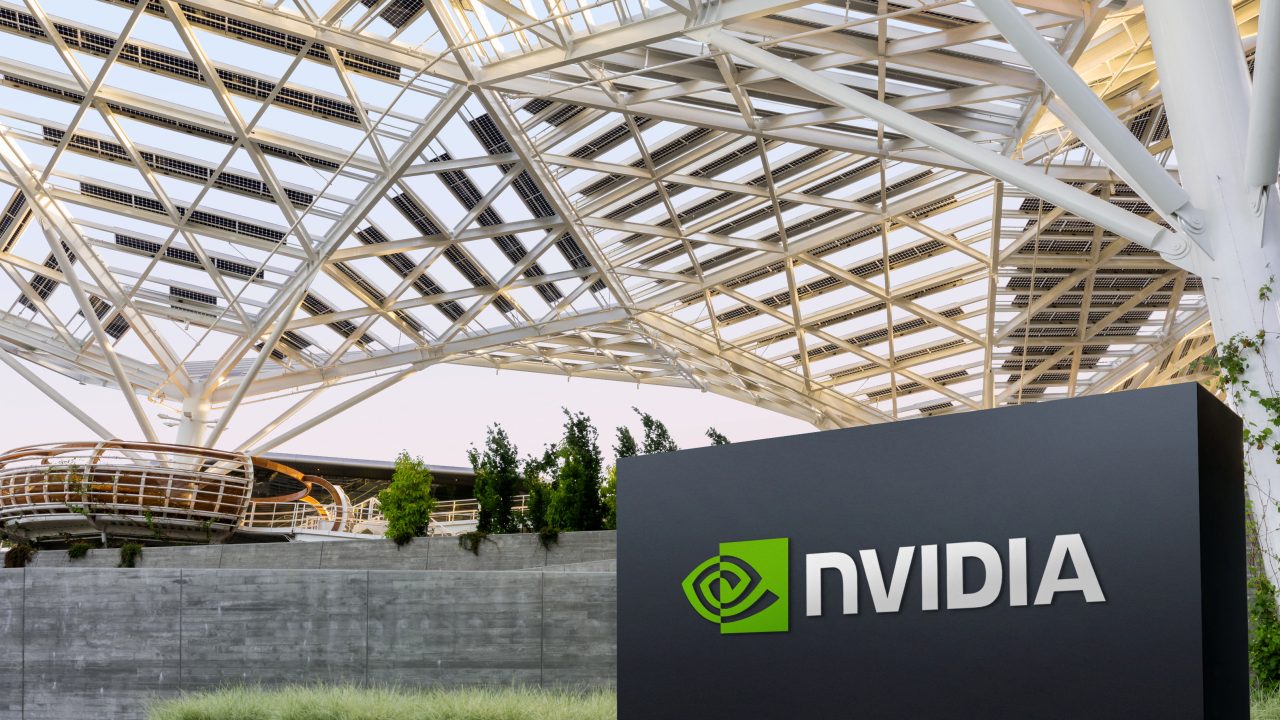
For cloud computing and AI companies, sovereignty seems to serve — at least partially — as a marketing tool, as its definition changes according to who is defining it. Nvidia, the world’s leading chip designer, has been the primary accelerant of the term “sovereign AI.” Jensen Huang (黃仁勳), the CEO of Nvidia, has undertaken somewhat of a global sovereign AI campaign to promote the physical development of national AI infrastructure. According to Nvidia, sovereign AI refers to “a nation’s capabilities to produce artificial intelligence using its own infrastructure, data, workforce and business networks.” This includes two main parts: building AI infrastructure locally (such as data centers and cloud services) and creating large language models (LLMs) trained on local datasets. Huang is particularly interested in transforming the data centers of telecommunications companies into “AI factories” that provide AI services to local governments and companies. These AI factories feature AI models that are finely tuned to the linguistic and cultural context of the place. At the World Governments Summit in February, Huang said sovereign AI “codifies your culture, your society’s intelligence, your common sense, your history — you own your own data.” Since the AI models are custom fit to the country, they are also built to align with particular national security interests. Huang frames building sovereign AI as a national imperative. In an interview with VentureBeat, Huang said, “There’s no reason to let somebody else come and scrape your internet, take your history, your data.” Of course, this approach also serves Nvidia’s business interests, as the physical infrastructure that Nvidia is promoting needs to run on high-performance graphic processing units (GPUs) like the ones Nvidia makes. In an earnings report released this year, Nvidia credited sovereign AI with creating a multi-billion dollar vertical for the company.
On the other hand, companies like Microsoft and Google, which provide comprehensive AI services, promote a different definition of sovereignty as it relates to AI supportive technology. These companies are referred to as hyperscalers because they are able to provide cloud computing solutions, as well as the artificial intelligence built on top of it, that are ready-made and can scale appropriately according to demand. Microsoft Cloud for Sovereignty allows countries to use Microsoft’s language models and AI applications while managing data according to “local policies and regulatory requirements.” Similarly, the Google Sovereign Cloud promises data localization and domestic oversight. Compared to Huang’s purest interpretation of AI sovereignty, where the full stack of AI (data centers to LLMs to AI applications) is built and developed domestically, the way in which hyperscalers meet the condition of “sovereignty” depends on the requirements of the country they are operating in.
Many countries are investing both in sovereign cloud computing and in physical data centers. Bain found that governments have personally ordered 40,000 GPUs in the past year, and local data centers are expected to constitute 22% of new computing capacity. However, the hyperscalers will continue to contribute the most to new computing capacity, at a rate of 43%.
A Look at Indonesia
Indonesia is an example of a country that is employing multiple approaches to “sovereign” AI infrastructure. Indosat, an Indonesian Telecommunications Company in which the government has a significant stake and a golden share, announced in August that it is partnering with Google Cloud to deliver “sovereign cloud and edge solutions” to Indonesia. Since Indosat operates existing data centers in Indonesia, this arrangement will allow Indonesian customers to use Google’s AI tools while ensuring that their data is kept within Indonesia’s borders. Indosat is also building an AI factory powered by Nvidia chips to host GPU Merdeka, which is a sovereign AI cloud service. This collaboration will allow Indonesian companies to rent and scale high-performance computing resources to do functions like artificial intelligence, data analytics and rendering.
Indonesian Minister of Communication and Information Budi Arie Setiadi has expressed several goals for Indonesia’s AI development. First, he has remarked that Indonesia wants to develop AI that “operates within the framework of our regulations and laws.” Second, Setiadi expressed interest in cloud computing, which would allow Indonesia to scale up its AI quickly, unburdened by the need to build and maintain physical infrastructure. Third, Setiadi has noted concerns about internet penetration and talent issues in Indonesia, which hinder its progress in AI.
Indonesia’s eagerness to take on the challenge of AI but lagging preparedness in some crucial domains is reflected in the data. According to the Oxford Insights AI Readiness Index, Indonesia rates very high on the “vision” metric, which indicates the strength of a government’s strategic vision for how it “develops and governs AI.” However, Indonesia’s scores on innovation capacity, human capital and infrastructure hover around 50/100, which indicates significant gaps in these domains. OECD data estimates that Indonesia’s AI talent concentration is about 1%, which is less than six times smaller than Korea and Japan. And a forthcoming report on AI readiness in Indonesia by UNESCO states that research in AI in Indonesia is underfunded.
As Setiadi indicated, a country that is lagging in infrastructural/technological readiness but wants to quickly scale up its AI capacity might find that leasing cloud computing software from a hyperscaler is more suitable than investing in infrastructure and training a national LLM. By investing in cloud computing as opposed to physical data centers, Indonesia is less at risk of creating abundant AI capacity that is difficult to maintain and underused because its AI innovation and talent ecosystem is still developing. A similar problem of overcapacity occurred in the telecom industry in the early 2000s.
But whether or not Indonesia is ultimately a good or bad candidate for Huang’s sovereign AI is hard to tell, as questions remain concerning how sovereign AI should be defined and its utility to countries. Even if a country like Indonesia is not fully prepared for AI, could it still succeed in building enduring sovereign AI? And, is there enough empirical evidence that sovereign AI makes economic and practical sense for countries, particularly those that are only partially prepared for AI in terms of infrastructural capacity and talent?






Leave a Reply