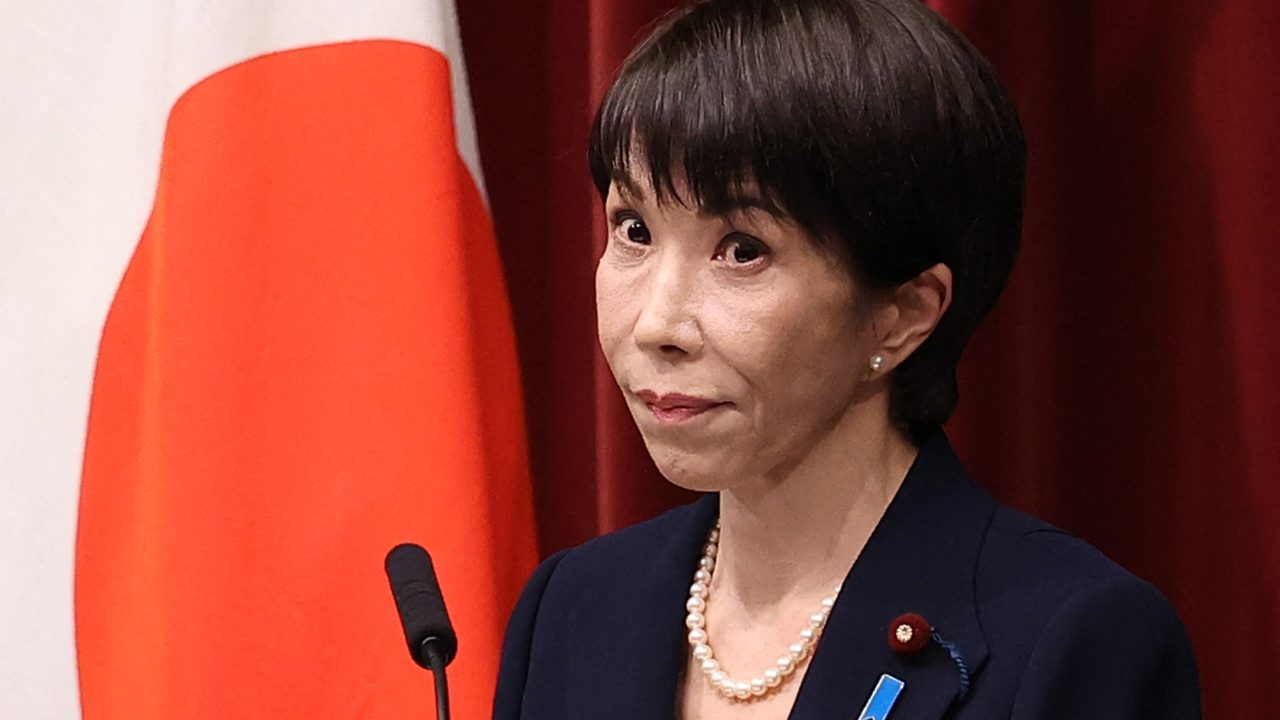
With two days to go until Japan’s lower house election on February 8, Japanese Prime Minister Sanae Takaichi’s gamble to dissolve parliament has thrust regional security into the spotlight, particularly amid tensions over Taiwan.
Takaichi, who took office in October as Japan’s first female prime minister, called the snap election after her Liberal Democratic Party and its coalition partner, the Japan Innovation Party, slipped to a one-seat majority in the 465-member lower house.
Polls from Japanese outlets like NHK and Asahi Shimbun indicate the coalition could secure over 300 seats, leveraging Takaichi’s 60-70% approval ratings amid voter concerns over inflation and defense.
“The conventional wisdom here is that you should call an election while your approval is high,” said Rintaro Nishimura, a Tokyo-based senior associate at the Asia Group.
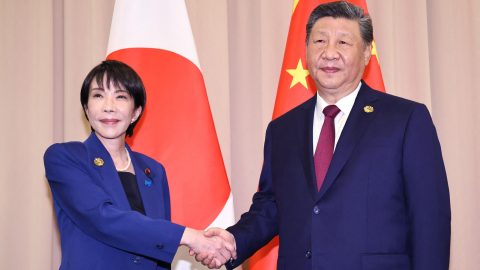
In November, Takaichi said in parliament that a Chinese military move on Taiwan could pose an “existential threat” to Japan. Such a designation would allow Takaichi to justify intervention in the conflict under a post-World War II rule that authorizes Japan’s military to use force in self-defense of the country. This statement echoes late Prime Minister Shinzo Abe’s stance, making Takaichi Tokyo’s most friendly leader in years.
“Takaichi worries less about China when dealing with Taiwan. She prioritizes doing what’s right without overthinking Chinese reactions,” said Wang Hung-jen (王宏仁), a professor at National Cheng Kung University’s Department of Political Science.
“Japanese officials genuinely support Taiwan and have strong reservations about China’s interference, but as leaders, they weigh broader factors,” Wang added. “Takaichi ignores outdated constraints like the Japan–China Joint Communique.”
“It’s not just semiconductors. It’s [Taiwan’s] position in the first island chain, its peaceful evolution as a Chinese society that has a democracy, a civil society, rule of law, freedom of press,” said Stephen Nagy, a professor of politics and international studies at the International Christian University in Tokyo and a visiting fellow with the Japan Institute for International Affairs.
Takaichi’s continued stance on Taiwan means steady, substantive ties rather than flashpoints. Wang points out that with Takaichi in power, “Substantive progress like TSMC’s expanded investments will deepen, especially in tech where Japan needs Taiwan. Japan handles Taiwan contacts seamlessly, undeterred by Chinese pressure.”
C.C. Wei (魏哲家), TSMC’s CEO, announced on February 5 that his company is planning to produce advanced 3-nanometer chips at its second facility in Kumamoto, in southern Japan, with a total investment of approximately $17 billion, instead of the previously planned $12.2 billion for the less advanced 6-nanometer chips.
“The prime minister has not been hiding the fact that she is very much a friend of Taiwan,” said Nishimura. He notes that there will be no dramatic shifts in Japan-Taiwan relations. “It’s not like winning a majority suddenly means Japan will decouple completely from China and work with Taiwan.”
If success in the snap election further solidies Japan’s new posture toward Taiwan, it could intensify the tensions between China and Japan, which have already been on the rise since Takaichi took office.
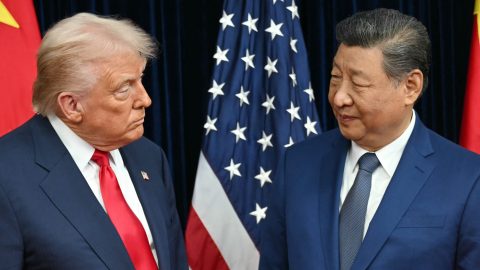
Nishimura notes that China calibrates based on U.S. ties, “When there’s good U.S.-China relations, China tends to try and provoke Japan a little bit. When the relationship is not going well, they tend to be a little bit nice to Japan because they don’t want the U.S.-Japan alliance to be targeting China explicitly.”
Wang predicts that “China-Japan relations will worsen as Takaichi’s popularity hurts the way how Beijing views her, prompting escalated pressure.”
A Takaichi victory in the snap election could be a boost for the U.S. “Trump loves winners. The meeting in March will go great,” Nagy points out. “They’ll be really happy with the victory, and he’s already written that he wants her to win on Twitter … He’s looking for partners.”
Nagy also emphasizes evolution on alliance. “This will be the first time in a while that we have seen a strong leader, and the LDP likely having a majority, which means strong domestic policy and strong foreign policy,” he said, using the acronym for the Liberal Democratic Party.
A stronger majority for Takaichi would not just strengthen her domestic mandate, it could transform the first island chain into a stronger deterrent against China.





Leave a Reply