
In February, a bipartisan group of 37 U.S. lawmakers sent a letter to senior Taiwanese politicians expressing concern about Taiwan’s inability to pass the $40 billion special defense budget proposed by President Lai Ching-te (賴清德). The threat of attack from China had never been higher, they said, and it was crucial that Taiwan do more to provide for its own defense.
Chief among the letter’s recipients was Cheng Li-wun (鄭麗文), chairwoman of the main opposition Chinese Nationalist Party (KMT), who led a monthslong effort to stall the bill before her party finally agreed to a scaled-back version in early May.
Now, she will have a chance to explain herself in person.
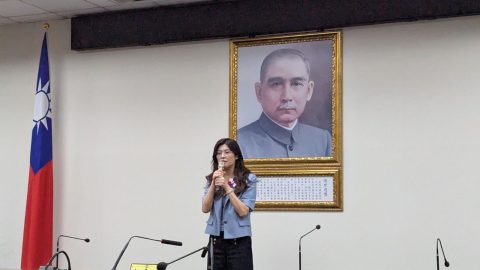
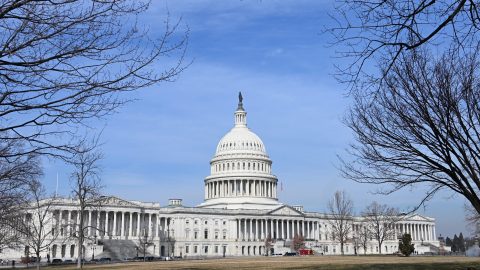
Cheng will set out for a two-week tour of the U.S. on Monday, visiting several U.S. cities before heading to Washington for a series of planned meetings with government officials and think tank experts. For a figure who few in Washington had heard of a year ago, the anticipation is high.
“It seems like half of the city knows Chairwoman Cheng [is] coming,” said Howard Shen (沈正浩), who served as the KMT’s foreign press secretary during the 2024 presidential campaign, and is based in Washington.
Cheng’s profile — or notoriety, depending on whom you ask — got a boost last month when she traveled to Beijing to meet with China’s president, Xi Jinping (習近平), making her the first current KMT leader to do so in more than a decade.
Shen said that the spectacle of Cheng walking into the Great Hall of the People in Beijing — the same building where Xi received President Donald Trump earlier this month — has attracted a lot of interest in Washington. “Honestly, I was skeptical about it, because obviously we know how Washington, DC feels about Xi Jinping,” Shen said. “Now that [she] has met with Xi Jinping personally, people can no longer look down on her or underestimate her influence within Taiwanese politics.”
The KMT has long maintained a presence in the U.S. The party’s founder, Sun Yat-sen (孫逸仙), established its precursor in 1894 in Hawaii, which had just fallen under American control. San Francisco, Cheng’s first planned stop, is home to the Chinese Historical Society of America, which has been around since the 1920s, when the KMT still controlled China. In Boston, Cheng’s next stop, the Chinatown gate still prominently displays a Republic of China flag, beneath an inscription that reads “everything under heaven for the common good” (天下為公), a famous phrase attributed to Sun.
But more recently, the party has struggled to compete with its domestic opponents, the Democratic Progressive Party (DPP), for influence on Capitol Hill. In 2022, Cheng’s predecessor Eric Chu (朱立倫) made a similar trip to the U.S., which culminated in the reopening of the KMT’s representative office in Washington. The office had been closed since 2008, when Ma Ying-jeou’s (馬英九) election to the presidency heralded a pro-Beijing shift for the party.
“Cheng’s biggest challenge will be selling a party with a damaged brand in Washington,” said Michael Cunningham, a senior fellow with the China program at the Stimson Center. “The KMT had an image problem long before Cheng took the reins, but many among the U.S. policy elite particularly distrust the more Beijing-friendly part of the party, which Cheng represents.”
Cunningham said that he expects Cheng to receive a polite welcome, but with tough questions soon to follow. “It’s no secret that many in Washington are deeply skeptical of her, in particular her position on defense spending and her outreach to Beijing,” he said. “That said, she’ll probably find a more receptive audience among parts of the executive branch than she would have had under Biden or the first Trump administration.”
He added: “Trump’s White House is focused on reducing tensions with China and worries that cross-strait friction might set back their negotiations with Beijing. So, although administration officials might not agree with a lot of Cheng’s positions and statements, they likely respect her efforts to dial down tensions with Beijing. Congress, however, will likely be a tougher audience.”
In an interview with Bloomberg last month, Cheng said that she hoped to meet with Trump while in the U.S. Most observers view that possibility as highly unlikely. “I don’t think it’s realistic to expect that the chairwoman will meet with Donald Trump,” Shen said. “I don’t think it is her expectation in any way.”
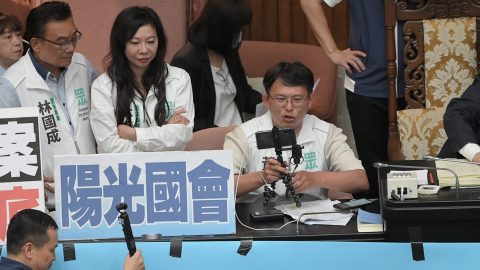
Cheng’s trip comes several months on the heels of Huang Kuo-chang (黃國昌), the leader of the smaller opposition Taiwan People’s Party, who traveled to Washington for meetings in January. After returning to Taiwan, Huang told local media that U.S. officials had “understood and agreed with” his assertion that a democratic legislature could not just blindly pass what the opposition parties deemed to be an ambiguous budget.
But other reports, citing Washington-based sources, revealed that U.S. officials had delivered a stronger message, urging Huang and the TPP to set aside partisan differences and approve the budget.
The perception that Taiwan’s opposition might pull a bait-and-switch won’t make things any easier for Cheng when she arrives. But the Huang episode was also a reminder of who Taiwanese politicians’ real audience is when they go to the U.S.
When asked what Cheng would be hoping to achieve, Alexander Huang (黃介正), the former director of international affairs for the KMT, said: “To meet with political and academic figures who are well known and positively regarded by the Taiwanese public, and to receive their praise in public.”

I read your piece on Cheng Li-wun’s visit to Washington with great interest. Your assessment that the KMT chairwoman is likely to be met with skepticism in Washington struck me as especially persuasive.
One possible way to extend the analysis is to compare Cheng’s visit with that of Jang Dong-hyeok, the leader of South Korea’s main conservative opposition party, who recently visited Washington. The contrast points to a broader pattern. South Korea’s conservative opposition appears to have read the language and power networks of the MAGA-era Republican Party more effectively, positioning itself within Washington’s anti-China and economic-security frame. By contrast, Taiwan’s KMT seems to be entering Washington with a peace narrative and a “one China”-compatible vocabulary that many U.S. policymakers may hear as uncomfortably close to Beijing’s preferred framing.
This difference is not merely a matter of opposition-party diplomacy. It may reflect a deeper strategic divergence among conservative parties along the first island chain in the Trump 2.0 era.