If you listen to liberal commentators, the idea of cross-party agreement often turns into a panacea for all problems. If political parties could simply look beyond “petty” differences, all would be well, the thinking goes, disregarding the fact that fundamentally different interests are very often at the heart of different positions.
Taiwan’s apparent consensus over energy issues is testament to at least one way that logic breaks down. Over the course of the current election campaign, all three of the remaining presidential candidates have acknowledged the necessity of a green transition. But the apparently similar positions they occupy seem to represent a shared lack of priority, rather than a meaningful agreement. It’s easy to agree if you’re not really being all that serious.
In the short term of the next five years, all three candidates are aiming for the same percentage of renewables by 2030. Ko Wen-je (柯文哲) of the Taiwan’s People’s Party (TPP) wants an energy mix of 45 percent natural gas, 15 percent coal, 30 percent renewables and 10 percent nuclear by 2030. Lai Ching-te (賴清德) of the Democratic Progressive Party (DPP) wants 50 percent natural gas, 20 percent coal and 30 percent renewables by 2030. This involves phasing out nuclear power by 2025. Hou Yu-ih (侯友宜) of the Chinese Nationalist Party (KMT) wants 45 percent natural gas, 14 percent coal, 27 percent renewables, 12 percent nuclear and 2 percent carbon neutral power by 2030.
In the longer term, all three have stated they want to achieve net zero carbon emissions by 2050. Lai has said his aim is for 60 to 70 percent renewables by that point, and Hou has said his aim is for 57 percent.
“I don’t think there’s actually a large difference between the political parties [on this issue],” DPP head of international affairs Vincent Chao (趙怡翔) summarized at an election event held by Taiwan News last week.
That is not exactly a true reflection of the respective top level policies, as the KMT and TPP support the use of nuclear power while the DPP does not. But the broader emphasis on renewables is obviously turning up because to say anything different would at this point be an own goal.
International pressure is growing in favor of a green transition as scientists say Earth is “well outside safe operating space for humanity” regarding carbon emissions. The Taiwanese public supports action on climate change, with over 80 percent agreeing that Taiwan must “proactively promote energy transition to safeguard future generations from severe climate catastrophes” in a survey by the Risk Society and Policy Research Center. And Taiwan currently has by far the lowest percentage of clean energy of major economies in Asia, around 16 percent when nuclear is included.
But what none of the vague, publicly expressed renewable energy targets address is how they can be achieved against a backdrop of failure from the current DPP government, whose lead everyone is rhetorically happy to follow. In June, Taiwan’s Ministry of Economic Affairs said Taiwan was on schedule to achieve 15.1 percent of its electricity from renewable sources by 2025, a long way off the (already modest) 20 percent target President Tsai Ing-wen (蔡英文) set for her government in 2016.
The slow progress is widely attributed to conflicts between renewable energy developers and agriculture, fishery and conservation efforts. So-called green on green battles are exacerbated by Taiwan’s high population density and resulting lack of land availability. However, there are other problems. The missed wind target last year was partly attributed to increased consumption of energy, and Taiwan’s economy relies heavily on industries that are energy intensive. “Taiwan Semiconductor Manufacturing Company (TSMC) … has committed to using 100% renewable energy by 2040. However, as they rapidly expand, electricity demand is expected to surge, possibly accounting for 15% of Taiwan’s total consumption,” Taiwanese news outlet Commonwealth Magazine pointed out last year.
Add in complaints from wind developers about fishing associations treating them as
“wishing wells,” or the government placing caps on bidding rates, or increasing the share of locally made content required to go into wind turbines, or limiting projects to a size that makes it difficult to achieve economies of scale, and it’s easy to see why so many renewable projects have been canceled.
On these issues, the idea of consensus becomes so vague it’s worth almost nothing. “I think [it] is incumbent on all three of our parties to really step in and find ways of solving this and communicating with the public because again, it’s not a political issue, it’s an issue about our energy security and that is something I think all of us can have agreement on,” the DPP’s Chao said at the Taiwan News event. Which basically means that there is a “cross-party consensus” around the idea of trying to find a solution. Which is basically as effective as a sports team manager telling their team to go out and try and win. It’s a goal, not a methodology.
This non-debate over broad renewable targets sits as a stagnant consensus because the real debate lies elsewhere. The more open disagreement over nuclear policy is only one aspect of what should be central to the discussion. Get into questions of paying subsidies to developers, or entirely different approaches to energy development, or injecting more democracy into decision making, or the idea of spending more money on technological solutions, or the idea of degrowth, or questions about the rate and type of carbon taxes, and disagreement would be laid bare. Maybe that’s part of the reason why the presidential debate on climate issues was called off.
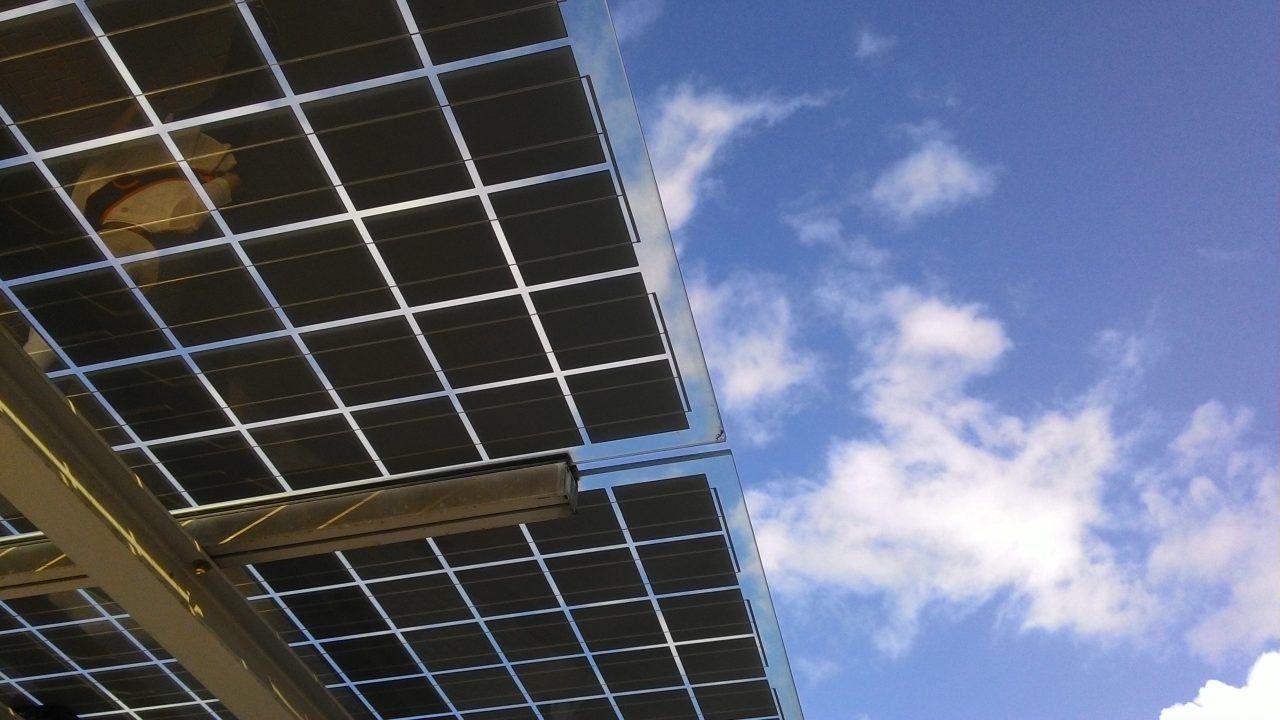
Photo by Asia Chang on Unsplash




Leave a Reply