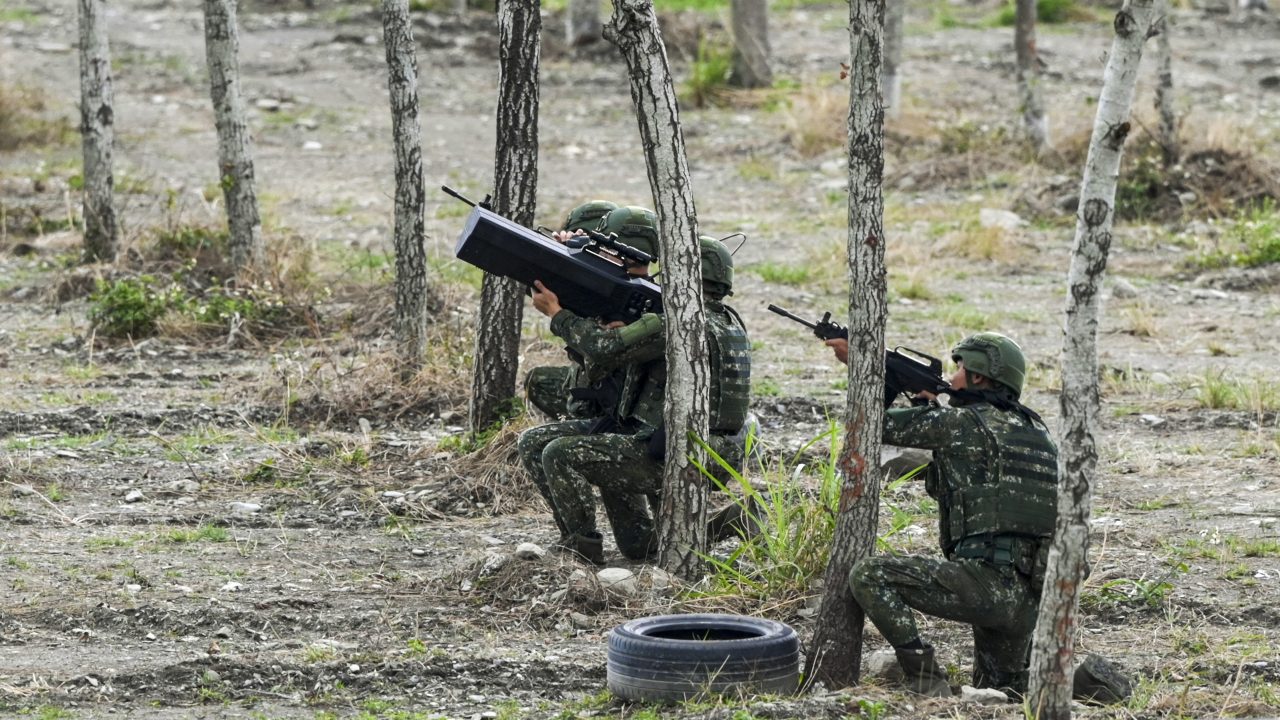
A few months after Russia’s February 24, 2022 invasion of Ukraine, President Tsai Ing-wen (蔡英文) and senior Taiwanese officials were briefed about the pivotal role of unmanned aerial vehicles, or UAVs, in Ukraine’s relative success against Russian forces. The implications were clear: UAVs could serve as an essential component of the island’s defense apparatus. But Taiwan possessed only four main types of UAVs numbering several hundred in its current inventory. By contrast, China’s extensive arsenal consisted of tens of thousands of UAVs across more than 50 different classes.
In response to this alarming gap, Tsai initiated the establishment of the “Drone National Team” program and inaugurated a drone development and production center in Chiayi. Taiwan’s government committed to spend 50 billion New Taiwan dollars (around $1.5 billion) to acquire drones and subsidize up to 50% of drone research and development costs for privately owned companies.
The National Defense Report of 2023 highlighted the imperative of prioritizing drone programs in the modernization efforts of Taiwan’s armed forces. This strategic plan envisages the acquisition of 700 military-grade and 7,000 commercial-grade drones by 2028, with an intended deployment of 3,200 UAVs by mid-2024. Nevertheless, the feasibility of this short-term target is still in question.

To discuss Taiwan’s endeavors to reinforce its defense capabilities through drone development, I interviewed Yusuf Akbaba, a defense industry consultant based in Ankara. He shed light on three pivotal considerations regarding the recent efforts in Taiwan’s drone development to fortify the island’s defense.
First, while UAVs offer a disproportionate tactical advantage in combat scenarios, they do not alone furnish a winning formula. Akbaba points out that the efficacy of UAVs depends on their integration within sophisticated operational frameworks, which includes electronic warfare.
Furthermore, Taiwan has overlooked the critical role of unmanned surface vehicles, or USVs. Ukraine has used joint UAV and USV operations to deal critical blows to the Russian Black Sea Fleet. The ability to mount such coordinated endeavors would greatly enhance Taiwan’s defensive posture.
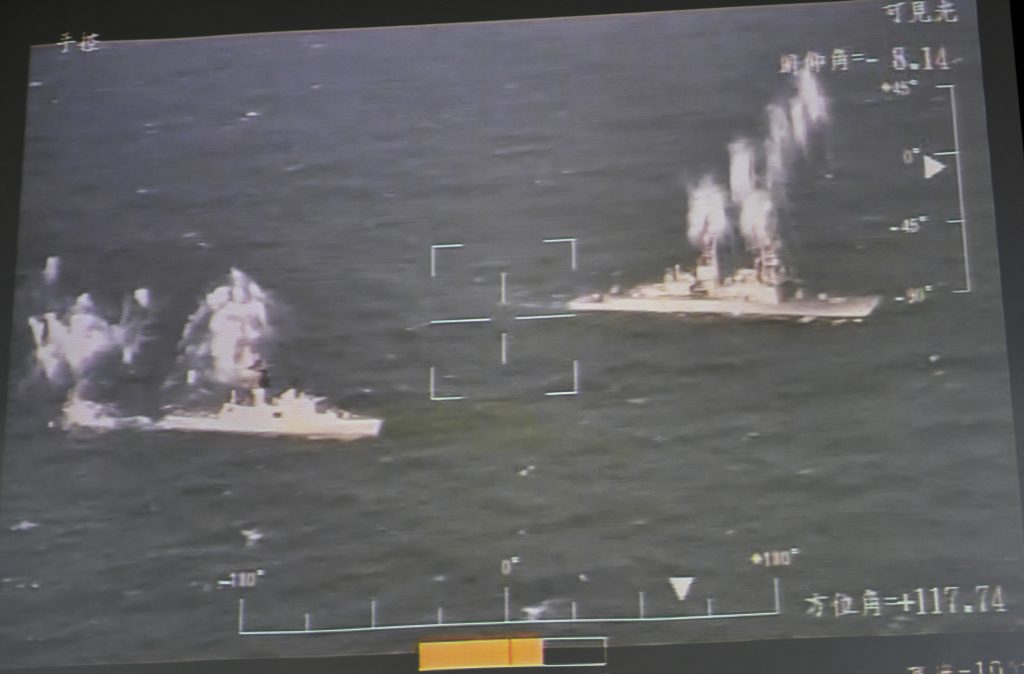
In the joint operational strategy implemented in the Black Sea, multiple Ukrainian TB2 drones circle a Russian vessel, signaling the threat of an imminent aerial assault. Simultaneously, a squadron of USVs launches a precise kamikaze attack. In certain contexts, USVs may offer more strategic utility than UAVs. Due to their diminutive radar and sonar profiles, it is difficult for enemy vessels to detect them before it is too late.
These USV attacks have been so influential that even Turkey had to revise its naval vessel designs and concepts. For example, the TCG Derya was planned to be built as a single combat support ship, but after the war in Ukraine the Turkish Navy added a new escort USV with electronic warfare capabilities. Similar to the TCG Derya, in the design of the TF2000 Air Defense Warfare (ADW) destroyer, weapon systems and displacement were adapted in parallel with the soaring USV threat.
The deployment of UAVs and USVs in joint operations presents a paradigm shift in modern warfare strategies. The coordinated use of unmanned platforms would help Taiwan turn itself into a porcupine against a Chinese amphibious operation.

Second, while the demand for drones in Taiwan is soaring, the economic feasibility of each unit remains a pivotal determinant of military procurement. In this regard, Taiwanese drone producers must reach international buyers to cut unit costs and help recoup money spent on research and development. When the Turkish military chose Baykar’s Bayraktar TB2 drones, for example, competitor Vestel-Lentatek Karayel looked for international buyers and made a deal with Saudi Arabia.
However, Taiwan’s China-imposed diplomatic isolation hampers its ability to export high-tech weaponry, thereby constraining the avenues for international market penetration. According to SIPRI, in the last 30 years, Taiwan has been able to deliver fewer than 20 UH-1H helicopters and four Dvora-class fast attack ships as secondhand aid to its handful of allies. Despite its technological prowess, entry into the overly saturated drone market remains a standing challenge for Taiwan.
Third, the necessity of acquiring combat experience in the process of drone development emerges as a central tenet. Given the absence of active conflicts in the region and the diplomatic pressures exerted by China, Taiwan faces constraints in both participating in combat scenarios and reaching international buyers for field-testing its drone systems. Fortunately, Taiwan has already teamed up with European, American and Israeli drone producers as part of its national drone development initiative. By harnessing the expertise and combat-tested technologies of partners such as Turkey, Taiwan can accelerate the maturation of its drone capabilities.

In a nutshell, Taiwan’s efforts to close the drone gap with China reflect a broader urgency in modernizing its defense capabilities. But the feasibility of rapidly arming its military with thousands of drones remains uncertain. The war in Ukraine serves as a stark reminder of the evolving nature of modern warfare, where tactical advantages are transient and adversaries rapidly adapt. Therefore, Taiwan must prioritize the development of a sophisticated joint defense concept that integrates UAVs and USVs to counter the threat posed by China’s amphibious fleet. By doing so, Taiwan can enhance its deterrence capabilities and reinforce its sovereignty in the face of evolving geopolitical challenges.




Leave a Reply