In June, U.S. Ambassador to China Nicholas Burns lamented that there are currently only around 800 American students studying in China, down from a highpoint of 15,000 a few years ago.
That turned out to be a low estimate, based only on those studying in university-credit programs. But even estimates in the low thousands elsewhere and far higher numbers of Chinese students still going to the U.S. to study do not hide the fact that there has been a wider freeze in academic relations between China and the U.S., particularly since the COVID-19 pandemic.
On the Chinese side, the Human Rights Foundation said in April that “Beijing has increasingly intimidated global academia, targeting both individual scholars and higher education institutions.” It listed informant networks, restricted funding opportunities and visa restrictions as forms of pressure applied to international scholars focusing on China.
But on the U.S. side, too, there has been a significant contribution. Law firm Benesch Law wrote in May that the U.S. Department of Justice continues to “[pursue] researchers and their employers over the failure to disclose ties to China,” even after its controversial “China Initiative” was dropped by the Biden Administration.
In combination, this marks a clear contrast to the situation in the 1990s and 2000s, where academics had more freedom in producing research about China and the conditions for people-to-people exchanges were far smoother.
“I think what’s really changed in the last few [years] is even if you’re not doing something nearly that sensitive, the scrutiny, the delays and sometimes just the outright rejections for visa applications … is getting really hard,” Michael Beckley, associate professor of political science at Tufts University, told a U.S.-Asia Institute webinar earlier this week regarding working in China.
Beckley said that in the 2000s, when he was a graduate student, professors who wrote about highly sensitive topics such as the Tiananmen Square massacre received visa restrictions. But now “if you do anything on human rights or Xinjiang or Taiwan and even increasingly just broader geopolitical issues, it’s getting really hard [to get access.]” He added that now even once academics are allowed into China, there are constraints on what can be studied.
At the same event, this timeline was broadly endorsed by Eileen Cheng-yin Chow (周成蔭), associate professor of the practice in Chinese and Japanese cultural studies at Duke University. She compared the situation in China now to the 1990s and 2000s, when she said the main emphasis was on controlling criticism that would be seen outside of China, rather than controlling all criticism.
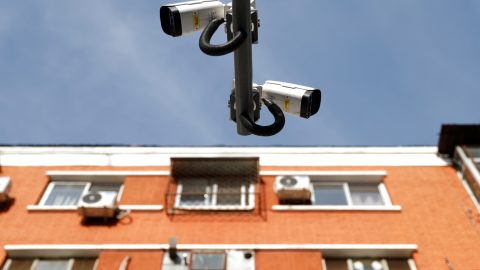
“[S]ince Xi [Jinping (習近平)] ascended and various other complicated factors that we need not go into here, it does feel like the most surveilled and most tightly controlled moment,” Chow said, though she added that this was part of a wider global phenomenon, owing to the increasing technological power of surveillance.
Chow, who pointed out that she was from Taiwan but works in the U.S., also spoke about restrictions on the U.S. side. She said the campus protests in the spring and summer showed “there are many many things we cannot talk about in the U.S with complete impunity,” and added that U.S. reaction to an increasingly oppressive state apparatus in China had spilled over into Asian hate that affected the Chinese diaspora.
This academic atmosphere and policy tightening is considered something that needs correcting by both sides.
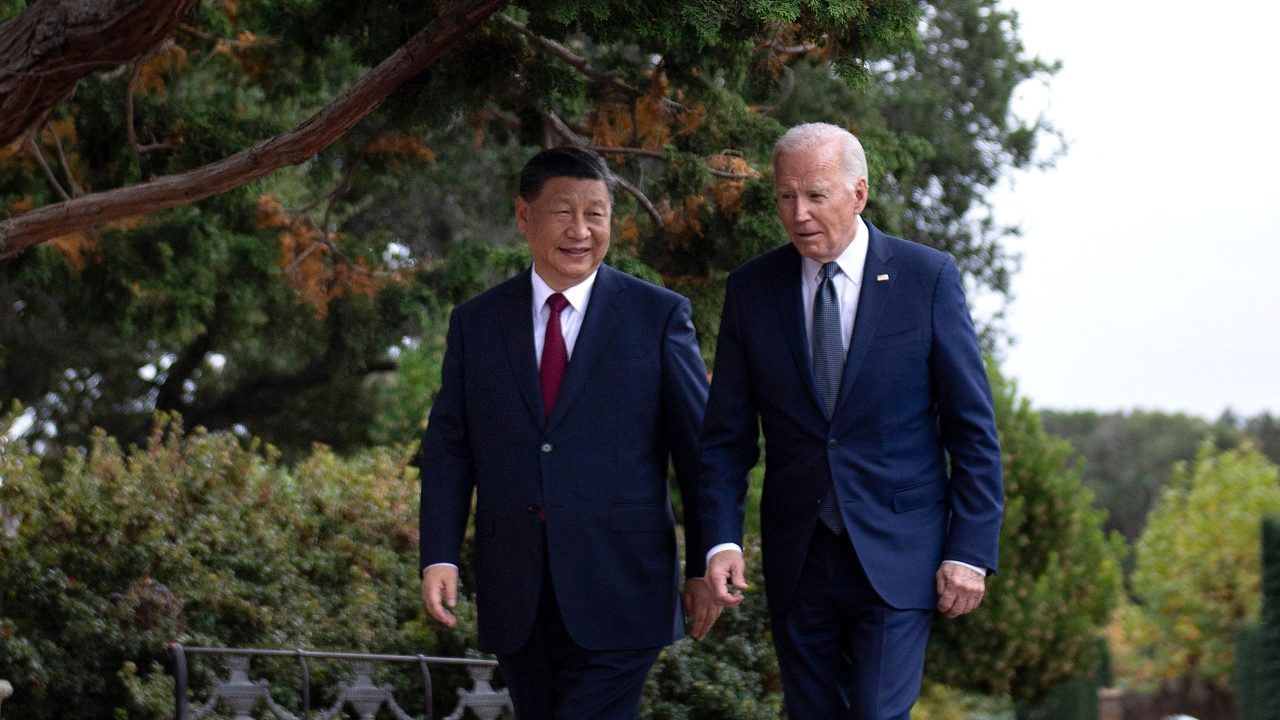
“We are committed to this cause and will continue to bring American and Chinese citizens together through academic and cultural exchange, and tourism,” Ambassador Burns said near the end of his June speech. Xi, during his visit to the U.S. last November, said China was prepared to invite 50,000 young Americans to China on exchange and study programs over the next five years.
But this has not automatically shifted the direction of travel, particularly in regard to U.S. study and research in China. Berkley said he had heard of both a reduced demand from U.S. students wanting to go to China — particularly since its economy slowed — and of exchange groups attempting to enter China having the “plug pulled.” Chow said that while there had been a “reversal” in U.S. exchange numbers this summer — Ambassador Burns said “rock bottom” was hit last year — it remained to be seen whether it would stick.
There is also the specific case of so-called branch campuses — U.S. university campuses located in China. Both Berkley and Chow were pessimistic about the terms on which these institutions can continue to operate, particularly regarding free speech. “Theoretically they’re great, but can you really do things on these campuses?” Chow asked. The director of a coalition of researchers studying American institutions abroad told Inside Higher Ed last year they are now “bleeding money.”
Speaking about what the U.S. side could do to facilitate a warming of academic relations, both Berkley and Chow agreed that espionage legislation needed to remain specific and limited. But both were pessimistic about the future.
Summing up a self-perpetuating cycle of distrust, Berkley put it like this: “I think this is what happens when great powers enter into periods of conflict with each other. It has knockdown effects on society.”




Leave a Reply