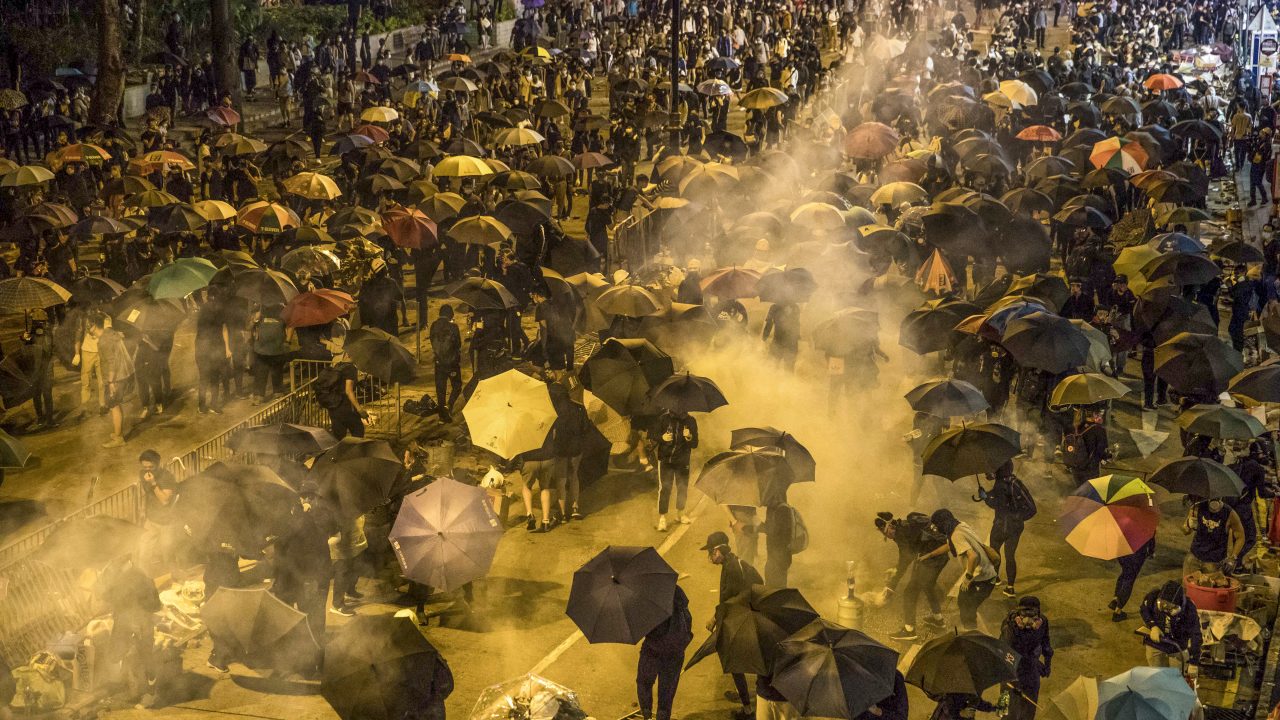
In early fall 2020, Hong Kong lawmaker Ted Hui (許智峯) made preparations to fly to the Netherlands for a work trip at the end of November. Although this kind of trip wasn’t unusual for him, it was 2020, during the height of the Covid-19 pandemic when flights were restricted and conferences were typically held online. Hui didn’t tell his friends in the Netherlands the real reason why he was looking for an excuse to visit, but “they knew it without me saying it, that it’s a preparation … in case I need to get out of Hong Kong.”
Six months after the 2020 national security law was passed, this trip was a potential escape route to avoid prosecution for his pro-democracy activism. Even as Hui boarded his plane, he had not yet decided whether he would be returning home. But “I had a feeling that we have fallen; Hong Kong has fallen into a very dark age,” Hui said.
Under the “one country, two systems” framework established at the British handover of Hong Kong in 1997, Hong Kong’s legal and judicial systems were partially independent from China. Five years ago, Beijing reasserted control over the territory when it passed the national security law, imposing Chinese law on Hong Kong for the first time without local legislative approval. Over the past several years, civil and political rights in Hong Kong have eroded rapidly, and record levels of activists, politicians, journalists and others have fled.
Domino Theory spoke to four Hong Kong democracy activists who are no longer able to go home due the risk of political persecution and imprisonment. Some left before the national security law was passed and some left after. Stitched together, their stories provide insight into the rhythm and nature of Beijing’s efforts to stifle human rights in Hong Kong.
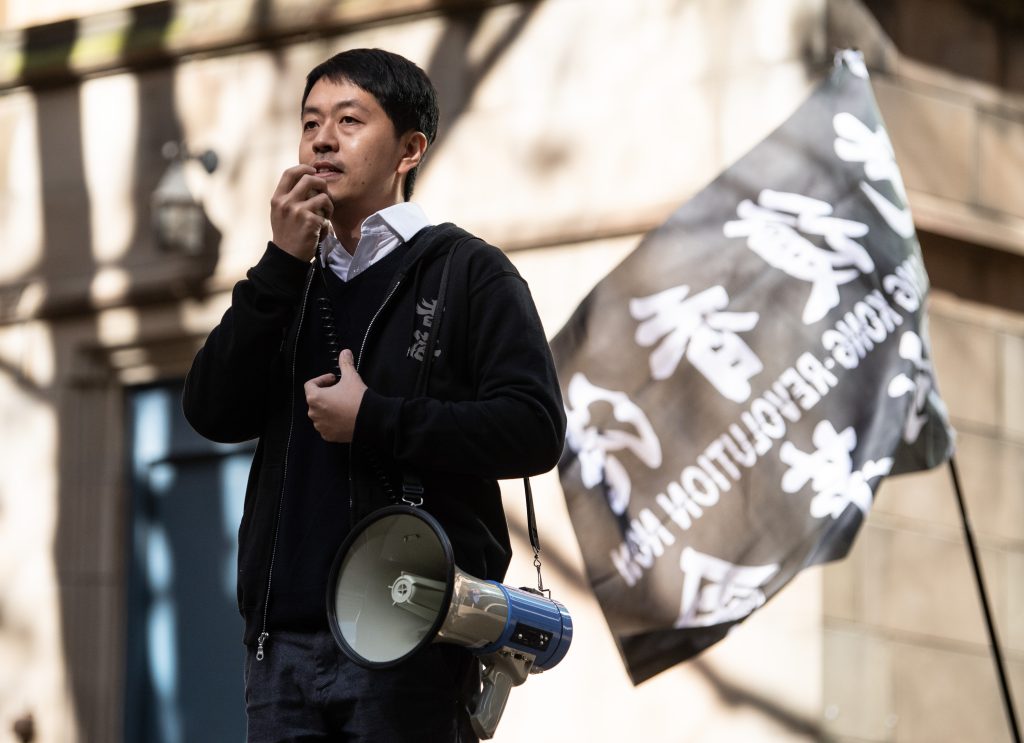
One of the earliest Hong Kong activists to seek political asylum abroad, Ray Wong (黃台仰), fled to Germany in November 2017 when he was 24 years old. Wong co-founded Hong Kong Indigenous, a political group formed in 2015 to advocate for Hong Kong’s independence.
The catalyst for Wong’s departure was his involvement in the Fishball Revolution in February 2016. Wong played a leading role in organizing this protest in Mong Kok, which resulted in violent clashes with the police that left 130 people injured.
Even though Wong had already been arrested five times for his involvement in political activism, the charges he faced for the Fishball Revolution were different. Up until then, pro-democracy activists had faced relatively minor charges that wouldn’t send them to prison for longer than about a year. Prominent Hong Kong activist Joshua Wong (黃之鋒) was sentenced to six months in prison for his involvement in the 2014 Umbrella Movement, a 79-day, youth-led protest sparked by Beijing’s decision to pre-screen candidates for Hong Kong’s Chief Executive. In contrast, Ray Wong was charged with inciting and participating in a riot. This was the first time the Hong Kong government used the rioting charge since persecuting a pro-Chinese Communist Party riot in 1968 during British colonial rule. A prison sentence for rioting could range from three to ten years.
Wong was sure he would be convicted and sent to prison. The definition of rioting according to Hong Kong law is broadly defined as three or more people disrupting the social order, and he considered himself and his colleagues at Hong Kong Indigenous to be the Hong Kong government’s “enemy number one.” He was also the first defendant in the case, indicating that he was most to blame for the riot.
Even though Wong was staring down the barrel of a decade in prison, he was planning to stay in Hong Kong and accept whatever punishment he received. “[A]t the time, we believed one of my other colleagues, Edward Leung (梁天琦), would be a better person to leave Hong Kong while I stayed … we agreed someone should leave Hong Kong to tell our story.”
But Leung ultimately decided to stay, which gave Wong about a month to decide whether to leave. He consulted with friends in Taiwan and at the World Uyghur Congress in Germany who told him, “you really need to tell the world what is happening in Hong Kong, because people still [think] the CCP is upholding their promise — Hong Kong is still free, and ‘one country, two systems’ is intact … It’s important for someone like me to come to Europe [to wake people up].”
With his trial around the corner, Wong didn’t have much time to make a plan. He decided to leave in November, when he had a work trip to Germany already scheduled. But the police had confiscated his passport back in 2016. To leave Hong Kong, he had to apply to the court, submit an invitation letter from his friends in Germany and add bail money. He got his passport back only two days before he was scheduled to leave. While Wong was still living in a refugee camp in Germany, Leung was sentenced to six years in prison.
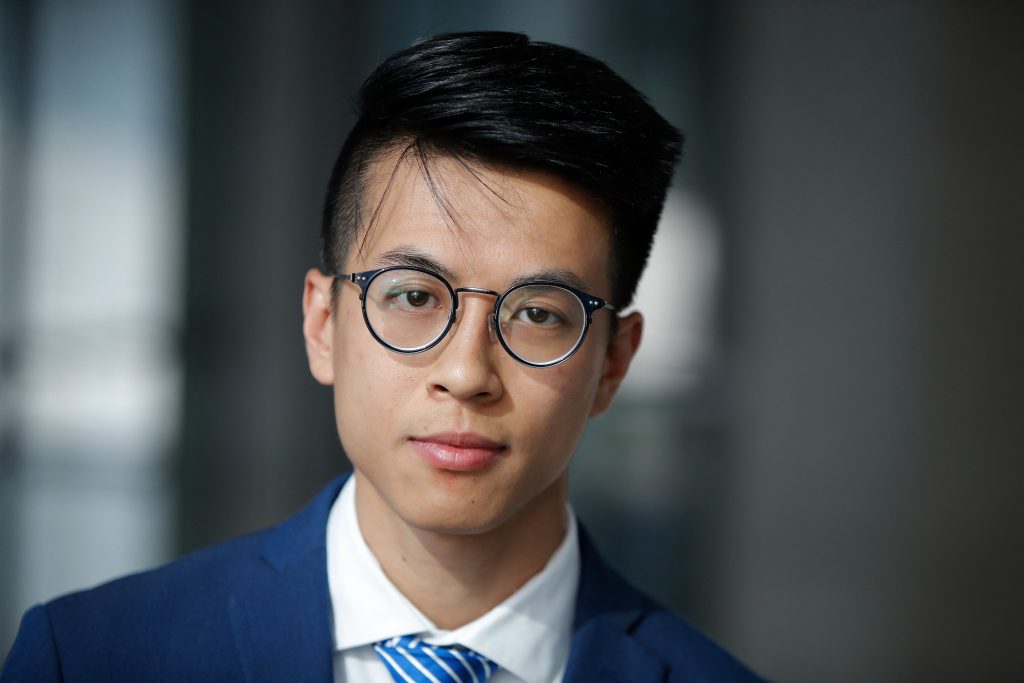
A lot more activism happened in Hong Kong after Wong left. Jeffrey Ngo (敖卓軒), another Hong Kong pro-democracy activist, was home from his PhD program in the U.S. during the 2019 anti-extradition law protests. During that summer, millions of people took to the streets to oppose a bill that would allow Hong Kong fugitives to be tried in China’s legal system. These were the largest protests to take place in Hong Kong’s history. Still, Ngo says he “did not feel inherently safer or less safe versus in years past,” despite having been involved in pro-democracy activism and politics for many years. When Ngo left to go back to school in late August 2019, he didn’t think he was leaving for good. “[T]here was definitely no sense when I left that I was saying goodbye to Hong Kong, it was just … summer’s end.”
According to Ngo, “the momentum of the protests was very much alive” through the beginning of 2020, until the Covid-19 pandemic squelched in-person organizing. “And then within about five months or so, there were rumors about this new sweeping national security law that would be passed by Beijing and then imposed on Hong Kong,” said Ngo. The national security law changed everything. Although Hong Kong was never fully democratic, and civil rights had been slowly eroding since around 2014, “on the whole, you know, a lot of [Hong Kong’s freedoms were] intact. And then it just all crumbled in 2020,” said Ngo.
Covid-19 restrictions notwithstanding, the national security law posed a major challenge to pro-democracy activism. Bills that were debated in the Legislative Council, Hong Kong’s legislature, could be protested because the public was aware of their contents and could organize to delay a vote. For example, the anti-extradition bill that had been proposed in 2019 never passed because “protesters physically blocked the entrance to the Legislative Council downtown, and so lawmakers couldn’t even physically enter the building to debate the bill. And then before long, the Chief Executive of Hong Kong shelved it,” said Ngo. In contrast, the national security law was passed in Beijing and the public didn’t know its contents “until the very moment it became effective,” said Ngo.
The impact was immediate. “Hours before the law was set to go into effect, a bunch of activists fled the city to the extent that they could … if their passports were not confiscated … because they didn’t know what was in there. And the worry was that within the first 48/72 hours of the national security law being in effect, that there would be door knocks and a bunch of people would be rounded up. It did not happen that quickly, but the effect was sweeping nevertheless,” said Ngo.
“The worst predictions of what might have been in the national security law in 2020 turned out to be pretty close to the mark,” said Ngo. He gradually came to terms with the fact that it wouldn’t be safe for him to return to Hong Kong. “There was no single moment when I realized it was not safe for me to go back. It was just sort of like you begin to see more data points, and you begin to understand not just the content of the national security law more fully, but also the application of it.”
For example, part of the national security law prohibits colluding with foreign forces, and Ngo had been engaging in international advocacy since 2014. “If the rule of law had been intact, whatever you had been doing before the law passed would not have affected you. But that’s not the case with … the Chinese legal system, where [they] could pass a law today … to prosecute things that you did yesterday.” In fact, when 47 people who participated in an unsanctioned pro-democracy primary election in July 2020 were arrested en masse six months later, the activities that they “had engaged in prior to the passage of the national security law were nevertheless incorporated into the prosecution’s case,” said Ngo.
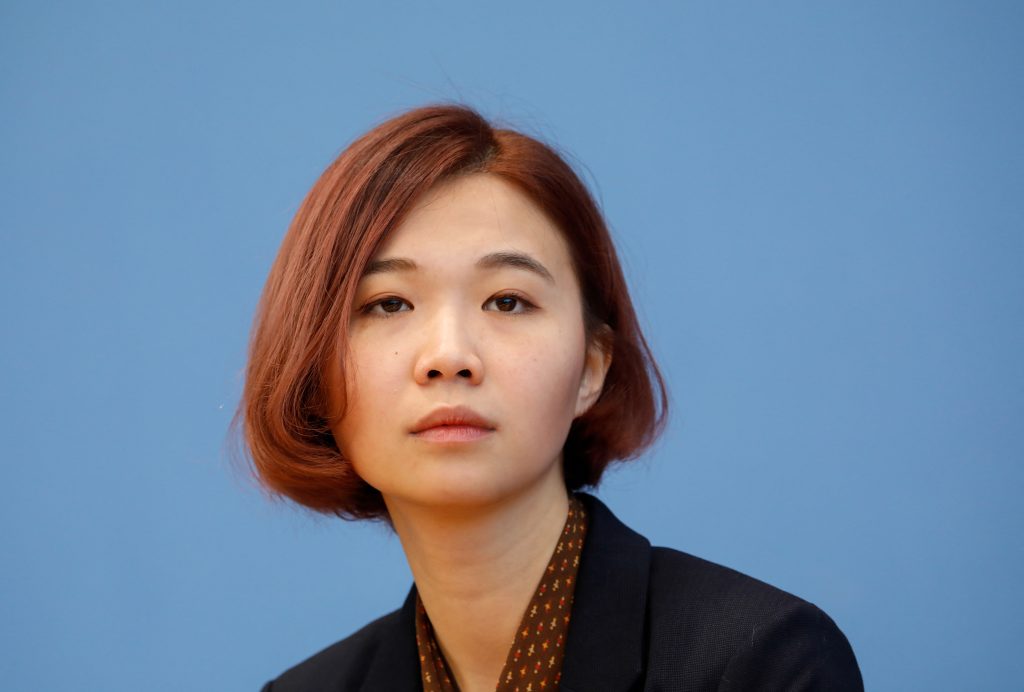
Glacier Kwong (鄺頌晴), who was studying for her doctoral degree in Germany in 2020, came back to Hong Kong in May of that year to participate in that same unsanctioned pro-democracy legislative election. She was running the campaign for Gwyneth Ho (何桂藍), a journalist and pro-democracy activist. After the national security law passed in June, Kwong made preparations to leave at the end of July because she wanted to continue her Hong Kong advocacy work in Germany. She feared persecution under the “foreign collusion” offense.
Gwyneth Ho was one of the 47 charged under the national security law for her involvement in these elections and she remains imprisoned. According to Kwong, Ho expected to go to jail for a long time. Ho had told Kwong that “she’ll do her part in Hong Kong and then go to jail for it, and she’s content with that, and she expects me to do my part abroad, which is international advocacy. So that was the last exchange we had … before she was [taken into] custody in … February [2021],” said Kwong.
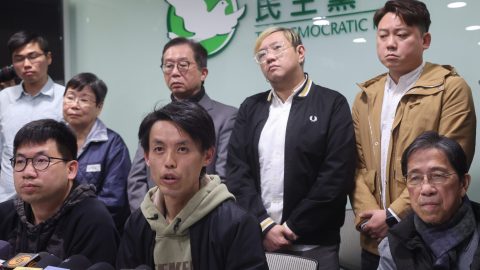
Ted Hui thinks he would have been number 48. In November 2020, Hui was the last legislator involved in the primaries to leave Hong Kong before the mass arrests on January 6, 2021. He is also the last person to have left Hong Kong out of the four people Domino Theory interviewed.
Hui was first elected to the Hong Kong Legislative Council in 2016 and was actively involved in pro-democracy protests throughout this time. Sensing the potential danger her husband could be facing, Hui’s wife advised him to prepare an exit strategy in 2018. “But in Hong Kong, fighting for freedom and democracy, it’s not like in mainland China, people don’t go to jail, and people don’t lose [their] lives to achieve that … So I bluntly refused,” said Hui.
When the police began raiding his house in August 2020, Hui changed his mind. “When they were reading [the charges] at my door, I was quite surprised. I was saying, ‘What are you talking about? Which case? I can’t remember at all,’” Hui said. The charges were a surprise because they were regarding his involvement in the anti-extradition law protests the previous year. “I knew they were digging up something very old, trying to find whatever charges that they can find and use it on me,” Hui said. His house was raided two more times in the following months.
As one of the earliest politicians in the pan-democracy camp to face legal action following the imposition of the national security law, Hui thinks he was targeted first with these arrests because he was considered a more radical member among the moderate camp. Hui had been charged for protesting before, but for things he actually did like obstructing the road. This time, Hui says his charges included falsehoods and distortions. “I knew at that time, something bigger must be coming very immediately,” said Hui.
The passage of the national security law caused the “whole political environment” to shift, said Hui. The police were empowered to abuse Hong Kong’s public order laws “with no consequences because that’s the wish of the regime.”
The rules of the game had changed. Ultimately, Hui boarded the plane and didn’t go back.
The next article in this series will discuss how becoming a part of the Hong Kong diaspora impacted these four activists’ sense of identity and their activism.



Leave a Reply