Over the past two decades, China has become South America’s largest-trading partner and is predicted by some to overtake the U.S. in the Latin American region overall by 2035. At the same time, it has flipped Panama, El Salvador, the Dominican Republic, Nicaragua and Honduras away from recognizing Taiwan diplomatically. And it has also secured access to huge stores of minerals crucial to modern energy systems like solar panels and electric vehicles.
Now, however, an open tussle over its role in the region has broken out with the U.S.
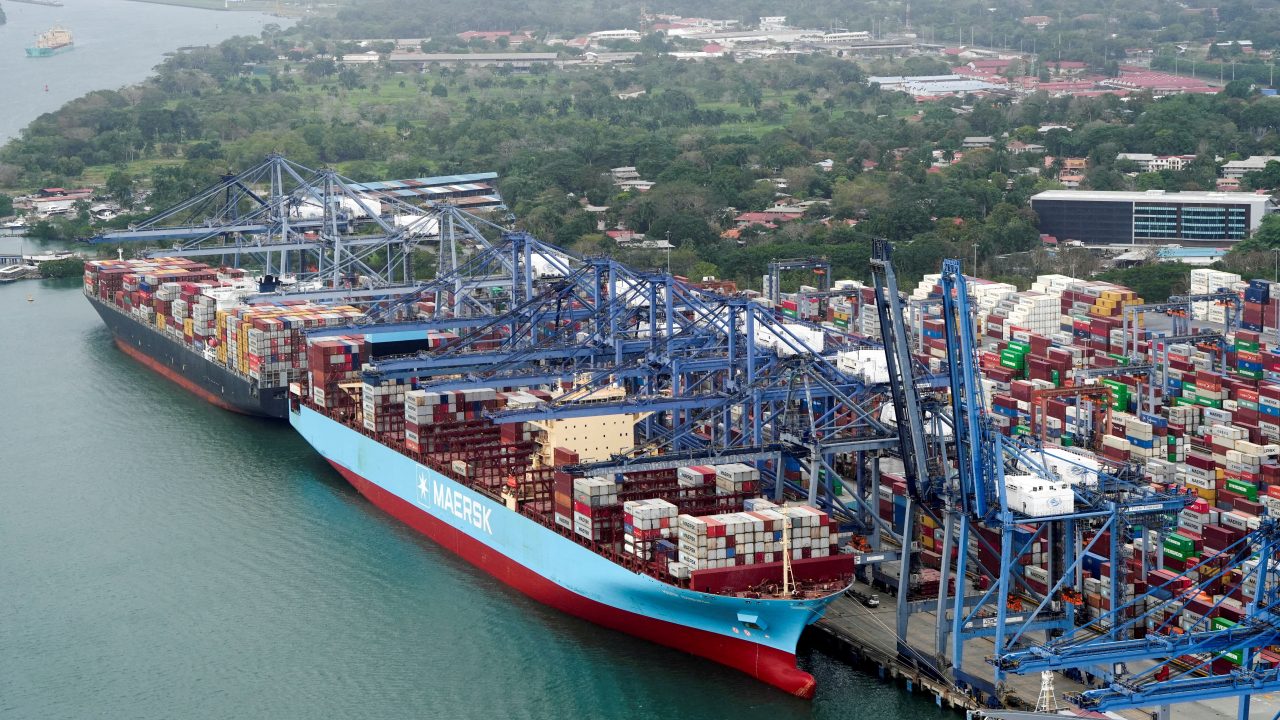
At the start of February, following a visit from U.S. Secretary of State Marco Rubio, President Jose Raul Mulino announced Panama’s withdrawal from China’s Belt and Road Initiative and said his government would reconsider the contract for two ports terminals on the Panama Canal controlled by Hong Kong-owned company CK Hutchison Holdings.
Since then, Panama’s Attorney General Luis Carlos Gomez has given the legal opinion that the contract granted for those terminals was unconstitutional, and CK Hutchison Holdings has agreed a deal to sell the terminals — fuelling a backlash in China.
That issue forms one element in a developing pattern. Last month, Mexican President Claudia Sheinbaum said her government will review tariffs on Chinese imports. Ecuador’s government terminated a new contract with a Chinese-led consortium to develop its most productive oilfield. And Argentina’s government sent a delegation to inspect the Chinese deep space observation station in Neuquen Province.
In each case, there are suggestions of U.S. pressure behind the decisions, and this is not unexpected. U.S. President Donald Trump has publicly cited the Monroe Doctrine in the past, calling it “the formal policy of our country.” That refers to the idea that the U.S. retains the Americas as its sphere of influence and will not tolerate outside interference.
But that intent does not guarantee success. And indeed, there are many who feel the U.S.’s pressure could backfire and it could be seen as a bully.
“[N]ow we’re seeing a revival of the most let’s say aggressive version of the Monroe Doctrine from the Trump administration. In particular more with coercive measures — threats, tariffs, pressure,” Bruno Binetti, an Associate Fellow at Chatham House said at one of their recent online events. “[But] it needs positive inducements as well and I think that’s what’s missing right now … Coercion can reap benefits in the short term but I think in the longer term that’s what’s missing from U.S strategy.”
This contrasts with China’s approach. China has been a major source of foreign direct investment and loans for infrastructure projects in the region since the mid-2010s. At the end of last year, for instance, Chinese President Xi Jinping (習近平) traveled to Peru to open a $1.3 billion new port, majority-owned by the Chinese shipping company Cosco. Yu Jie (喻潔), senior research Fellow on China at Chatham House, noted China has also been a major buyer of Latin American agricultural products as it has looked to diversify its supply away from U.S. products.
Such an equation means the U.S. cannot simply click its fingers and have Latin America follow its lead, as the other half of the ledger from last month shows.
In March, Honduras’ National Electric Power Company gave a Chinese company a contract to develop a large battery energy storage system, Nicaragua gave a Chinese company a 25-year deal to extract metals and nonmetallic minerals, and a deal was mooted for China Petroleum to take over from Chevron’s oil operations in Venezuela.
There is also a view that the U.S.’s recent threats could actively push Latin American countries toward China, both diplomatically and economically.
“We don’t know what exactly Trump would have in his mind, but for China it has been quite consistent in terms of engaging with the developing world, with engaging with [the] Global South. That is to say to treat [the] Global South as equal,” Yu Jie said, addressing the diplomatic side of this equation. Many will disagree with that assessment, but what it elucidates either way is China’s willingness to present itself in such terms.
One example of this is the contrasting response to recent U.S. deportation flights to Columbia. After Columbia’s president turned around the flights, the Trump Administration threatened to impose 25% tariffs on the country. China’s ambassador to Columbia, on the same day, posted 38 tweets celebrating ties between China and Columbia.
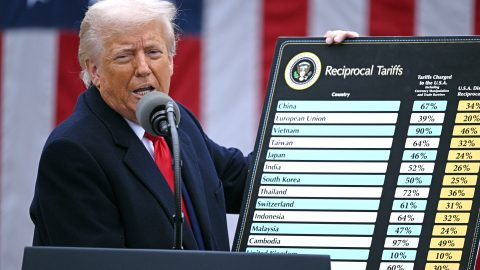
Economically, there is a chance of the same story playing out. The U.S.’s new 10% baseline tariffs on most Latin American countries are not considered huge, but they — and the instability in trade that they bring — could make increased exports to China more appealing. And in the other direction, far larger 104% tariffs on China make trade with Latin American countries an appealing replacement for trade with the U.S.
“104% U.S. tariffs against China perversely drives China to import more agricultural products and other things like strategic minerals from Latin America. Some of the biggest beneficiaries of that trade [are] Brazil and Argentina, also Uruguay, and putting more pressure on a flip by Paraguay,” said Robert Evan Ellis, a research professor of Latin American Studies at the U.S. Army War College Strategic Studies Institute.
Ultimately, then, the takeaway is clear. If access to resources and calls for geopolitical support in the region come down to transactional calculations, then China’s role will likely continue to be significant.
“I would say for most of these countries … the relationship with China is a very pragmatic decision to diversify their foreign policies, to diversify their economic engagements, and also to turn to a country such as China that has a lot of demand for what most Latin American countries have to sell,” Binetti said.
If that’s the case, the only way that balance could shift is if the U.S. finds more to offer than just threats.


Leave a Reply