
Unless all the polling from the last two months is incorrect, on Friday morning the United Kingdom will have a new government, the first Labour government in 14 years. What does this mean for Taiwan?
Like most democratic countries, the U.K. has in recent years been more vocal about security and stability in the Taiwan Strait and has participated in the general trend of sending low-ranked government ministers and parliamentary delegations. At the same time, the relationship with China has not recovered from the slump it entered in 2020 with COVID-19 and the National Security Law in Hong Kong. A broad cross-party consensus has emerged in Westminster that the PRC now represents more of a challenge than an opportunity.
This can be seen by the fact that Labour’s stated manifesto policy towards China, “Co-operate, Compete and Challenge,” is a near mirror of the Conservative’s “Protect, Align and Engage.” Unsurprisingly the manifesto contains nothing on Taiwan at all. Given the closeness of the two parties on foreign policy, most experts do not anticipate that there will be any dramatic change for Taiwan.

David Lammy is the shadow foreign secretary, a parliamentarian who will very likely be named as the foreign secretary if Labour wins. In a speech to the Fabian Society in London in January of this year, Lammy outlined his foreign policy strategy: progressive realism. Drawing on two well-known Labour figures, Lammy said: “Our approach will combine the best of two great Labour traditions, the commitment to realism of Ernest Bevin, the Foreign Secretary who gave us NATO. And the commitment to progress of Robin Cook, the Foreign Secretary who put principle at the heart of foreign policy.”
Unfortunately, it’s hard to determine what this means for Taiwan (or anywhere). Will the relationship with Taipei be emphasized on ideological grounds? Or would ties with Beijing be put first due to realist concerns over the shape of the world as it is?
Fundamentally, there is no public Labour Taiwan policy and there will likely not be one unless external events force the British government to take a strong stance. This is something everyone interviewed for this article agreed on. On Taiwan, the Labour government will almost certainly continue the pattern of cautious engagement on all fronts, without marking any unexpected moves.
There have, however, been small gestures. Andrew Yeh, executive director of the China Strategic Risks Institute, pointed out that Catherine West, the shadow minister for Asia and the Pacific, publicly congratulated President Lai Ching-te (賴清德) after his election. Sam Hogg, a political analyst who founded the influential (but sadly now defunct) newsletter Beijing to Britain, noted that Lammy has supported Taiwan’s ability to attend international fora. As recently as January of this year, Lammy also raised the issue of stability in the Taiwanese Strait in a written question to Parliament.
How will Labour’s China policy impact Taiwan? Key here is that Labour has announced an audit of the U.K.’s relationship with China. This means we won’t know of any significant shifts in policy until some time after the election, but according to Baroness D’Souza, a party-unaffiliated member of the British-Taiwanese All-Party Parliamentary Group and guest at President Lai’s inauguration, we should not expect them to do much different from the current government.
Because Labour is likely to maintain the view that China is a security risk, that puts a firm ceiling on how much they could improve relations. Lammy has spoken about China’s “greater repression at home and more assertive behavior abroad — in Hong Kong and Xinjiang, Taiwan and the South China Sea.”
Attempting to read the tea leaves, one might also look at Labour leader Sir Keir Starmer’s past. He has been seen as a fairly ruthless leader in politics, but before that he had a storied career in law where he was Director of Public Prosecutions and a well-regarded human rights lawyer, with a particular interest in the death penalty internationally. On a recent episode of the Political Currency podcast, former U.K. chancellor George Osborne and former shadow chancellor Ed Balls speculated that it’s possible that with this background he will want the Foreign Office to lean more heavily on the progressive side of things.
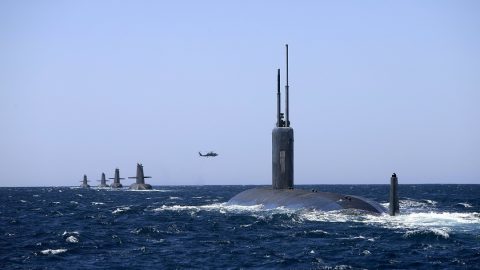
The U.K. has been increasingly engaged across the wider Indo-Pacific, with pseudo-alliances and partnerships like AUKUS and GCAP, defense deployments of River-class offshore patrol vessels, amphibious warfare ships and carrier strike groups, the accession to Comprehensive and Progressive Agreement for Trans-Pacific Partnership (CPTPP) and dialogue partnership with ASEAN. Not to mention, of course, the British Overseas Territories in the Indian and Pacific oceans. These are all elements of former Conservative prime minister Boris Johnson’s Indo-Pacific tilt. Gray Sergeant, an Indo-Pacific fellow at the Council on Geostrategy, said the shadow defense secretary, John Healey, had previously questioned the wisdom of this policy, but Gray and other analysts suggest that in office he will discover the tilt is not “easy to walk away from.”
I asked those I spoke with to choose a policy they would like Labour to adopt or emphasize. Hogg said he would like to see both the U.K. and Taiwanese governments invest in much greater educational exchange. Yeh suggested ministers should adopt a less cautious and narrow reading of the U.K.’s “One China” policy: “I think the U.K. can also be much bolder in stating that China’s current gray zone coercion tactics against Taiwan … are in contradiction of the U.K.’s ‘One China’ policy, because the U.K.’s ‘One China’ policy has always mentioned peaceful resolution, and gray zone coercion is not peaceful resolution.” Incidentally, Yeh has a report out with the China Strategic Risks Institute discussing in much greater depth how a Labour government could respond to Chinese gray zone attacks on Taiwan.
Baroness D’Souza gave three recommendations. The U.K. should strengthen its Five Eyes partnerships, it should oppose Chinese entry into the CPTPP and it should build up strong relationships with democracies in the region like Japan, South Korea, Malaysia and Indonesia.
Sergeant gave the most thought-provoking answer. He said the U.K. should seek to preserve the status quo while also providing the Taiwanese people with dignity: “Everyone talks about not rocking the boat and Beijing not engaging in gray zone maneuvers and all of this. Well, the Taiwanese people have been pretty good at not rocking the boat recently.”
In the end, for all that Labour wishes itself to walk quietly on Taiwan, it might not have any choice. As Harold Macmillan once said: “Events, dear boy, events.”



Leave a Reply