In December 2016, as the dust settled on what was then a shocking Donald Trump victory, Taiwanese President Tsai Ing-wen (蔡英文) picked up the phone and spoke with the president-elect for about ten minutes. It was an unprecedented call, believed to be the first direct conversation between Taiwanese and U.S. presidents since the U.S. recognized the P.R.C. in 1979. In many ways, this moment encapsulates the shifts and changes that the first Trump term meant for Taiwan, both encouraging but also disconcerting.
Now that Trump is president-elect again, and especially since Trump has been making worrying comments about Taiwan through the campaign even as parts of his team remain staunch supporters of defending it, Taiwanese President Lai Ching-te (賴清德) and his government need to once more chart the murky waters that represented state-to-state relations with a Trump-led America.
Here are five things that Lai and Taiwan need to do, before and after Trump takes office:
Bring Back the Band
Lai was not the vice president during former President Tsai’s first term, which coincided with Trump’s first term. Therefore, he lacks direct experience in dealing with a Trump administration. While he will not want to appear unconfident in his own abilities, he also needs all the help he can get. This is no time for ego.
The current administration should tap into the experience of those who worked most closely with Trump’s team from 2017 to 2020. This includes Stanley Kao (高碩泰), who was the Taiwanese representative to the United States in that period, and it includes Tsai herself. It also includes a lot of people who quietly did the work behind closed doors. They need to make sure their successors know everything that they learned and can lean on every contact that they made.
How Does the Pro-Taiwan/Anti-Ukraine Faction Really Feel?
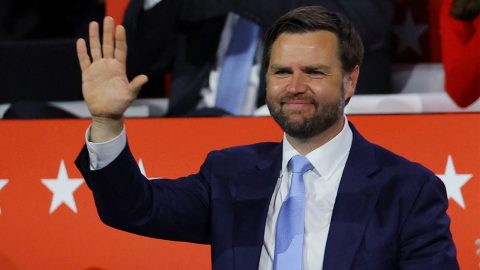
The Trump administration is going to be shaped, to some extent, by a loose collective of groups and people who are China hawks and who think that helping Ukraine against Russia has been a distraction from a much more serious geopolitical foe. They include Vice President-elect JD Vance and the America First Policy Institute, but this sentiment is widespread among the MAGA wing of the Republican Party.
Lai’s people in Washington, both in the Taipei Economic and Cultural Representative Office (TECRO) and in the Democratic Progressive Party (DPP) U.S. Mission, need to establish exactly how the people who actually have Trump’s ear, a group that has probably not yet coalesced, actually feel. Do they genuinely want to stick by Taiwan even through four tough years? Or are they isolationists who will look to abandon Taiwan after they have used it as an excuse to abandon Ukraine?
The answer to this question is probably the single key piece of information that will define Taiwanese security through 2029. Correctly diagnosing that this faction is not to be counted on would be the equivalent of George Keenan’s Long Telegram. It would change everything.
Find the Right Path on Ukraine
If the new Trump administration indeed withdraws its support from Ukraine and uses Taiwan as part of the justification, the days of Taipei openly and vocally calling for the U.S. to support Ukraine are over. It would appear almost as a personal affront to Trump and his team. However, to flip on this issue will open Lai’s government to accusations that it is hypocritical, and worse, that it is unreliable.
To an extent, there is nothing Taipei can do about this, because it would be true. It is simple realist calculus. However, the risk is that those people in democracies, particularly European democracies, that have come to see Taiwan as a partner, as a member of a democratic community, would see Taiwan turn its back on Ukraine and in turn become less invested in Taiwan’s own cause. No-one expects that European navies would fight in the Taiwan Strait. But I have long argued that after 2022 Europeans expect they would provide material support for Taiwan. Taiwanese diplomats will have their work cut out.
There are also still things that Taiwan and Ukraine can do together, even if they have to learn to do them without the U.S. Both countries share the similar problem of a powerful and irredentist aggressor on their border. Taipei should seek to maintain channels with Kyiv for the flow of mutually beneficial information, and should continue to pursue opportunities in Europe that are win-win-win for Taiwan, Ukraine and third parties.
That Taiwan still has its own foreign policy is something the Trump administration will have to live with.
Turning Japanese
Japan has long been Taiwan’s “second ally.” Taipei should start a highly confidential, high-level dialogue with Tokyo about what both sides plan to do if the Trump administration ultimately turns away from allies and Asia altogether.
At an election event on Monday in Taipei, political scientist Chen Fan-yu (陳方隅) pointed out that for Taiwanese when it comes to allies, it is not a choice between the U.S. and the rest of the world, it is a choice between the U.S. and China. If Taiwan loses the U.S., the DPP might well lose the electorate.
It is hard to imagine a world where both Taipei and Tokyo believe they can credibly balance against China without America, but it would be irresponsible not to have the conversations, not only about preparing for such a scenario, but also cooperating to try to prevent it.
Crisis and Opportunity
There is an old Western idiom which states that the Chinese words for “crisis” and “opportunity” are the same. They are not, of course, but it doesn’t stop people from saying it to make their point.
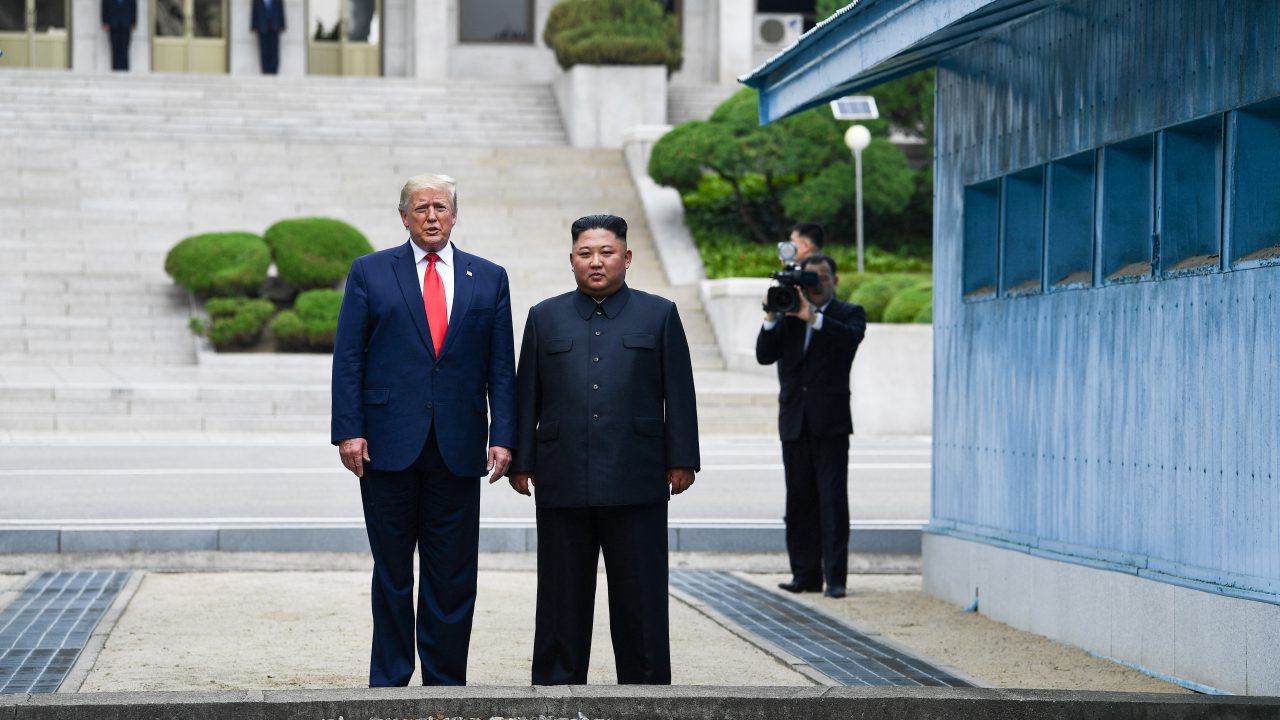
Who would have guessed in 2017 when Trump threatened North Korea with “fire and fury” that less than a year later he would shake hands with North Korean supreme leader Kim Jong Un at an unprecedented summit in Singapore?
With Trump, you never really know whether you are on the outs or not. The people who warn that Trump’s election represents danger for Taiwan, that he may be prepared to make a deal with China, are not in my opinion wrong. But they only represent one side of a coin that Trump himself seems to flip. What if Trump is willing to make a deal with Taiwan?
When Trump said in an interview with Taiwan that “Taiwan should pay us for defense. You know, we’re no different than an insurance company. Taiwan doesn’t give us anything,” many Taiwanese, understandably, felt extremely threatened. After all, Taiwan spends billions of dollars on American weapons every year, and in return, famously, doesn’t receive any firm security guarantee or alliance, instead having to live under the indignity of strategic ambiguity.
But Lai should not only see a threat. Lai should see an opportunity. How much, actually, would Taiwan be prepared to pay the U.S. for defense? How much would Lai’s government be prepared to pay for a summit in Singapore and a treaty that guaranteed the U.S. would defend Taiwan if China attacked?
You know the answer. The answer is that Lai would pay almost anything, and it would still be cheap.
No U.S. president since Jimmy Carter has been prepared to give Taiwan such a guarantee. It goes against U.S. foreign policy since the switch to recognize the P.R.C. in 1979. But Trump is not like other presidents. Time and again, he upended orthodoxy.
Who’s to say he wouldn’t again?



Leave a Reply