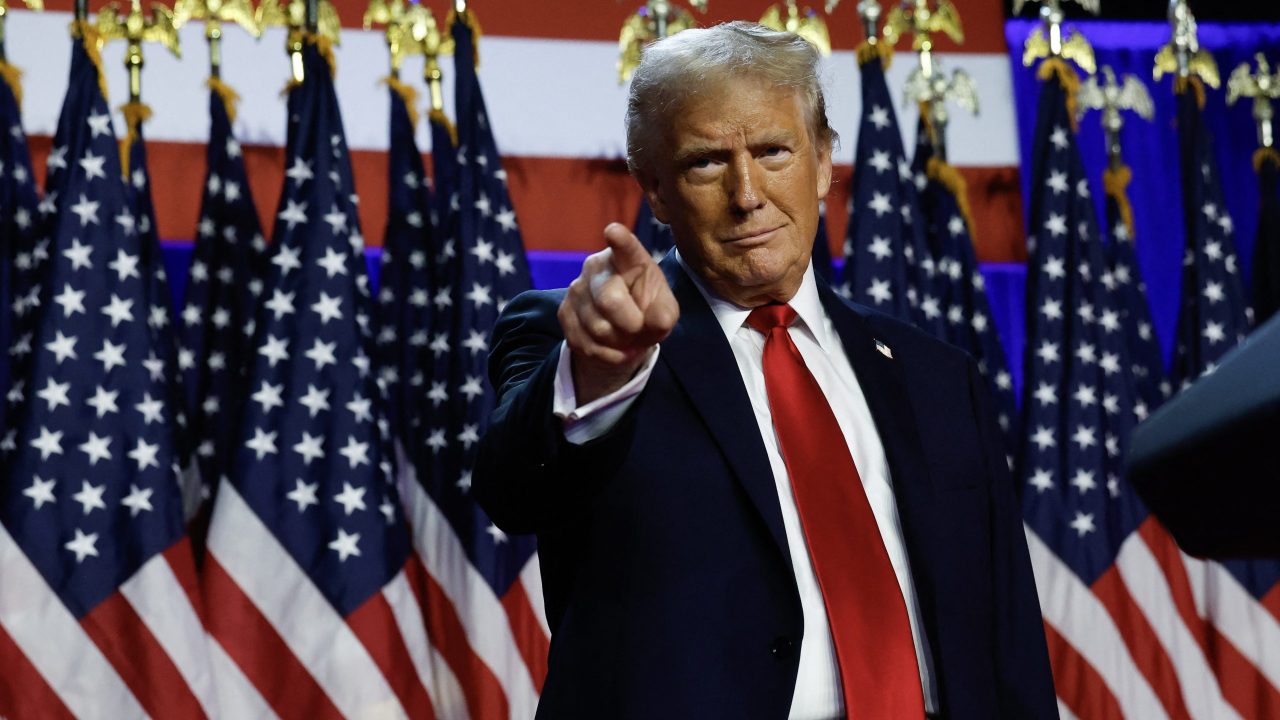
As the reactions rolled in to Trump’s victory in the U.S. election, many election night viewers worried his unilateral and isolationist tendencies in foreign policy mean that he won’t be willing to defend Taiwan in the event of a Chinese invasion. These fears are premature at best, and unhelpful at worst.
The Sentiment in Taiwan
For Taiwanese, Trump’s first term represented a sea change in how America treated their country. Trump took a phone call from then-Taiwanese President Tsai Ing-wen (蔡英文), something which had previously been seen as a breach of the U.S.’s “One China policy.” The Trump administration started selling weapons to Taiwan in much larger quantities than the Obama administration had, including a big order for new F-16 fighter jets, something Taiwan had been trying to get for more than a decade.
By the end of Trump’s first term, Taiwan was the only country in the Asia-Pacific where people preferred him to Biden in the 2020 race. However, Trump’s tone toward Taiwan has become chillier in recent months. Trump has several times asserted that Taiwan stole the U.S.’s semiconductor industry and that Taiwan needs to pay for its protection. Speaking to Bloomberg in July, Trump said, “I think Taiwan should pay us for defense. You know, we’re no different than an insurance company. Taiwan doesn’t give us anything.”
This combination of “evolving” positions is likely to be responsible for the shift in Taiwanese views on the 2024 election. Polling also conducted in July and published by Brookings showed that Taiwanese had flipped and preferred Biden to Trump.
Trump’s Approach to Dealings in the Indo-Pacific
During his first term, Trump was generally unenthusiastic about American engagement in multilateral organizations, reserving particular ire for NATO. One exception: the Quad grouping of the U.S., Japan, India and Australia was revived during his four years. Nonetheless, the contrast to the Biden years is likely to feel quite stark. Will Trump’s diplomats push the G7 to include language calling for stability in the Taiwan Strait in its communiques? Many European countries have become more active in the Indo-Pacific, including sending navy ships on tours. One of the reasons for doing so was U.S. “encouragement.” It seems likely this will falter under Trump.
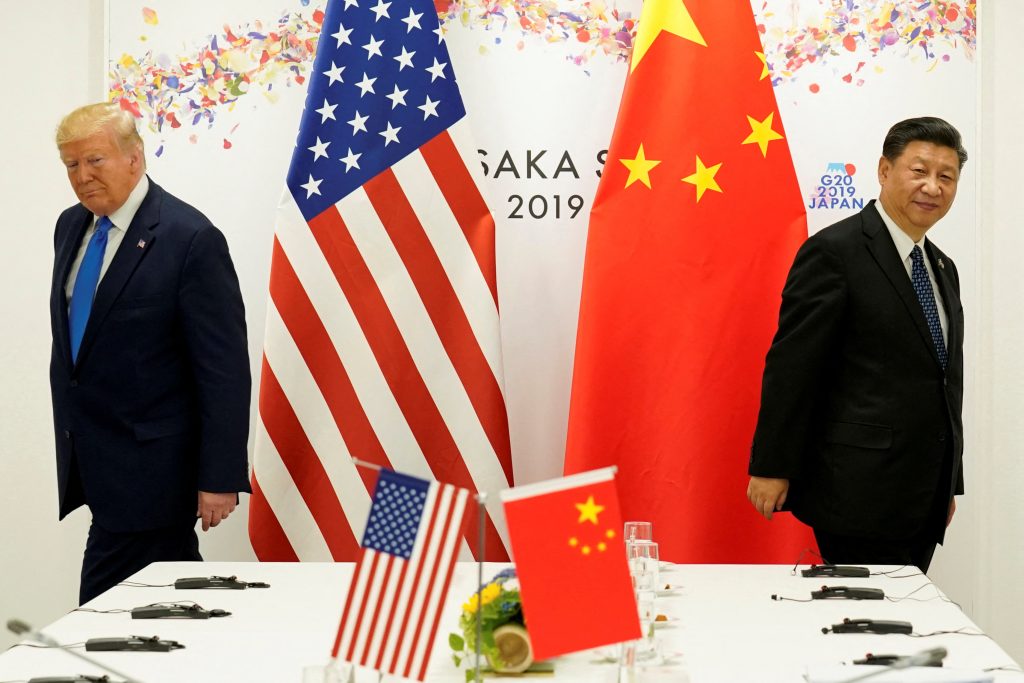
Trump prefers to deal with countries bilaterally. In the event of escalating tensions across the Taiwan Strait, Trump might try to cut a deal. Despite being highly critical of China on multiple counts, Trump has spoken highly of his interactions with Chinese President Xi Jinping (習近平). Trump has even expressed willingness to use Taiwan as a bargaining chip with China, although it seems unlikely that Beijing could provide an appealing enough offer to warrant Trump’s abandonment of Taiwan.
Trump might also deal with Taiwan transactionally, as he evidently thinks that Taiwan owes the U.S. for military support. If Taiwan can negotiate with Trump in financial terms, the island might be able to better secure this support. But it will be difficult.
Taiwan already increased its defense spending from 2% to 2.5% during former president Tsai’s tenure. Speaking at a Taiwan Media Workers Alliance event on Monday, Soochow University professor Chen Fan-yu (陳方隅) said that President Lai Ching-te’s (賴清德) administration will it find difficult to increase it because his party does not have a majority in Taiwan’s legislature. If the Chinese Nationalist Party (KMT) opposes it, Taiwan will not be able to increase its military budget. If Lai is unable to communicate this domestic issue to Trump’s team, it could spell real trouble.
Trump’s Inner Circle
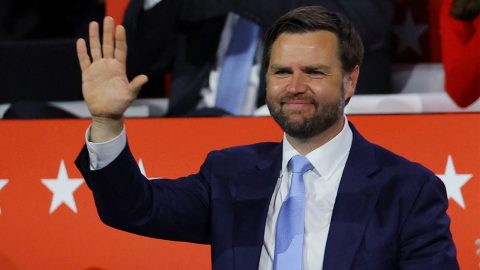
First the next U.S. vice president, J.D. Vance. Vance thinks that Taiwan is more strategically vital to the U.S. than Ukraine, due to Taiwan’s outsized role in the semiconductor supply chain. “I think [Washington] has left Taiwan in a really crappy position, because we sent all our weapons to Ukraine,” Vance said.
Vance’s sentiment has been echoed by Elbridge Colby, a possible pick for Trump’s national security team, who wrote in a May 2023 op-ed that he believes the annexation of Taiwan would jeopardize American global leadership. Colby recently seems to have become more critical of Taiwan’s investment in its preparedness and less strident in his belief that the U.S. should come to Taiwan’s defense. “Taiwan is very valuable, but it’s not existential for America … We can’t afford to squander our military in a losing fight.”
The America First Policy Institute, the organization believed to be at the center of policy planning for Trump’s second term, advocates for engaging with Taiwan, supporting its self-defense and integrating the island further into the global system. On strategic ambiguity, the institute says, “The failed decades-long establishment approach has resulted in a provocative ambiguity that puts Taiwanese independence at risk and endangers America’s deterrent credibility.” This seems to imply that the next Trump administration might lean into more strategic clarity on Taiwan. Fred Fleitz, the institute’s deputy director, got more granular, writing for Fox News that a “single Taiwan Military Command should be created that includes Japan, the United States and Taiwan to foster military cooperation.”
One person close to Trump who takes the opposing view is Elon Musk. The CEO of Tesla, SpaceX and X (Twitter) is relatively friendly with senior Chinese leaders. Tesla has an important factory in Shanghai, and Musk has not been shy about using CCP messaging when it suits him. Moreover, in 2022 Musk suggested that Taiwan could become a “special administrative zone” of China. Last week it was reported that in a private conversation with Musk, Russian President Vladimir Putin asked him not to activate Starlink over Taiwan as a favor for China.
Looking Ahead
Given that the new Trump administration appears likely to withdraw support from Ukraine, and to partially justify that by saying that it’s necessary to support Taiwan and face China in the Indo-Pacific, will Taipei be able to continue its own vocal support for Kyiv? The answer, painful though it is, is almost certainly “no.” The one thing that any Taiwanese government cannot afford to do is to alienate the president of the United States. If President Lai appears to be looking the U.S. gift horse in the mouth, then Trump might just gallop that horse off back toward Hawaii. That does not mean, however, that Taiwan cannot conduct its own foreign policy in Europe, especially in Central and Eastern Europe. It just means that it will need to be even more circumspect about how it does so so as not to irritate the new team in Washington.
There is no doubt that Trump’s election represents some lack of continuity and uncertainty for Taiwan, even though Biden’s approach built on what Trump had previously done in office. Trump himself may not care about Taiwan at all, but there is a whole ecosystem around him that shapes his actions. Many of those advisors and players at least profess to strongly support Taiwan’s right to exist as an independent polity and believe that the U.S. should be focused on boosting Taiwan’s defense capabilities. Four years of Trump’s administration before helped Taiwan rather than hindered it. The onus is now on Taiwan and its friends to replicate that.


Leave a Reply