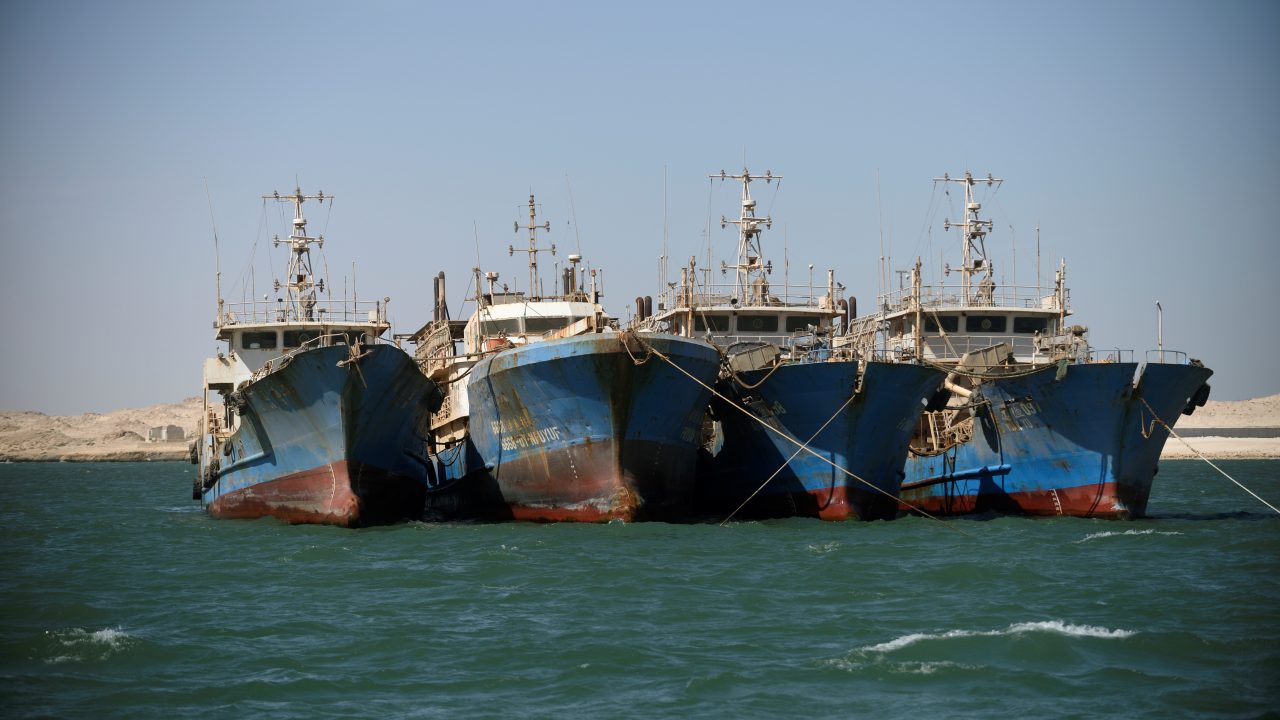
As China’s economic power has grown, speculation about whether tensions with the Global South will grow with it has become increasingly common. But one issue that remains conspicuous by the apparent lack of open diplomatic tension it generates is China’s distant water fishing take.
China again captured more fish than any other country in 2022 (13.0 million tonnes in the most recent year for which the U.N. offers a total). That accounted for 14.3 percent of global captures of aquatic animals, which is more than the total captures of the second (Indonesia) and third-ranked (India) countries combined.
From a distance, this seems like it should place a strain on the relationships China has with Global South governments, because it’s often their waters, or waters just outside of theirs, this catch comes from. According to self-reported figures, a total of 2.3 million tonnes of China’s catch came from its distant water fishery, and a steady string of news stories reflect issues this brings about in poorer countries.
In October, The Wall Street Journal reported that Peru’s squid catch was down 70 percent so far this year, “a result of the industrial-scale fishing that Chinese companies have brought to seas normally plied by individuals in small boats.”
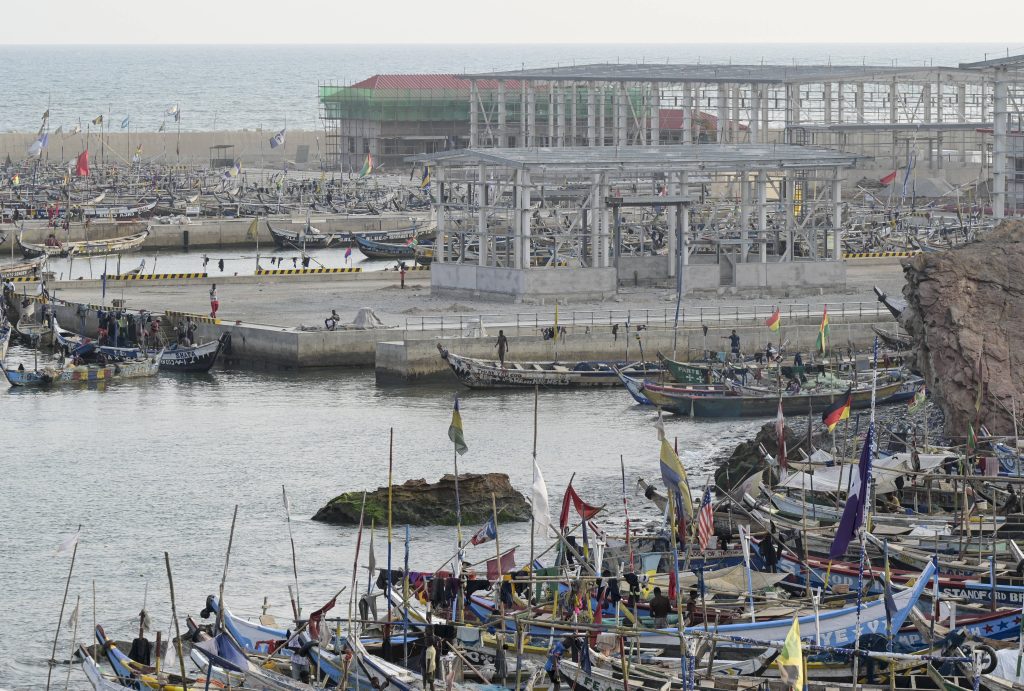
In September, Global Voices published a report noting that the Chinese fleet’s mass-scale fishing techniques have “devastated local fishing industries, leaving many without their livelihoods” across West Africa.
And in April, an Environmental Justice Foundation report found “systemic illegal fishing and human rights abuses in countries bordering the Southwest Indian Ocean.”
These kinds of stories can include both legal and illegal fishing inside the waters of poorer countries, as well as on the high seas around those countries.
However, what is notable is that the complaints they cite are almost always from local fishers or NGOs, rather than government officials.
Two Explanations
Explanations for that gap come in two forms.
“The problem is that corruption and weak state capacity drive this trade,” Eric Olander, co-founder of the China Global South Project, told Domino Theory by email.
On the one hand, sophisticated monitoring systems and powerful coastguard regimes that exist in rich countries like Japan or the U.S. do not exist in the likes of Kenya or Ghana.
On the other hand, “[I]t’s Kenyan and Ghanaian government officials who are 100% complicit in making this happen,” Olander said.
“They take bribes to grease the wheels so any regulatory friction is removed. And even when they are ‘fined,’ the Chinese trawler owners simply ignore it and move on without any consequence from the local government.”
So, not only is the task of containing illegal or unregulated fishing fundamentally difficult, there is an apparent split in incentive structures between fishers and government officials who are supposed to represent them. The fishers need the fish for their livelihoods, while officials are being paid to allow outside vessels to fish for them.
And these differing priorities stretch out beyond overt corruption.
“African officials, in my experience, prioritize their economic relations with China and the various relationships viz borrowings for infrastructure and investment for mineral extraction by China, hence open criticism of Chinese fleets is often kept behind closed doors,” Mark Godfrey, a journalist covering the agriculture and fisheries sectors, told Domino Theory.
It’s well known large investment projects such as the Global Development Initiative and the Belt and Road Initiative hold huge sway, and one trade-off is keeping quiet about other areas of disagreement.
Potential for Increasing Dissent
This doesn’t mean it’s impossible that government officials could align themselves with fishers, though.
Notably, in 2020, Senegal’s government rejected a number of licenses for Chinese vessels to fish in its waters — and there could be more shows of dissent in future.
“I think the discussions in more robust democracies like Kenya around imports of Chinese seafood, like tilapia filets, are demonstrations that African officials do speak out on China, and as China seeks to increase its exports of manufactured goods to Africa these voices will grow,” Godfrey said.
Where things go from here may, then, depend on what promises of Chinese investment ultimately look like.
“Various officials I have talked to look to China for investments in aquaculture and fish processing,” Godfrey said. “If these don’t materialize, I think African officials will get a lot more critical. I think you’ll find a lot of vibrant debate on China in Mauritania, a key destination of Chinese investments in fisheries which has made a lot of moves to increase transparency around its fishery in order to extract more economic value from it.”
This view is echoed by Desire Nimubona, a Burundi-born and based journalist, who told Domino Theory that while Africa-China relations are “not openly tense,” there are significant moves below the top level that show African countries “no longer clap hands to what China wants from Africa.”
As examples of ongoing pressure points, Nimubona pointed to Chinese mining operators facing attacks in the DR Congo and the Central African Republic, Senegal’s move to block Chinese fishing, and concerns from civil society organizations, media and researchers that the presence of Chinese companies and cooperatives could be a “curse for the environment” in countries like Gabon and the Republic of the Congo (also known as Congo-Brazzaville.)
Consequences
If there is top-level pushback, though, it’s unlikely to be cost free.
In Senegal, for example, China has “taken away jobs and fishing advantages from the local community. Consequently, [the] Senegal government is under pressure and could revise the law as far as fishing is concerned,” Nimubona noted.
That, perhaps, operates as the negative case for why so many governments have gone in the other direction — and why they continue to do so, both regarding fishing and other industries. (China currently plans to build a military base in Gabon, having recently signed a $5 billion investment deal with the country. “Since then, the deforestation rate increased and most of the timber from Gabon is being sold to China,” Nimubona pointed out.)
Ultimately, such decisions are why Olander concludes: “The real issue here isn’t Chinese [Illegal, Unreported and Unregulated fishing] (which is a problem to be sure) but rather the weak state capacity of governments in many Global South countries that either can’t or don’t enforce fishing regulations.”
“Speak with local activists in Ghana and they will not blame the Chinese, they will definitely point the finger towards their own leaders who they rightly feel are selling them out.”



Leave a Reply