
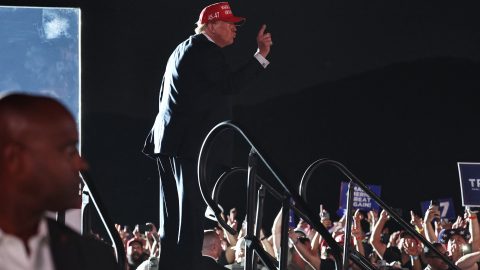
People in Taiwan have been worried ever since Donald Trump first said that Taiwan stole America’s chips industry and should pay the U.S. for protection. So why is Taiwan cutting its defense spending?
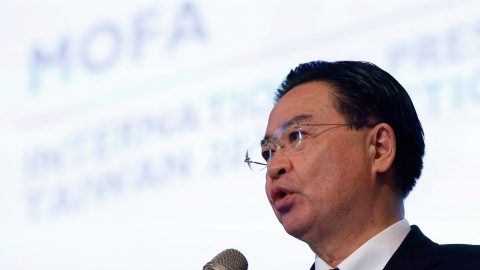
On February 14, President Lai Ching-te (賴清德) announced that Taiwan would raise its defense spending over 3% of GDP. President Trump himself has previously said that Taiwan should spend 10% of GDP on defense, a number that clearly Lai’s announcement doesn’t come close to. But the real problem for Taiwan to hit even 3% lies much closer to home, inside the Legislative Yuan, Taiwan’s parliament.
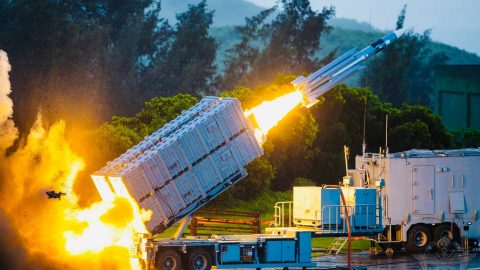
Last year, Lai’s administration announced that the military budget for 2025 would be 647 billion New Taiwan dollars, or $19.8 billion by today’s exchange rate. That was an increase over 2024’s NTD 607 billion ($18.5 billion), but a decrease as a percentage of GDP from roughly 2.5 to 2.45.
However, when the budget was sent before the Legislative Yuan, defense ended up being cut by NTD 8.4 billion ($260 million) from the proposal, with a further NTD 90 billion ($2.8 billion) being “frozen.” Most concerningly, NTD 74.4 billion ($2.27 billion) of the frozen amount is allocated for operational expenses. While frozen funds can in theory be “unfrozen” if attached conditions are met, this process will take time and the decision to unfreeze would be in the hands of the Legislative Yuan.
The Legislative Yuan is cutting the budget proposed by the executive because the two are controlled by different parties. President Lai is from the Democratic Progressive Party (DPP). The Legislative Yuan has a majority formed of a coalition between the Chinese Nationalist Party (KMT) and the Taiwan People’s Party (TPP). The KMT used to rule China, the DPP was born out of local Taiwanese opposition to the KMT’s dictatorship in Taiwan that preceded the transition to democracy in the 1980s and 1990s.
Today the KMT is more supportive of engagement with the People’s Republic of China, while the DPP is more skeptical and views Beijing as a threat. This is mirrored to some extent by the Chinese Communist Party’s refusal to engage with the DPP while entertaining KMT visitors. The TPP in theory sits in the middle but in reality since the 2024 presidential election has been firmly aligned with the KMT.
While it does make sense geopolitically that the DPP would want to raise military spending and the KMT would want to reduce it, the issue is wrapped up in a broader domestic political battle. The KMT wants to use its majority in the Legislative Yuan to restrict Lai’s presidency, and the budget is one part of that. There are cuts across the board, not just for defense.
For the eight years of Tsai Ing-wen’s (蔡英文) presidency, the DPP also controlled the Legislative Yuan. Tsai, who left office last year, was able to move military reform and spending at her preferred pace. The situation of a “balance of power” now resembles that which existed when Chen Shui-bian (陳水扁) was the first DPP president in the early 2000s. At that time, too, the KMT controlled the Legislative Yuan and repeatedly refused to approve arms purchases from the U.S.
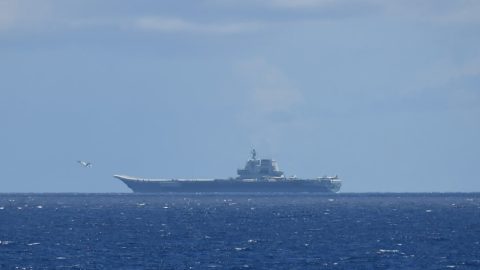
China’s military threat to Taiwan grows every year. Before the U.S. election, Trump called for Taiwan to increase its defense spending to 10% of GDP. In an editorial last year, incoming undersecretary of defense for policy and longtime Taiwan critic Elbridge Colby called for Taiwan to spend a minimum of 5% of GDP.
It’s unclear exactly what number the new administration thinks it can actually persuade Taiwan to achieve, since even a country like South Korea with a major external threat only spends 2.8%. However, it seems impossible that the cut imposed by the Legislative Yuan will be accepted or understood in Washington, especially given the rather granular level of the domestic issues driving it here in Taipei.
In Lai’s announcement on Friday, he said that the government would use special budget allocations to increase spending. This would make sense if it is argued that these are extraordinary measures necessary for national security. But special budget expenditure still needs to be approved by the Legislative Yuan, which means the KMT and TPP would have the possibility to block it again.
The DPP says that the budget cuts implemented by the Legislative Yuan are an “existential threat” to Taiwan. The party has launched dozens of recall efforts to remove KMT legislators. This is a high-risk strategy because if these recalls fail, they cannot be attempted again for the rest of Lai’s term.
From the outside, you might think that Lai would be able to use the threat of China to drive public opinion enough that the KMT legislators would be forced to support a special budget to increase military spending for national security reasons. But from Taipei, that does not feel likely. After all, it didn’t happen in the early 2000s when the KMT stalled defense procurement for years.
If Taipei is to substantially increase defense spending, Lai is somehow going to have to pick and win the political fight of his life.
Update: The original version of this article listed the amount frozen as NTD 83 billion ($2.6 billion). It is in fact NTD 90 billion ($2.8 billion). This error was due to citing the added total of items included in the frozen section, which was not an exhaustive list.


Great article part of a series of insightful pieces by the same author. I believe the amount spent on defense by Taiwan is little deterrent to China, so the real issue looks indeed to be [quoting] “a broader domestic political battle. The KMT wants to use its majority in the Legislative Yuan to restrict Lai’s presidency, and the budget is one part of that. There are cuts across the board, not just for defense”. It’s understandable that the KMT is playing its cards, politically, as it also awaits to see how Trump’s foreign policy [also towards the island] unfolds.